Guangzhou to Sydney is 4,671 miles (7,517 km), a flight of about 9 hours 10 minutes.
The left side captures the Pearl River Delta's urban density on departure and Sydney's harbour and coastal skyline on arrival, while the right side mostly overlooks featureless interior terrain and open ocean during the long overwater cruise.
Flight Path
South China Sea, Philippine archipelago near Luzon, Sulu and Celebes Seas, Coral Sea approaching the Queensland coast near the Great Barrier Reef
Great circle distance and headings ›

.jpg?width=600)
Phase by phase
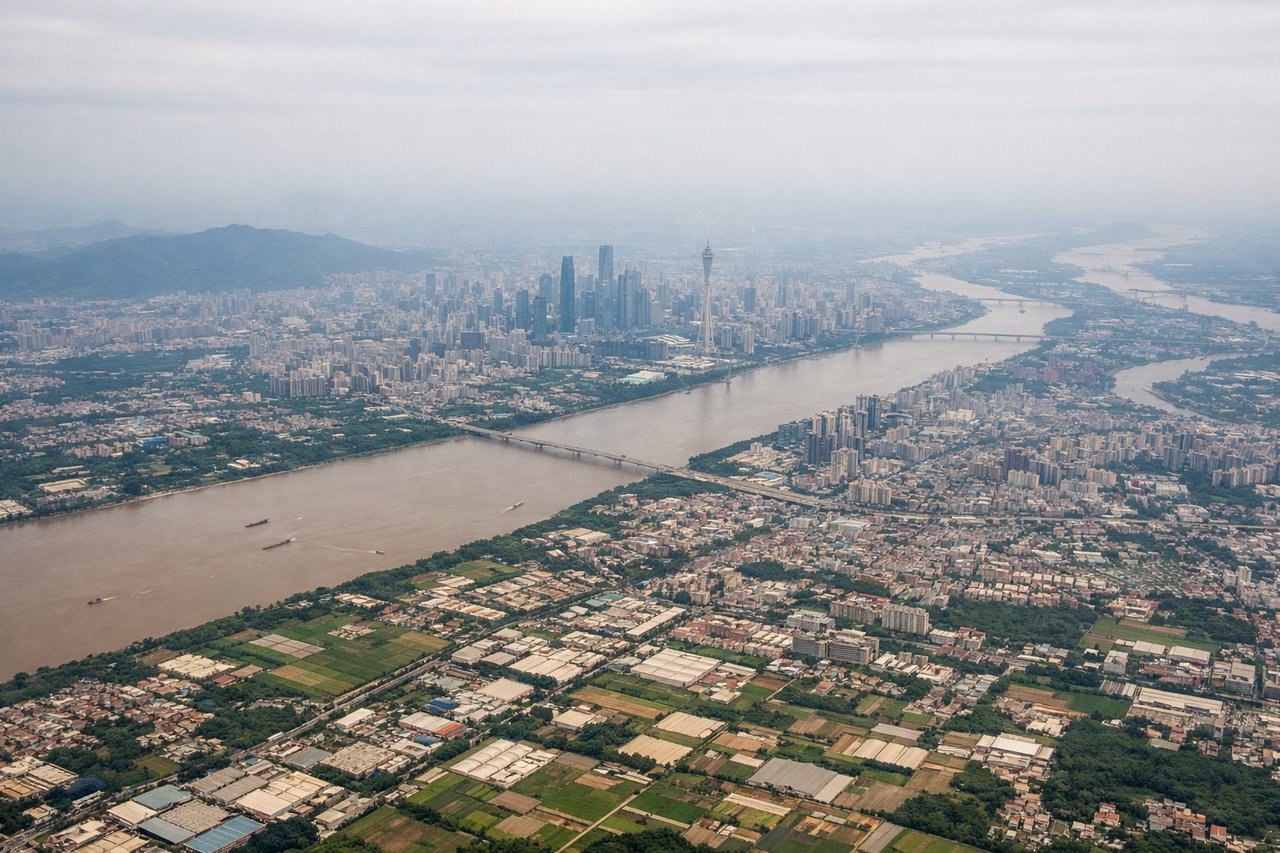
Takeoff from CAN
LEFTDeparting CAN to the south, the left (east) side gives passengers a good look at the Pearl River Delta's dense urban sprawl, including Dongguan and the approach toward Shenzhen and Hong Kong's hills before the coastline recedes into the South China Sea.
Landing at BWU
LEFTOn approach into Bankstown from the north, the left side offers views of Sydney's skyline, harbour inlets, and the Pacific coastline before the aircraft turns inland toward the flatter Bankstown basin.
Landmarks on this routeAll landmarks →
Will your flight be in sunlight?
Pick a date and time in the Sun Map to watch the sun move across your whole flight.
About This Route
Which side of the plane should I sit on flying from Guangzhou Baiyun International Airport (CAN) to Sydney Bankstown (BWU)?
Sit on the Left side of the plane for the best views on flights from Guangzhou to Sydney. The left side captures the Pearl River Delta's urban density on departure and Sydney's harbour and coastal skyline on arrival, while the right side mostly overlooks featureless interior terrain and open ocean during the long overwater cruise.
What can I see during takeoff from Guangzhou Baiyun International Airport in Guangzhou?
During takeoff from Guangzhou Baiyun International Airport (CAN), sit on the Left side for the best views. Departing CAN to the south, the left (east) side gives passengers a good look at the Pearl River Delta's dense urban sprawl, including Dongguan and the approach toward Shenzhen and Hong Kong's hills before the coastline recedes into the South China Sea. Notable sights include: Pearl River Delta, Dongguan/Shenzhen urban sprawl, Hong Kong's hilly skyline in the distance, Pearl River estuary.
What can I see when landing at Sydney Bankstown in Sydney?
When landing at Sydney Bankstown (BWU), sit on the Left side for the best views. On approach into Bankstown from the north, the left side offers views of Sydney's skyline, harbour inlets, and the Pacific coastline before the aircraft turns inland toward the flatter Bankstown basin. Notable sights include: Sydney Harbour and CBD skyline, Botany Bay, Pacific coastline, Georges River winding toward Bankstown.
How long is the flight from Guangzhou to Sydney?
The flight from Guangzhou Baiyun International Airport (CAN) to Sydney Bankstown (BWU) takes about 9 hours 10 minutes. The shortest flight path between them is 4,671 miles (7,517 km); winds and air traffic control usually add a few percent.
What does the Guangzhou to Sydney flight path pass over?
South China Sea, Philippine archipelago near Luzon, Sulu and Celebes Seas, Coral Sea approaching the Queensland coast near the Great Barrier Reef