The left side captures the dramatic terrain transition of the cruise phase—southern glimpses of the Tibetan Plateau's edge and the Tian Shan range—plus stronger urban and coastal scenery at both ends of the flight, from Guangzhou's river delta to Istanbul's Bosphorus approach.
Flown CAN to IST? Did we get it right?
Flight Path
Guangzhou to Istanbul is 4,899 miles (7,884 km), a flight of about 10 hours 30 minutes.
Eastern edge of the Tibetan Plateau, Tarim Basin and Taklamakan Desert margins, Tian Shan mountain range, Kazakh steppe, northern Caspian Sea, and the Caucasus Mountains before descent into Anatolia
Great circle distance and headings ›


Phase by phase
Takeoff from CAN
LEFTDeparting CAN toward the northwest, the initial climb and turn put Guangzhou's dense urban core and the Pearl River on the left side of the aircraft, with the Baiyun Mountain foothills visible just north of the airport as the plane banks away.
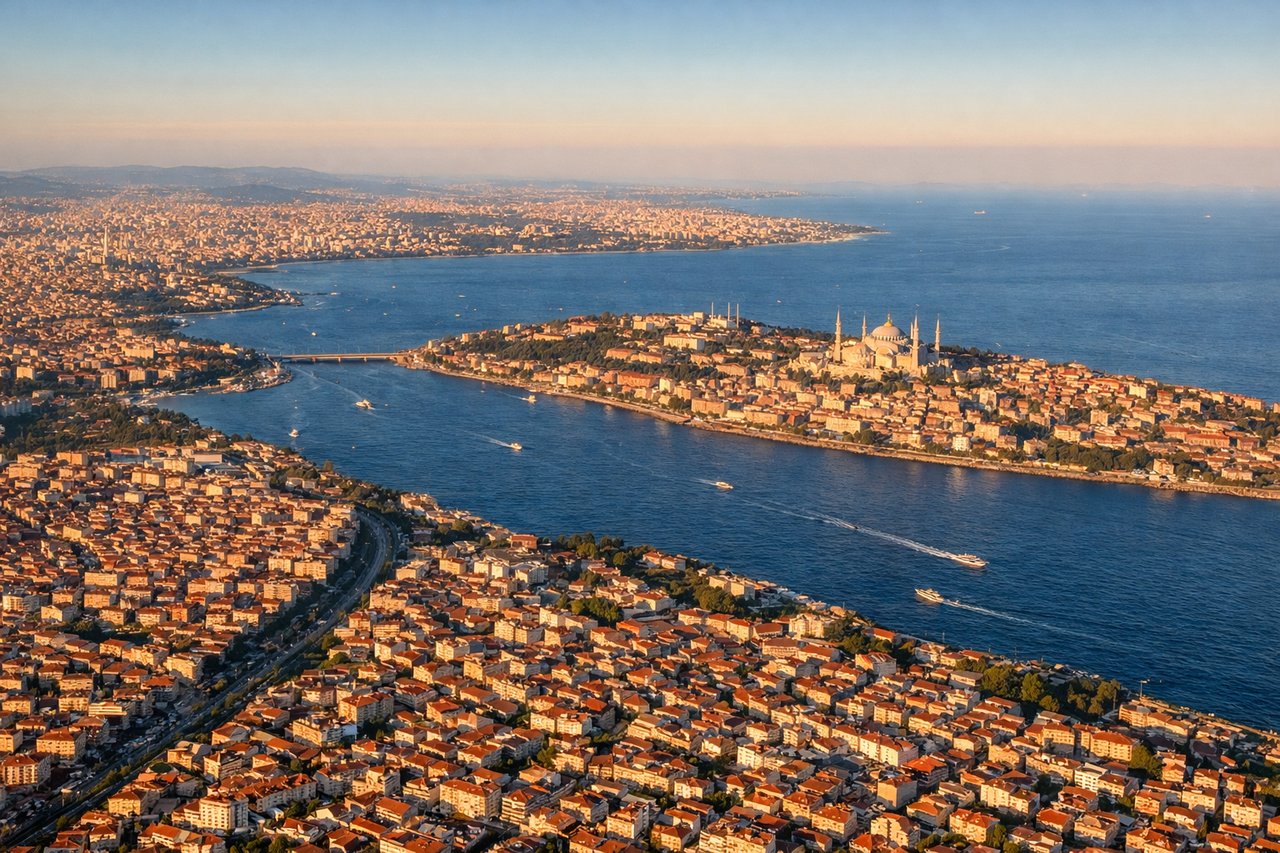
Landing at IST
LEFTOn approach to IST from the east, the descent path crosses near the Sea of Marmara and the Bosphorus, giving left-side passengers a view of Istanbul's historic peninsula, the strait, and scattered Princes' Islands before touchdown.
Will your flight be in sunlight?
Pick a date and time in the Sun Map to watch the sun move across your whole flight.
About This Route
Which side of the plane should I sit on flying from Guangzhou Baiyun International Airport (CAN) to İstanbul Airport (IST)?
Sit on the Left side of the plane for the best views on flights from Guangzhou to Istanbul. The left side captures the dramatic terrain transition of the cruise phase—southern glimpses of the Tibetan Plateau's edge and the Tian Shan range—plus stronger urban and coastal scenery at both ends of the flight, from Guangzhou's river delta to Istanbul's Bosphorus approach.
What can I see during takeoff from Guangzhou Baiyun International Airport in Guangzhou?
During takeoff from Guangzhou Baiyun International Airport (CAN), sit on the Left side for the best views. Departing CAN toward the northwest, the initial climb and turn put Guangzhou's dense urban core and the Pearl River on the left side of the aircraft, with the Baiyun Mountain foothills visible just north of the airport as the plane banks away. Notable sights include: Guangzhou city skyline, Pearl River, Baiyun Mountain foothills, Pearl River Delta waterways.
What can I see when landing at İstanbul Airport in Istanbul?
When landing at İstanbul Airport (IST), sit on the Left side for the best views. On approach to IST from the east, the descent path crosses near the Sea of Marmara and the Bosphorus, giving left-side passengers a view of Istanbul's historic peninsula, the strait, and scattered Princes' Islands before touchdown. Notable sights include: Bosphorus Strait, Sea of Marmara, Istanbul historic peninsula skyline, Princes' Islands.
How long is the flight from Guangzhou to Istanbul?
The flight from Guangzhou Baiyun International Airport (CAN) to İstanbul Airport (IST) takes about 10 hours 30 minutes. The shortest flight path between them is 4,899 miles (7,884 km); winds and air traffic control usually add a few percent.
What does the Guangzhou to Istanbul flight path pass over?
Eastern edge of the Tibetan Plateau, Tarim Basin and Taklamakan Desert margins, Tian Shan mountain range, Kazakh steppe, northern Caspian Sea, and the Caucasus Mountains before descent into Anatolia