Guangzhou to Jeddah is 4,676 miles (7,526 km), a flight of about 9 hours 45 minutes.
While the takeoff side favors the right due to Guangdong's hill terrain, the left side wins overall because of the striking Red Sea coastal approach into Jeddah, which adds strong color contrast and coastline detail that outweighs the relatively flat, hazy cruise-phase scenery on either side.
Flight Path
The route crosses southern Yunnan's mountainous terrain, the Brahmaputra and Ganges river plains of Bangladesh and northern India, the arid expanses of Pakistan's Sindh region, and the Arabian Sea coastline near Oman before crossing the deserts of the Arabian Peninsula toward the Red Sea.
Great circle distance and headings ›.jpg?width=600)

.jpeg?width=600)


_and_the_Dubai_skyline_(25781049892).jpg?width=600)

Phase by phase
Takeoff from CAN
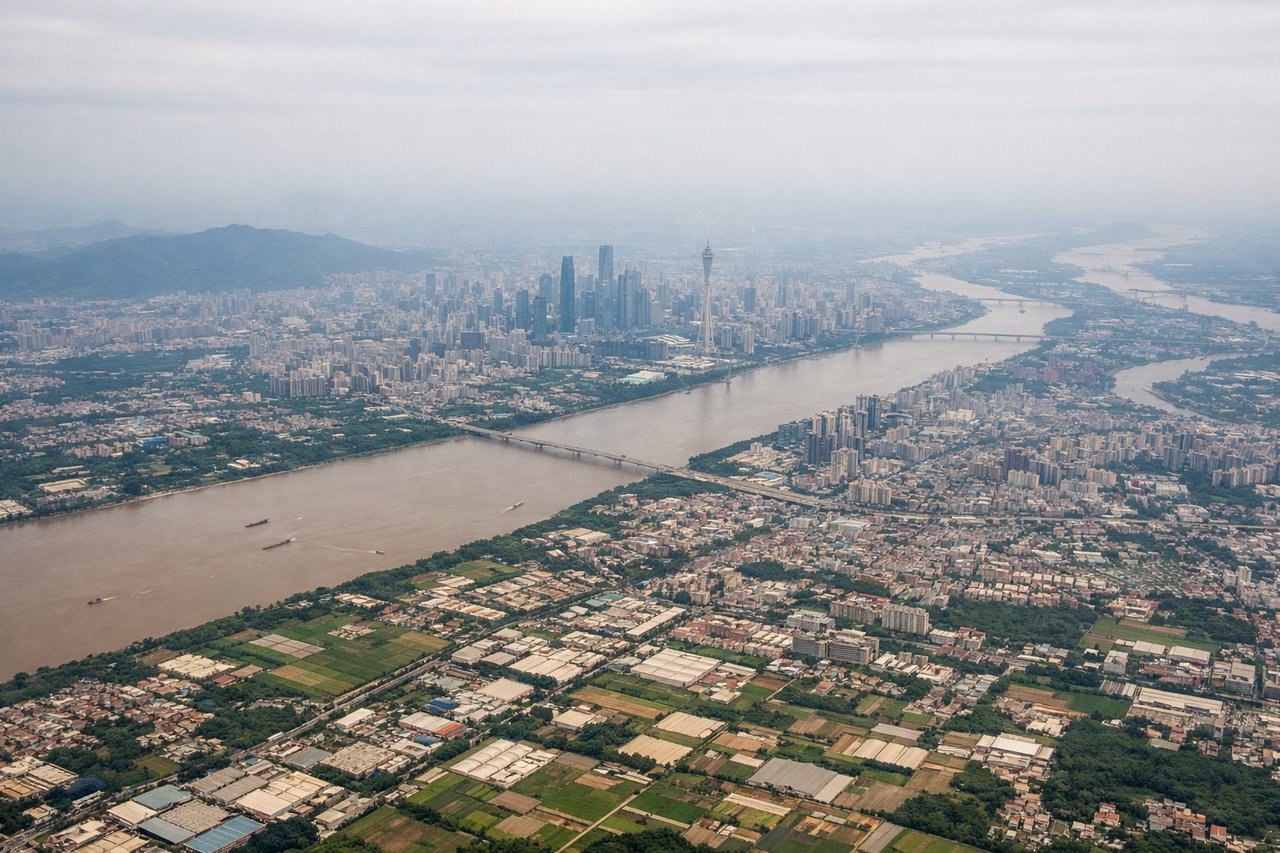
RIGHTAs CAN's runways run north-south, westbound departures typically climb out and bank toward a westerly heading, putting the rolling hills of Baiyun Mountain and the forested ridgelines of northern Guangdong on the right side of the aircraft. The left side mostly shows the flatter Pearl River Delta sprawl, which is interesting briefly but fades into haze quickly.

Landing at JED
LEFTOn approach to JED, aircraft favoring runway 34 arrive from the southeast, tracking northwest along the coast before turning onto final. This puts the turquoise waters and reef-lined shoreline of the Red Sea, along with Jeddah's coastal skyline and the King Fahd Fountain area, on the left side of the plane during the descent.
Landmarks on this routeAll landmarks →
Will your flight be in sunlight?
Pick a date and time in the Sun Map to watch the sun move across your whole flight.
About This Route
Which side of the plane should I sit on flying from Guangzhou Baiyun International Airport (CAN) to King Abdulaziz International (JED)?
Sit on the Left side of the plane for the best views on flights from Guangzhou to Jeddah. While the takeoff side favors the right due to Guangdong's hill terrain, the left side wins overall because of the striking Red Sea coastal approach into Jeddah, which adds strong color contrast and coastline detail that outweighs the relatively flat, hazy cruise-phase scenery on either side.
What can I see during takeoff from Guangzhou Baiyun International Airport in Guangzhou?
During takeoff from Guangzhou Baiyun International Airport (CAN), sit on the Right side for the best views. As CAN's runways run north-south, westbound departures typically climb out and bank toward a westerly heading, putting the rolling hills of Baiyun Mountain and the forested ridgelines of northern Guangdong on the right side of the aircraft. The left side mostly shows the flatter Pearl River Delta sprawl, which is interesting briefly but fades into haze quickly. Notable sights include: Baiyun Mountain, Guangzhou's northern suburbs, forested hills of the Nanling foothills, glimpses of the Pearl River tributaries.
What can I see when landing at King Abdulaziz International in Jeddah?
When landing at King Abdulaziz International (JED), sit on the Left side for the best views. On approach to JED, aircraft favoring runway 34 arrive from the southeast, tracking northwest along the coast before turning onto final. This puts the turquoise waters and reef-lined shoreline of the Red Sea, along with Jeddah's coastal skyline and the King Fahd Fountain area, on the left side of the plane during the descent. Notable sights include: Red Sea coastline and coral reefs, Jeddah Corniche, King Fahd's Fountain area, downtown Jeddah's coastal towers.
How long is the flight from Guangzhou to Jeddah?
The flight from Guangzhou Baiyun International Airport (CAN) to King Abdulaziz International (JED) takes about 9 hours 45 minutes. The shortest flight path between them is 4,676 miles (7,526 km); winds and air traffic control usually add a few percent.
What does the Guangzhou to Jeddah flight path pass over?
The route crosses southern Yunnan's mountainous terrain, the Brahmaputra and Ganges river plains of Bangladesh and northern India, the arid expanses of Pakistan's Sindh region, and the Arabian Sea coastline near Oman before crossing the deserts of the Arabian Peninsula toward the Red Sea.