Guangzhou to Tashkent is 2,813 miles (4,527 km), a flight of about 5 hours 45 minutes.
The left side wins overall because the cruise phase traces the southern edge of the Tibetan Plateau and the Kunlun Mountains before crossing the Taklamakan Desert, and the final approach into Tashkent reveals the Tian Shan foothills — giving the left side more sustained, dramatic terrain across the whole flight compared to the flatter northern desert views on the right.
Flight Path
Hengduan Mountains and eastern Tibetan Plateau edge, Kunlun Mountains, Taklamakan Desert in the Tarim Basin, western Tian Shan range near the Kyrgyzstan-Uzbekistan border
Great circle distance and headings ›.jpg?width=600)


Phase by phase
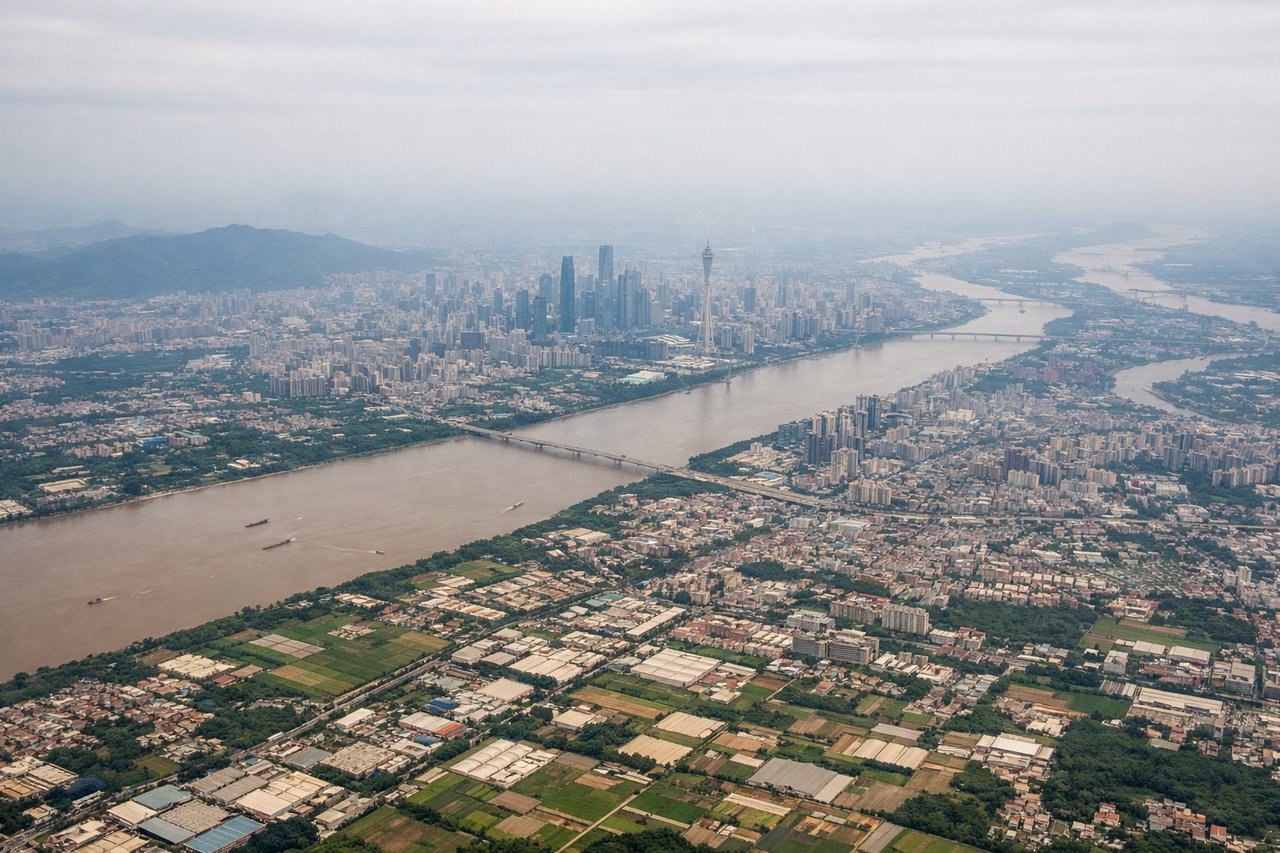
Takeoff from CAN
RIGHTBaiyun's departure track curves the aircraft away from the city, putting Guangzhou's skyline and the Pearl River Delta's dense waterways and shipping channels on the right side of the cabin during the initial climb. It's a brief but distinctly urban, water-laced view before the route turns inland.
Landing at TAS
LEFTOn the descent into Tashkent, the flight path brings the foothills of the western Tian Shan and the Chimgan mountain range into view to the south, visible from the left side as the aircraft turns for final approach. This gives a striking contrast of snow-dusted peaks against the flat Chirchiq river valley where Tashkent sits.
Landmarks on this routeAll landmarks →
Will your flight be in sunlight?
Pick a date and time in the Sun Map to watch the sun move across your whole flight.
About This Route
Which side of the plane should I sit on flying from Guangzhou Baiyun International Airport (CAN) to Tashkent International Airport (TAS)?
Sit on the Left side of the plane for the best views on flights from Guangzhou to Tashkent. The left side wins overall because the cruise phase traces the southern edge of the Tibetan Plateau and the Kunlun Mountains before crossing the Taklamakan Desert, and the final approach into Tashkent reveals the Tian Shan foothills — giving the left side more sustained, dramatic terrain across the whole flight compared to the flatter northern desert views on the right.
What can I see during takeoff from Guangzhou Baiyun International Airport in Guangzhou?
During takeoff from Guangzhou Baiyun International Airport (CAN), sit on the Right side for the best views. Baiyun's departure track curves the aircraft away from the city, putting Guangzhou's skyline and the Pearl River Delta's dense waterways and shipping channels on the right side of the cabin during the initial climb. It's a brief but distinctly urban, water-laced view before the route turns inland. Notable sights include: Guangzhou skyline (Zhujiang New Town towers), Pearl River Delta waterways, Foshan urban sprawl.
What can I see when landing at Tashkent International Airport in Tashkent?
When landing at Tashkent International Airport (TAS), sit on the Left side for the best views. On the descent into Tashkent, the flight path brings the foothills of the western Tian Shan and the Chimgan mountain range into view to the south, visible from the left side as the aircraft turns for final approach. This gives a striking contrast of snow-dusted peaks against the flat Chirchiq river valley where Tashkent sits. Notable sights include: Chimgan/Tian Shan foothills, Chirchiq River valley, Tashkent city grid.
How long is the flight from Guangzhou to Tashkent?
The flight from Guangzhou Baiyun International Airport (CAN) to Tashkent International Airport (TAS) takes about 5 hours 45 minutes. The shortest flight path between them is 2,813 miles (4,527 km); winds and air traffic control usually add a few percent.
What does the Guangzhou to Tashkent flight path pass over?
Hengduan Mountains and eastern Tibetan Plateau edge, Kunlun Mountains, Taklamakan Desert in the Tarim Basin, western Tian Shan range near the Kyrgyzstan-Uzbekistan border