Cedar City to Dallas-Fort Worth is 963 miles (1,550 km), a flight of about 2 hours 45 minutes.
While the takeoff offers dramatic red rock scenery, the landing approach into DFW provides more sustained and varied views of significant geography: the high desert plateau transition, the Llano Estacado (Staked Plains) of the Texas Panhandle during cruise, and finally the Trinity River system and Dallas-Fort Worth metroplex. Right side captures the most visually interesting final descent.
Flight Path
During cruise, the flight passes over the high desert plateau country of northern Arizona and the Texas Panhandle. Notable features include the Kaibab Plateau region (visible as elevated terrain with sparse vegetation), the transition into the Llano Estacado (Staked Plains) of the Texas Panhandle with its distinctive flat, featureless terrain, and scattered mesas and buttes. The Canadian River valley may be visible as a linear feature cutting through the plains. As you approach DFW from the north, the terrain gradually transitions from high plains to rolling prairie with increasing urban development visible around the Dallas-Fort Worth metroplex.
Great circle distance and headings ›
.jpeg?width=600)
.jpg?width=600)
.jpg?width=600)
Phase by phase
Takeoff from CDC
LEFTLeft side offers immediate views of the red rock formations and plateaus surrounding Cedar City. The Markagunt Plateau and surrounding high desert terrain are directly north and west of the airport, providing dramatic geology during climb-out.
Landing at DFW
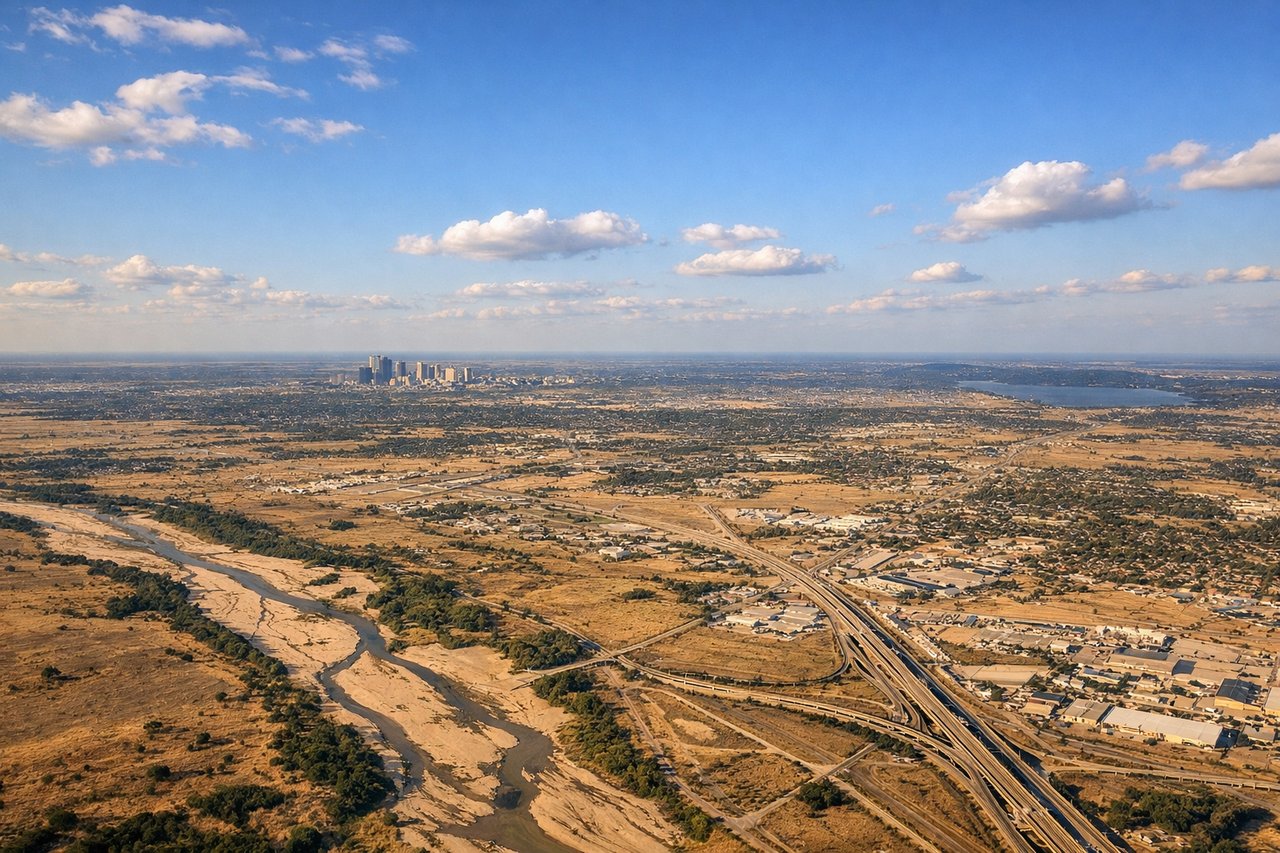
RIGHTRight side provides views of the Dallas-Fort Worth metroplex and the Trinity River system as you descend into DFW. The sprawling urban development, highway networks, and the distinctive geometry of the airport runways become visible on approach from the north.
Landmarks on this routeAll landmarks →
Will your flight be in sunlight?
Pick a date and time in the Sun Map to watch the sun move across your whole flight.
About This Route
Which side of the plane should I sit on flying from Cedar City Rgnl (CDC) to Dallas Fort Worth International (DFW)?
Sit on the Right side of the plane for the best views on flights from Cedar City to Dallas-Fort Worth. While the takeoff offers dramatic red rock scenery, the landing approach into DFW provides more sustained and varied views of significant geography: the high desert plateau transition, the Llano Estacado (Staked Plains) of the Texas Panhandle during cruise, and finally the Trinity River system and Dallas-Fort Worth metroplex. Right side captures the most visually interesting final descent.
What can I see during takeoff from Cedar City Rgnl in Cedar City?
During takeoff from Cedar City Rgnl (CDC), sit on the Left side for the best views. Left side offers immediate views of the red rock formations and plateaus surrounding Cedar City. The Markagunt Plateau and surrounding high desert terrain are directly north and west of the airport, providing dramatic geology during climb-out. Notable sights include: Markagunt Plateau, Cedar Breaks National Monument rim (visible as pale limestone cliffs), Hurricane Cliffs to the west, red sandstone badlands of the immediate region.
What can I see when landing at Dallas Fort Worth International in Dallas-Fort Worth?
When landing at Dallas Fort Worth International (DFW), sit on the Right side for the best views. Right side provides views of the Dallas-Fort Worth metroplex and the Trinity River system as you descend into DFW. The sprawling urban development, highway networks, and the distinctive geometry of the airport runways become visible on approach from the north. Notable sights include: Dallas-Fort Worth urban sprawl and skyline, Trinity River and its floodplain, Interstate 35E corridor, DFW Airport runway complex.
How long is the flight from Cedar City to Dallas-Fort Worth?
The flight from Cedar City Rgnl (CDC) to Dallas Fort Worth International (DFW) takes about 2 hours 45 minutes. The shortest flight path between them is 963 miles (1,550 km); winds and air traffic control usually add a few percent.
What does the Cedar City to Dallas-Fort Worth flight path pass over?
During cruise, the flight passes over the high desert plateau country of northern Arizona and the Texas Panhandle. Notable features include the Kaibab Plateau region (visible as elevated terrain with sparse vegetation), the transition into the Llano Estacado (Staked Plains) of the Texas Panhandle with its distinctive flat, featureless terrain, and scattered mesas and buttes. The Canadian River valley may be visible as a linear feature cutting through the plains. As you approach DFW from the north, the terrain gradually transitions from high plains to rolling prairie with increasing urban development visible around the Dallas-Fort Worth metroplex.