Right side wins overall. While left gives the Paris departure view, right side captures the English Channel crossing, the Welsh coastline, the Irish Sea, and the spectacular arrival view over Lough Neagh. The water crossings and the sheer scale of Lough Neagh on approach make the right side the stronger choice for the full journey.
Flown CDG to BFS? Did we get it right?
Flight Path
Paris to Belfast is 540 miles (869 km), a flight of about 1 hour 55 minutes.
The flight tracks northwest over the Pas-de-Calais region of northern France, crosses the English Channel near its narrowest point between Calais and Dover (the white chalk cliffs of Dover are visible on clear days), passes over southeast England and the Thames Estuary, crosses central England over the Midlands, then crosses the Irish Sea before descending over County Antrim toward Belfast. The Irish Sea crossing takes roughly 20-25 minutes of the flight.
Great circle distance and headings ›

Phase by phase
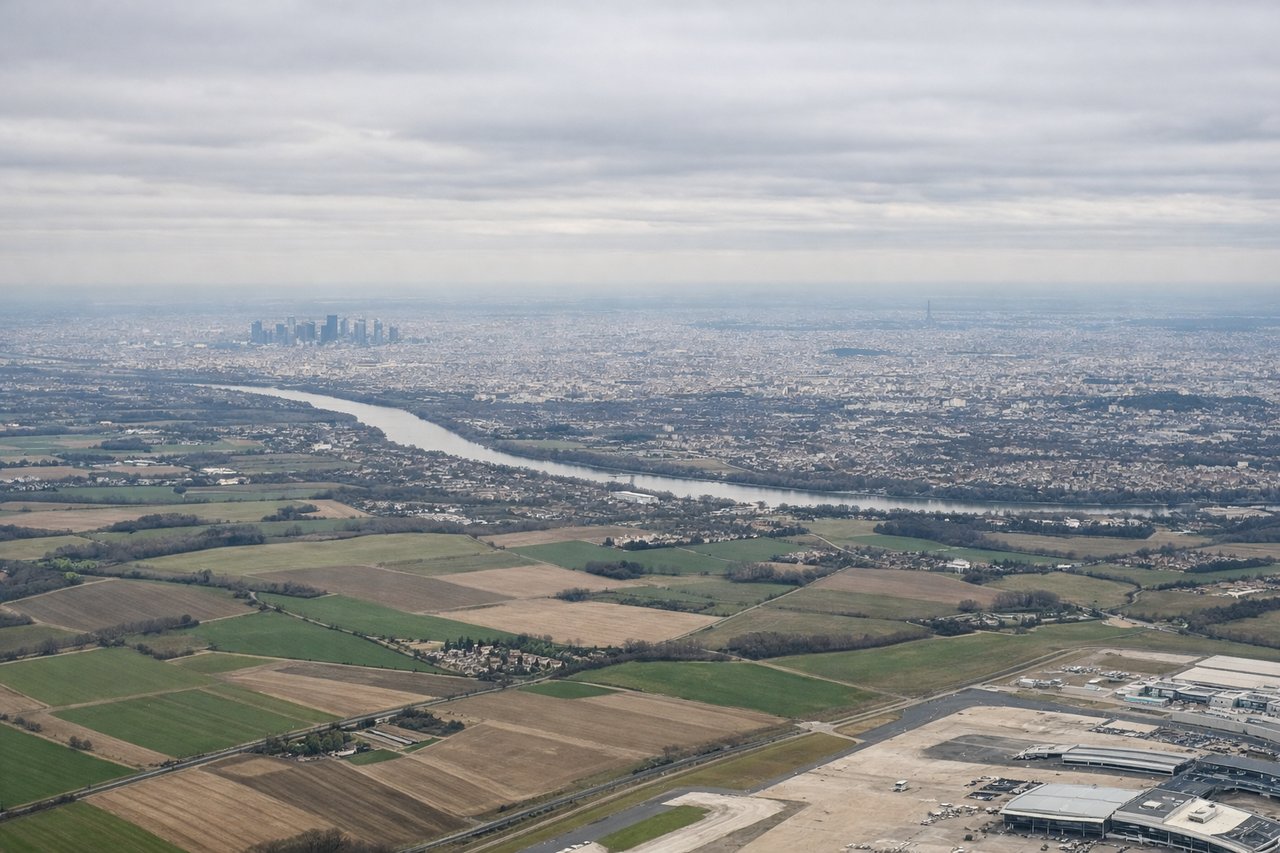
Takeoff from CDG
LEFTCDG typically departs westward on runways 08L/08R or northward on 27L/27R. On a northwest-bound departure toward Belfast, left-side seats get views over central Paris as the aircraft banks north. You can see the Seine river snaking through the city and the dense urban grid of the Île-de-France region spreading out below.
Landing at BFS
RIGHTBelfast Aldergrove typically lands on runway 07 (heading northeast) or runway 25 (heading southwest). On approach from the southeast on runway 07, right-side seats look south over Lough Neagh, the largest freshwater lake in the British Isles, which is unmistakable from altitude. On runway 25 approach from the northeast, right seats face south toward the Antrim Plateau and the lough.
Will your flight be in sunlight?
Pick a date and time in the Sun Map to watch the sun move across your whole flight.
About This Route
Which side of the plane should I sit on flying from Charles De Gaulle (CDG) to Aldergrove (BFS)?
Sit on the Right side of the plane for the best views on flights from Paris to Belfast. Right side wins overall. While left gives the Paris departure view, right side captures the English Channel crossing, the Welsh coastline, the Irish Sea, and the spectacular arrival view over Lough Neagh. The water crossings and the sheer scale of Lough Neagh on approach make the right side the stronger choice for the full journey.
What can I see during takeoff from Charles De Gaulle in Paris?
During takeoff from Charles De Gaulle (CDG), sit on the Left side for the best views. CDG typically departs westward on runways 08L/08R or northward on 27L/27R. On a northwest-bound departure toward Belfast, left-side seats get views over central Paris as the aircraft banks north. You can see the Seine river snaking through the city and the dense urban grid of the Île-de-France region spreading out below. Notable sights include: Seine river bends through Paris, La Défense business district tower cluster to the west, Cergy-Pontoise urban area, Oise river valley heading northwest.
What can I see when landing at Aldergrove in Belfast?
When landing at Aldergrove (BFS), sit on the Right side for the best views. Belfast Aldergrove typically lands on runway 07 (heading northeast) or runway 25 (heading southwest). On approach from the southeast on runway 07, right-side seats look south over Lough Neagh, the largest freshwater lake in the British Isles, which is unmistakable from altitude. On runway 25 approach from the northeast, right seats face south toward the Antrim Plateau and the lough. Notable sights include: Lough Neagh (largest lake in British Isles), Antrim Hills to the northeast, Belfast Lough inlet to the east, River Bann draining northward from Lough Neagh.
How long is the flight from Paris to Belfast?
The flight from Charles De Gaulle (CDG) to Aldergrove (BFS) takes about 1 hour 55 minutes. The shortest flight path between them is 540 miles (869 km); winds and air traffic control usually add a few percent.
What does the Paris to Belfast flight path pass over?
The flight tracks northwest over the Pas-de-Calais region of northern France, crosses the English Channel near its narrowest point between Calais and Dover (the white chalk cliffs of Dover are visible on clear days), passes over southeast England and the Thames Estuary, crosses central England over the Midlands, then crosses the Irish Sea before descending over County Antrim toward Belfast. The Irish Sea crossing takes roughly 20-25 minutes of the flight.