The left side bookends the short flight with two genuine landmark views — the Paris skyline receding at takeoff and Windsor Castle plus the distant London skyline on arrival — while the right side offers mostly uninterrupted farmland during both departure and arrival phases.
Flight Path
English Channel (Dover Strait) crossing between Calais and Dover, with the chalk White Cliffs visible on both the French and English coastlines during the brief water crossing; Picardy and Kent farmland patchworks flank the crossing on either side.
Great circle distance and headings ›.jpg?width=600)
.jpeg?width=600)
Phase by phase
Takeoff from CDG
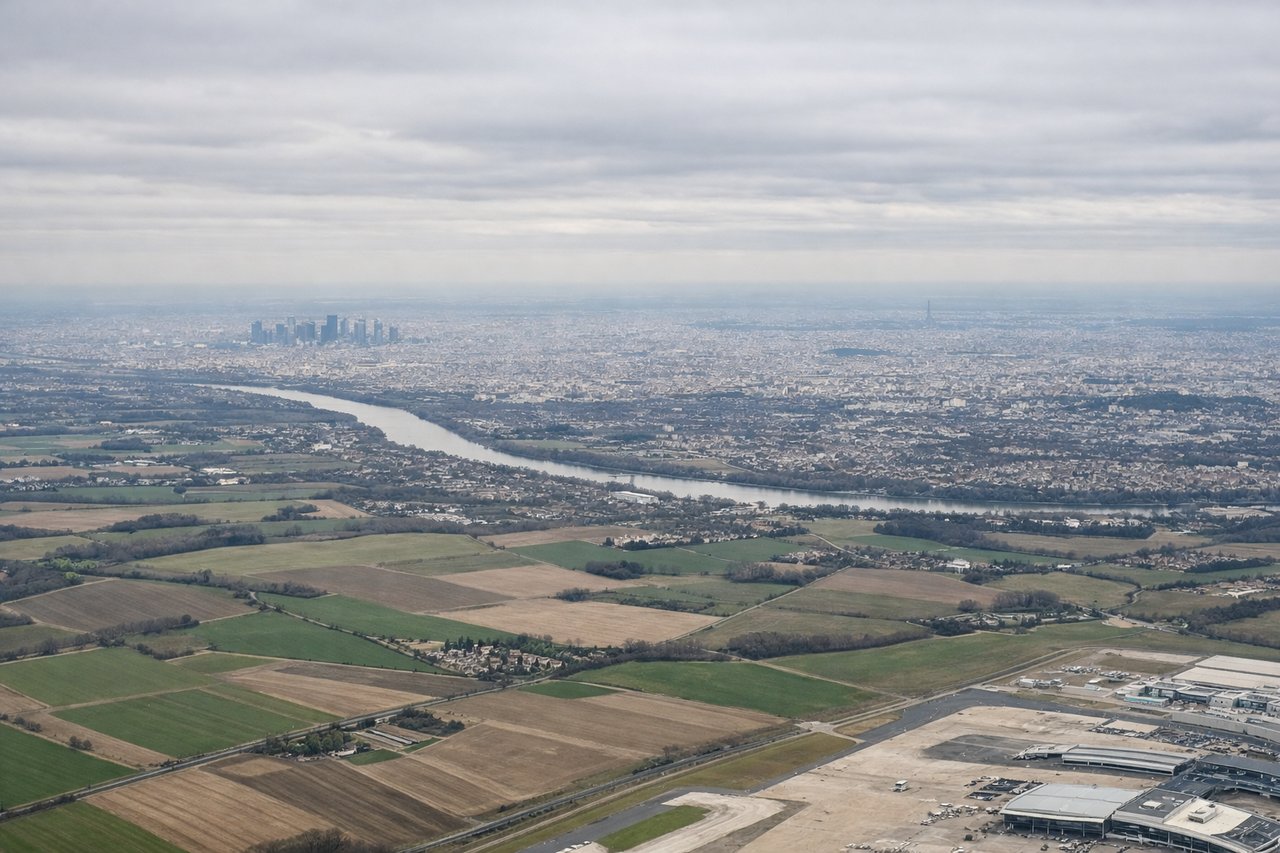
LEFTCDG sits only about 25km northeast of central Paris, and on a clear-day departure toward the north the city skyline falls away to the south — visible on the left side as the aircraft climbs out and turns onto its northbound routing toward the UK. The right side over the northern Paris suburbs and Seine-et-Marne farmland is comparatively featureless.
Landing at LHR
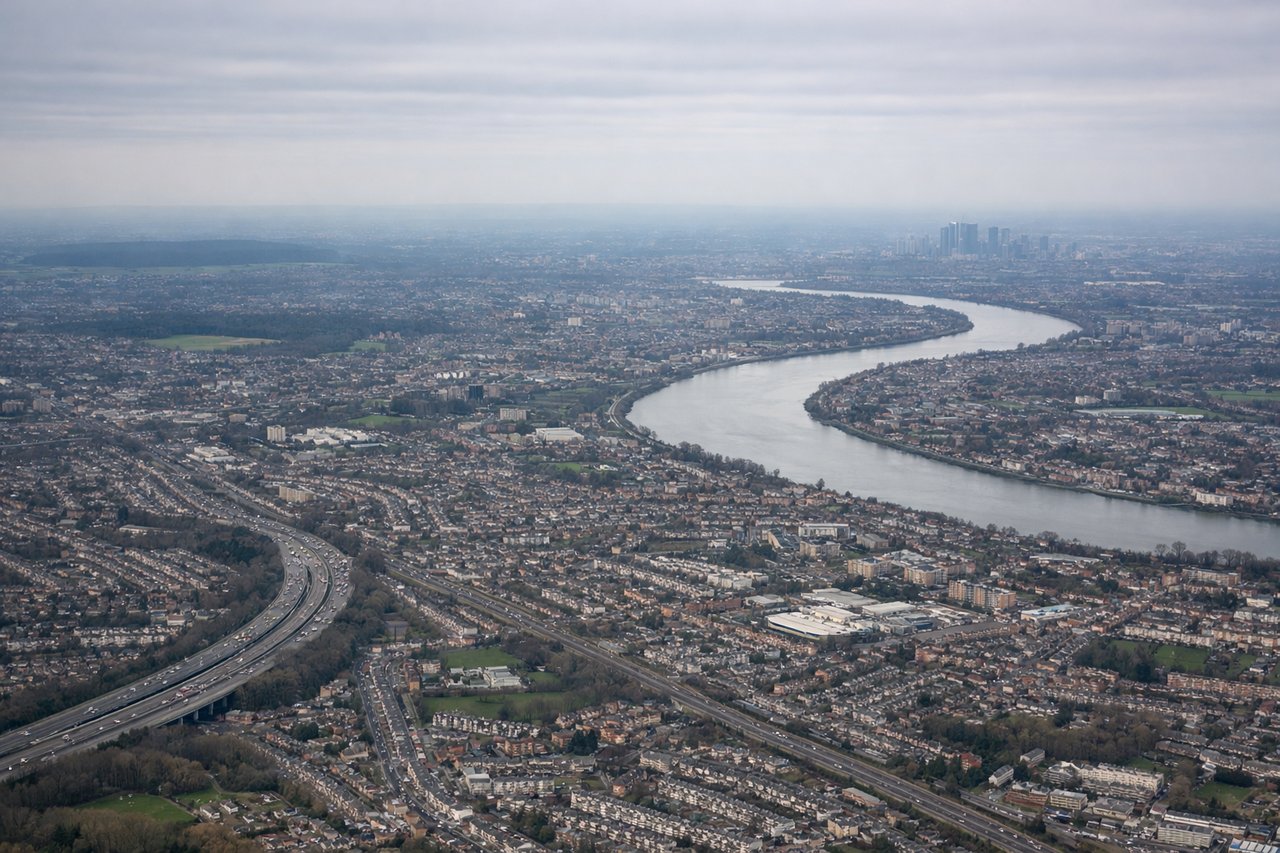
LEFTArriving at LHR from the southeast during westerly operations, the descent path crosses the Thames near Staines and Windsor before final approach, putting Windsor Castle, Windsor Great Park, and glimpses of the wider Thames valley on the left side of the cabin. The right side mostly shows the flat, less distinctive suburban sprawl north of the approach path.
Landmarks on this routeAll landmarks →
Will your flight be in sunlight?
See exactly which side of the plane gets sun and shade at your departure time.
About This Route
Which side of the plane should I sit on flying from Charles De Gaulle (CDG) to Heathrow (LHR)?
Sit on the Left side of the plane for the best views on flights from Paris to London. The left side bookends the short flight with two genuine landmark views — the Paris skyline receding at takeoff and Windsor Castle plus the distant London skyline on arrival — while the right side offers mostly uninterrupted farmland during both departure and arrival phases.
What can I see during takeoff from Charles De Gaulle in Paris?
During takeoff from Charles De Gaulle (CDG), sit on the Left side for the best views. CDG sits only about 25km northeast of central Paris, and on a clear-day departure toward the north the city skyline falls away to the south — visible on the left side as the aircraft climbs out and turns onto its northbound routing toward the UK. The right side over the northern Paris suburbs and Seine-et-Marne farmland is comparatively featureless. Notable sights include: Eiffel Tower, La Défense skyscraper district, Seine River bends, Sacré-Cœur/Montmartre hill.
What can I see when landing at Heathrow in London?
When landing at Heathrow (LHR), sit on the Left side for the best views. Arriving at LHR from the southeast during westerly operations, the descent path crosses the Thames near Staines and Windsor before final approach, putting Windsor Castle, Windsor Great Park, and glimpses of the wider Thames valley on the left side of the cabin. The right side mostly shows the flat, less distinctive suburban sprawl north of the approach path. Notable sights include: Windsor Castle and Great Park, Thames River loops near Staines, distant London skyline (The Shard, Canary Wharf), Surrey/Berkshire farmland mosaic.
How long is the flight from Paris to London?
The flight from Charles De Gaulle (CDG) to Heathrow (LHR) takes 1h 15m.
What does the Paris to London flight path pass over?
English Channel (Dover Strait) crossing between Calais and Dover, with the chalk White Cliffs visible on both the French and English coastlines during the brief water crossing; Picardy and Kent farmland patchworks flank the crossing on either side.