While takeoff briefly favors the left with a view of Paris, the right side offers a stronger sustained payoff: a dramatic bay-and-mountain arrival into Kansai that outweighs the fairly flat, monotonous Siberian and Mongolian steppe seen during the long cruise phase on either side.
Flight Path
Western Russian plains near the Volga, Ural Mountain foothills, Siberian taiga and river systems, Mongolian steppe and the edge of the Gobi Desert, before descending toward the Korean peninsula and the Sea of Japan
Great circle distance and headings ›.jpg?width=600)


Phase by phase
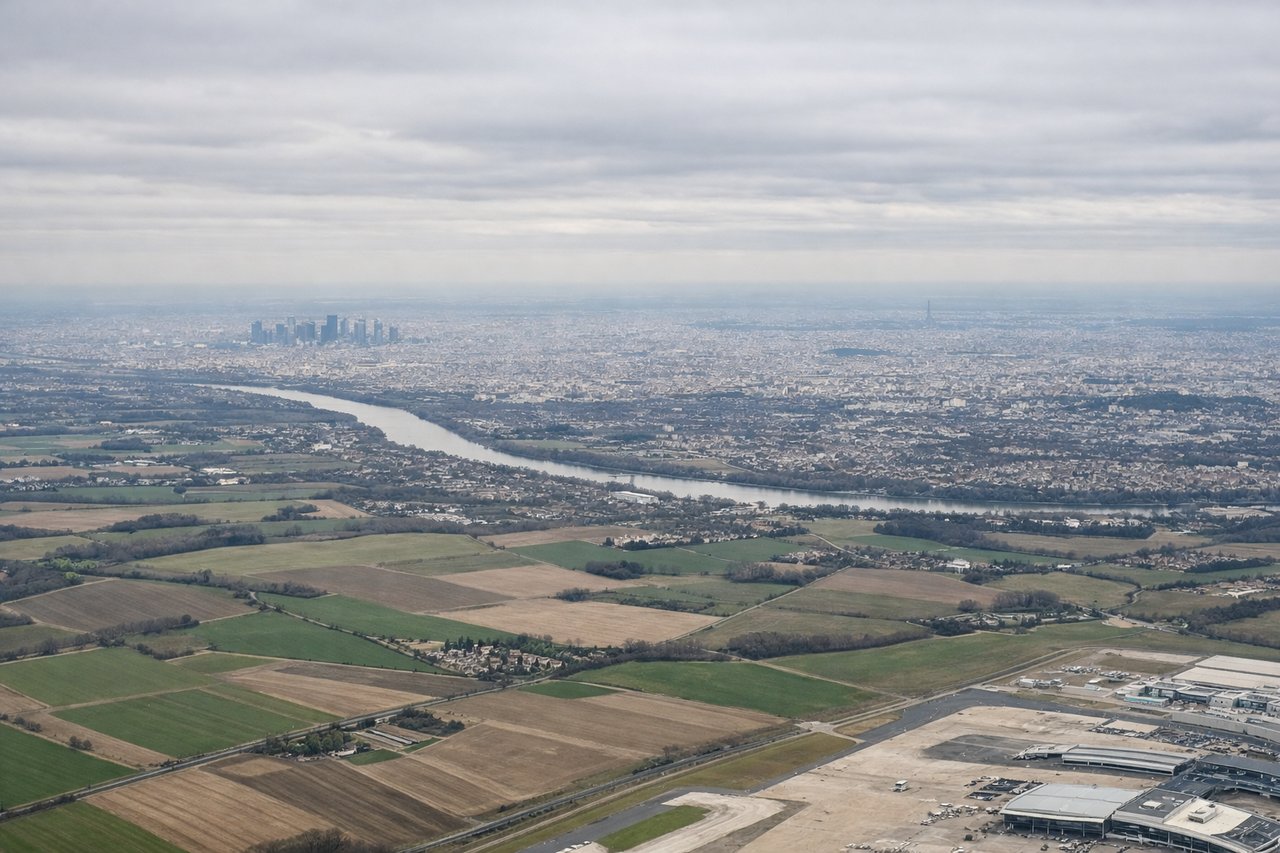
Takeoff from CDG
LEFTDeparting CDG on the eastbound routing typically involves a turn that puts Paris briefly on the southern (left) side of the aircraft, offering a glimpse of the city's rooftops and the Seine before the climb continues northeast over the Île-de-France countryside.
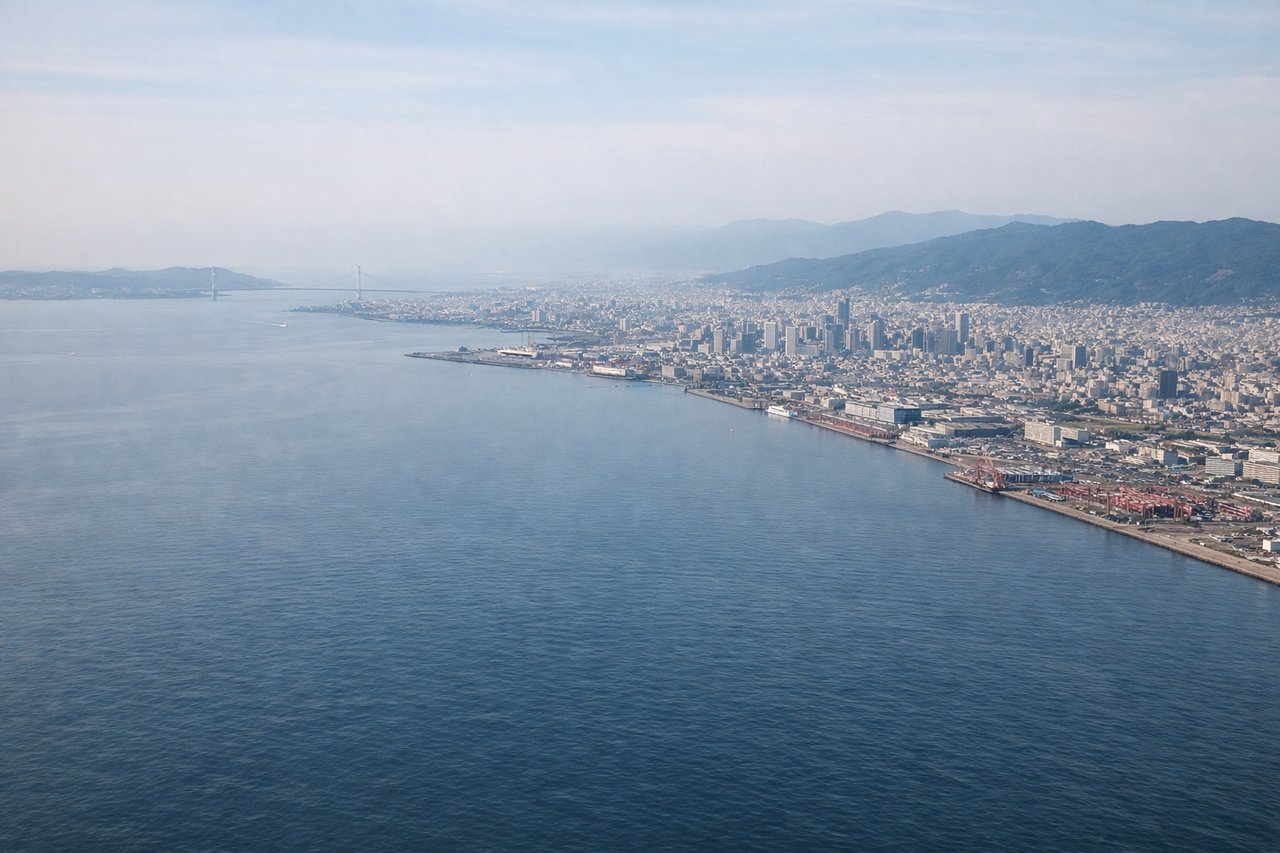
Landing at KIX
RIGHTApproaching KIX on its artificial island typically comes in from the northeast over Osaka Bay, giving right-side passengers a sweeping view of the Osaka-Kobe urban coastline, the mountains behind Kobe, and Awaji Island across the bay just before touchdown.
Landmarks on this routeAll landmarks →
Will your flight be in sunlight?
See exactly which side of the plane gets sun and shade at your departure time.
About This Route
Which side of the plane should I sit on flying from Charles De Gaulle (CDG) to Kansai International (KIX)?
Sit on the Right side of the plane for the best views on flights from Paris to Osaka. While takeoff briefly favors the left with a view of Paris, the right side offers a stronger sustained payoff: a dramatic bay-and-mountain arrival into Kansai that outweighs the fairly flat, monotonous Siberian and Mongolian steppe seen during the long cruise phase on either side.
What can I see during takeoff from Charles De Gaulle in Paris?
During takeoff from Charles De Gaulle (CDG), sit on the Left side for the best views. Departing CDG on the eastbound routing typically involves a turn that puts Paris briefly on the southern (left) side of the aircraft, offering a glimpse of the city's rooftops and the Seine before the climb continues northeast over the Île-de-France countryside. Notable sights include: Paris skyline silhouette, Seine river bends, Île-de-France farmland patchwork.
What can I see when landing at Kansai International in Osaka?
When landing at Kansai International (KIX), sit on the Right side for the best views. Approaching KIX on its artificial island typically comes in from the northeast over Osaka Bay, giving right-side passengers a sweeping view of the Osaka-Kobe urban coastline, the mountains behind Kobe, and Awaji Island across the bay just before touchdown. Notable sights include: Osaka Bay coastline, Kobe cityscape and Rokko mountains, Awaji Island, Kansai International's man-made island runway complex.
How long is the flight from Paris to Osaka?
The flight from Charles De Gaulle (CDG) to Kansai International (KIX) takes 11h 40m.
What does the Paris to Osaka flight path pass over?
Western Russian plains near the Volga, Ural Mountain foothills, Siberian taiga and river systems, Mongolian steppe and the edge of the Gobi Desert, before descending toward the Korean peninsula and the Sea of Japan