The left side delivers the more dramatic and iconic single moment of the flight — the Paris cityscape on departure is genuinely spectacular and hard to beat. The right side wins at landing but the Orlando approach, while interesting, is less visually distinctive than central Paris from the air.
Flown CDG to MCO? Did we get it right?
Flight Path
Paris to Orlando is 4,498 miles (7,239 km), a flight of about 9 hours 30 minutes.
The flight tracks northwest from Paris over Normandy and the English Channel, then across southern Ireland or the tip of Cornwall before heading out over the North Atlantic. The mid-Atlantic portion is open ocean with no landmarks. Approaching North America, the route typically crosses Newfoundland or Nova Scotia, then follows the US East Coast south past the Carolinas before cutting inland toward Florida. The Gulf Stream is occasionally visible as a color contrast in the ocean surface at lower altitudes near the US coast.
Great circle distance and headings ›

Phase by phase
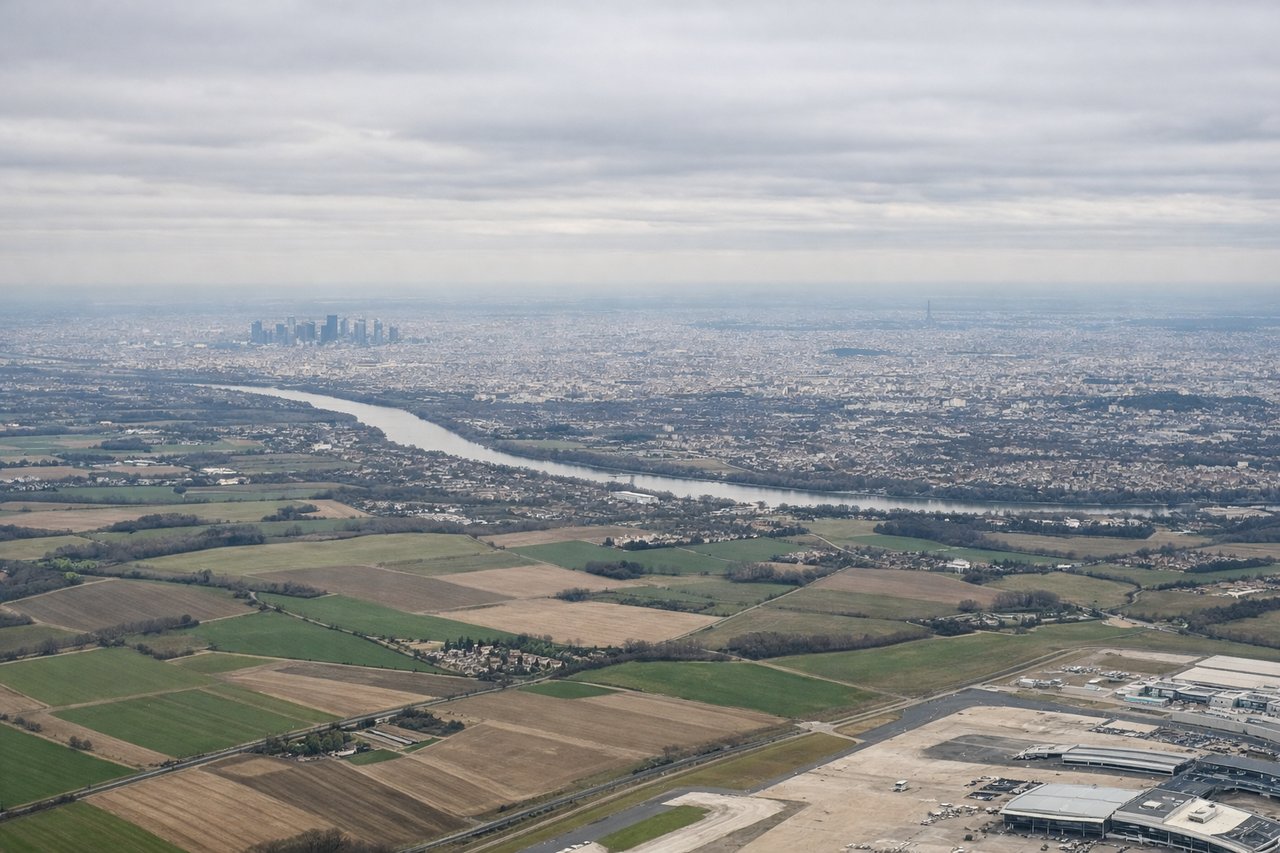
Takeoff from CDG
LEFTCDG typically departs westbound on runways 26L/26R, meaning a left-side seat faces south toward Paris. You get a clear view of the city center including the Seine river bends and the Eiffel Tower district as the aircraft climbs and banks right toward the Atlantic.

Landing at MCO
RIGHTMCO typically lands on runways 18L/18R heading south, placing the right side facing west over the Orlando theme park corridor. You get a clear view of Walt Disney World's distinctive layout and the chain of lakes west of the airport on approach.
Will your flight be in sunlight?
Pick a date and time in the Sun Map to watch the sun move across your whole flight.
About This Route
Which side of the plane should I sit on flying from Charles De Gaulle (CDG) to Orlando International (MCO)?
Sit on the Left side of the plane for the best views on flights from Paris to Orlando. The left side delivers the more dramatic and iconic single moment of the flight — the Paris cityscape on departure is genuinely spectacular and hard to beat. The right side wins at landing but the Orlando approach, while interesting, is less visually distinctive than central Paris from the air.
What can I see during takeoff from Charles De Gaulle in Paris?
During takeoff from Charles De Gaulle (CDG), sit on the Left side for the best views. CDG typically departs westbound on runways 26L/26R, meaning a left-side seat faces south toward Paris. You get a clear view of the city center including the Seine river bends and the Eiffel Tower district as the aircraft climbs and banks right toward the Atlantic. Notable sights include: Seine river meanders through central Paris, Eiffel Tower and Champ de Mars, La Défense business district tower cluster, Bois de Boulogne forest.
What can I see when landing at Orlando International in Orlando?
When landing at Orlando International (MCO), sit on the Right side for the best views. MCO typically lands on runways 18L/18R heading south, placing the right side facing west over the Orlando theme park corridor. You get a clear view of Walt Disney World's distinctive layout and the chain of lakes west of the airport on approach. Notable sights include: Walt Disney World resort complex and its lakes, Lake Tohopekaliga to the south, the chain of lakes along the Kissimmee River corridor, Orlando's downtown skyline to the northwest.
How long is the flight from Paris to Orlando?
The flight from Charles De Gaulle (CDG) to Orlando International (MCO) takes about 9 hours 30 minutes. The shortest flight path between them is 4,498 miles (7,239 km); winds and air traffic control usually add a few percent.
What does the Paris to Orlando flight path pass over?
The flight tracks northwest from Paris over Normandy and the English Channel, then across southern Ireland or the tip of Cornwall before heading out over the North Atlantic. The mid-Atlantic portion is open ocean with no landmarks. Approaching North America, the route typically crosses Newfoundland or Nova Scotia, then follows the US East Coast south past the Carolinas before cutting inland toward Florida. The Gulf Stream is occasionally visible as a color contrast in the ocean surface at lower altitudes near the US coast.