While takeoff favors the right, the landing view from the left is significantly more dramatic and geographically distinctive. The approach into Christchurch offers unobstructed views of the Canterbury Plains and distant Southern Alps, which are far more visually rewarding than the relatively modest Charleston departure.
Flown CHS to CHC? Did we get it right?
Flight Path
Charleston to Christchurch is 8,554 miles (13,766 km), a flight of about 17 hours.
This route crosses the South Pacific. Depending on routing, aircraft may pass near or over Fiji, Samoa, or the Cook Islands. The vast open ocean dominates the midpoint, with occasional cloud formations and rare island atolls visible. The International Date Line is crossed during the flight. No major mountain ranges or distinctive landmarks are visible during the long oceanic cruise phase.
Great circle distance and headings ›


Phase by phase
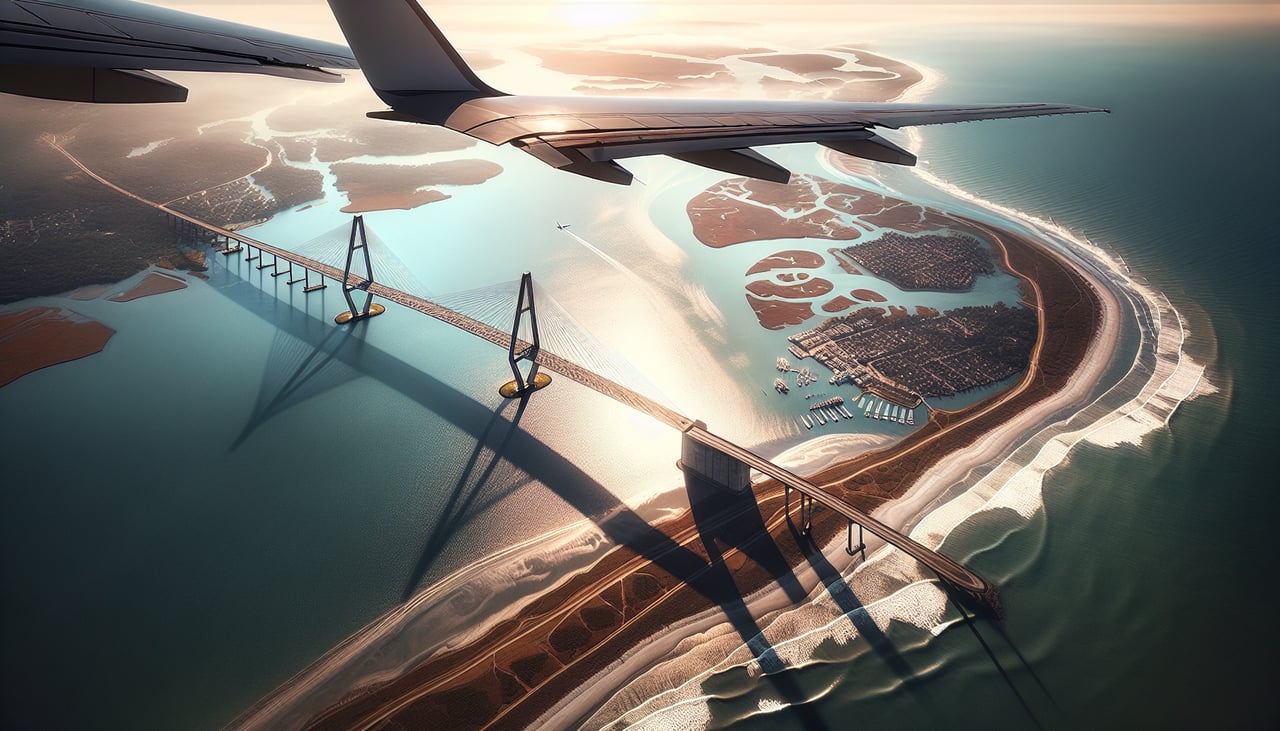
Takeoff from CHS
RIGHTCharleston AFB typically departs runway 15 (southeast) or 33 (northwest). Right-side seats on a southeast departure offer views of Charleston Harbor and the Atlantic coastline as the aircraft climbs. On a northwest departure, right seats still capture the Cooper River and downtown Charleston before turning toward the ocean.

Landing at CHC
LEFTChristchurch International uses runways 02/20. On approach from the north or northeast (typical transpacific routing), left-side seats provide excellent views of the Canterbury Plains, the Southern Alps on the western horizon, and the Avon River valley as the aircraft descends toward the airport.
Will your flight be in sunlight?
Pick a date and time in the Sun Map to watch the sun move across your whole flight.
About This Route
Which side of the plane should I sit on flying from Charleston Afb International (CHS) to Christchurch International (CHC)?
Sit on the Left side of the plane for the best views on flights from Charleston to Christchurch. While takeoff favors the right, the landing view from the left is significantly more dramatic and geographically distinctive. The approach into Christchurch offers unobstructed views of the Canterbury Plains and distant Southern Alps, which are far more visually rewarding than the relatively modest Charleston departure.
What can I see during takeoff from Charleston Afb International in Charleston?
During takeoff from Charleston Afb International (CHS), sit on the Right side for the best views. Charleston AFB typically departs runway 15 (southeast) or 33 (northwest). Right-side seats on a southeast departure offer views of Charleston Harbor and the Atlantic coastline as the aircraft climbs. On a northwest departure, right seats still capture the Cooper River and downtown Charleston before turning toward the ocean. Notable sights include: Charleston Harbor, Cooper River, Atlantic Ocean coastline, downtown Charleston skyline.
What can I see when landing at Christchurch International in Christchurch?
When landing at Christchurch International (CHC), sit on the Left side for the best views. Christchurch International uses runways 02/20. On approach from the north or northeast (typical transpacific routing), left-side seats provide excellent views of the Canterbury Plains, the Southern Alps on the western horizon, and the Avon River valley as the aircraft descends toward the airport. Notable sights include: Canterbury Plains, Southern Alps (distant), Avon River, Banks Peninsula (to the south).
How long is the flight from Charleston to Christchurch?
The flight from Charleston Afb International (CHS) to Christchurch International (CHC) takes about 17 hours. The shortest flight path between them is 8,554 miles (13,766 km); winds and air traffic control usually add a few percent.
What does the Charleston to Christchurch flight path pass over?
This route crosses the South Pacific. Depending on routing, aircraft may pass near or over Fiji, Samoa, or the Cook Islands. The vast open ocean dominates the midpoint, with occasional cloud formations and rare island atolls visible. The International Date Line is crossed during the flight. No major mountain ranges or distinctive landmarks are visible during the long oceanic cruise phase.