Cheju to Tokyo is 804 miles (1,295 km), a flight of about 1 hour 55 minutes.
Left side wins at both ends of the flight. Hallasan on departure and Tokyo Bay plus the potential Fuji sighting on approach make the left side consistently more rewarding. The right side offers open ocean for most of the flight with little to distinguish it.
Flight Path
The flight crosses the Korea Strait and then the East China Sea / Sea of Japan transition zone. At cruising altitude you pass over or near Tsushima Island (a long narrow island clearly visible below on clear days), then the northwestern tip of Kyushu near Fukuoka, before crossing the Genkai Sea and tracking northeast over the Japanese main islands of Honshu across the Chugoku and Kinki regions toward the Kanto Plain.
Great circle distance and headings ›


Phase by phase
Takeoff from CJU
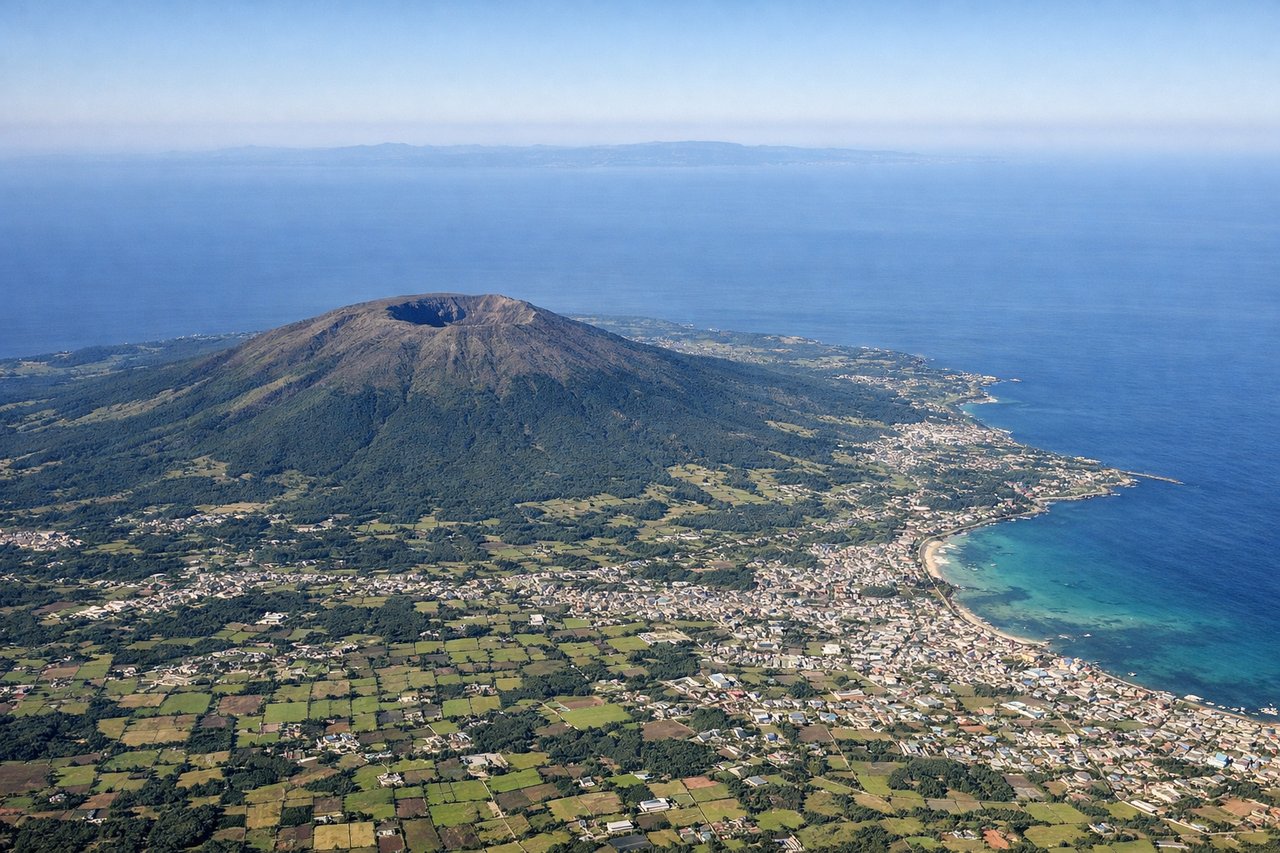
LEFTJeju's runway 07 departure (heading northeast toward Japan) puts the left side facing north, giving a clear view of Hallasan, the 1,950m volcanic peak dominating Jeju's center. As the aircraft climbs out over the northern coast, the left side also captures the broader Jeju coastline and the Korea Strait opening up toward the Korean mainland.
Landing at NRT
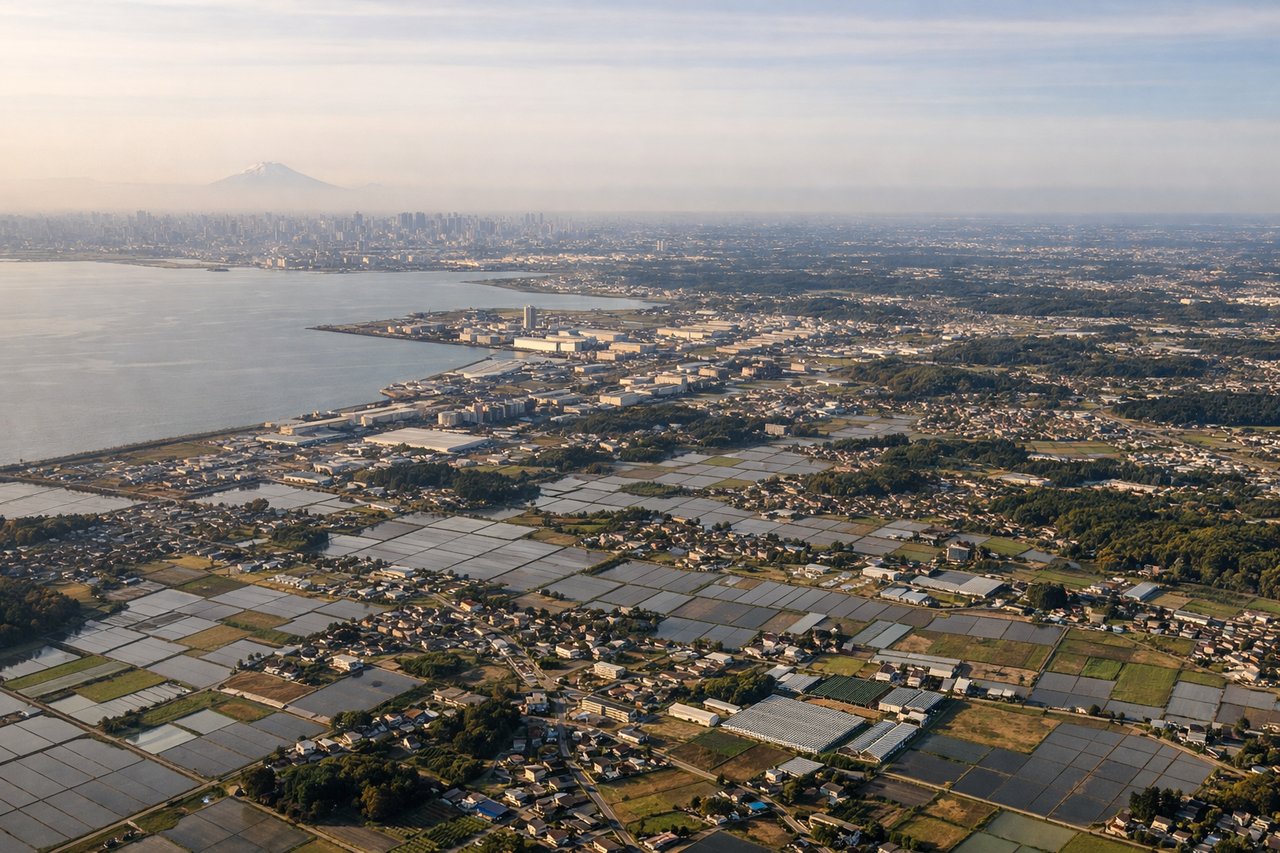
LEFTNRT's runway 34L/34R approach comes from the south, meaning the aircraft tracks northward on final. The left side faces west toward central Tokyo, giving views of Tokyo Bay, the dense urban grid of the Kanto Plain, and on clear days the distinctive silhouette of Mount Fuji on the far western horizon. The right side faces east over the Pacific and Chiba's flat coastal plain, which is far less interesting.
Landmarks on this routeAll landmarks →
Will your flight be in sunlight?
Pick a date and time in the Sun Map to watch the sun move across your whole flight.
About This Route
Which side of the plane should I sit on flying from Jeju International (CJU) to New Tokyo International (NRT)?
Sit on the Left side of the plane for the best views on flights from Cheju to Tokyo. Left side wins at both ends of the flight. Hallasan on departure and Tokyo Bay plus the potential Fuji sighting on approach make the left side consistently more rewarding. The right side offers open ocean for most of the flight with little to distinguish it.
What can I see during takeoff from Jeju International in Cheju?
During takeoff from Jeju International (CJU), sit on the Left side for the best views. Jeju's runway 07 departure (heading northeast toward Japan) puts the left side facing north, giving a clear view of Hallasan, the 1,950m volcanic peak dominating Jeju's center. As the aircraft climbs out over the northern coast, the left side also captures the broader Jeju coastline and the Korea Strait opening up toward the Korean mainland. Notable sights include: Hallasan volcanic summit and crater, Jeju northern coastline, Korea Strait, distant southern tip of Korean peninsula.
What can I see when landing at New Tokyo International in Tokyo?
When landing at New Tokyo International (NRT), sit on the Left side for the best views. NRT's runway 34L/34R approach comes from the south, meaning the aircraft tracks northward on final. The left side faces west toward central Tokyo, giving views of Tokyo Bay, the dense urban grid of the Kanto Plain, and on clear days the distinctive silhouette of Mount Fuji on the far western horizon. The right side faces east over the Pacific and Chiba's flat coastal plain, which is far less interesting. Notable sights include: Tokyo Bay, Kanto Plain urban sprawl, Mount Fuji (distant western horizon on clear days), Chiba coastal lowlands.
How long is the flight from Cheju to Tokyo?
The flight from Jeju International (CJU) to New Tokyo International (NRT) takes about 1 hour 55 minutes. The shortest flight path between them is 804 miles (1,295 km); winds and air traffic control usually add a few percent.
What does the Cheju to Tokyo flight path pass over?
The flight crosses the Korea Strait and then the East China Sea / Sea of Japan transition zone. At cruising altitude you pass over or near Tsushima Island (a long narrow island clearly visible below on clear days), then the northwestern tip of Kyushu near Fukuoka, before crossing the Genkai Sea and tracking northeast over the Japanese main islands of Honshu across the Chugoku and Kinki regions toward the Kanto Plain.