Tokyo to Cheju is 804 miles (1,295 km), a flight of about 1 hour 45 minutes.
While takeoff offers good Tokyo Bay views from the right, the landing approach from the left provides more dramatic and distinctive scenery—Hallasan's volcanic cone and Jeju Island's unique geological character are more visually striking than the urban sprawl of Tokyo.
Flight Path
The flight crosses the Korean Strait, passing over open water for roughly 45 minutes. The Tsushima Strait lies to the west (left) during cruise. On clear days, you may glimpse the southern tip of South Korea's mainland (Jeollanam-do province) on the left side during descent, but the midpoint is primarily open water with no major landmarks visible.
Great circle distance and headings ›


Phase by phase
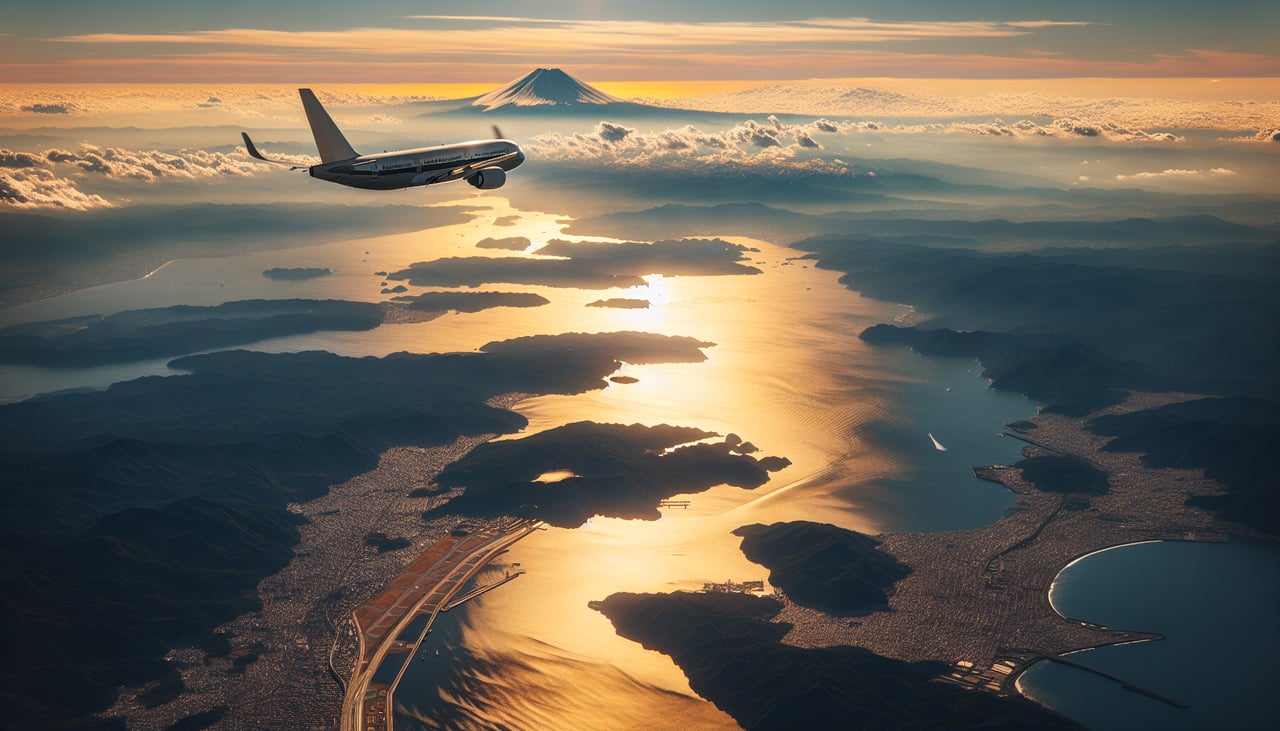
Takeoff from NRT
RIGHTRight-side seats offer views of Tokyo Bay and the Kanto Plain as the aircraft climbs southeastward from NRT. You'll see the sprawl of greater Tokyo, including the distinctive curve of Tokyo Bay and the urban grid extending toward the coast.
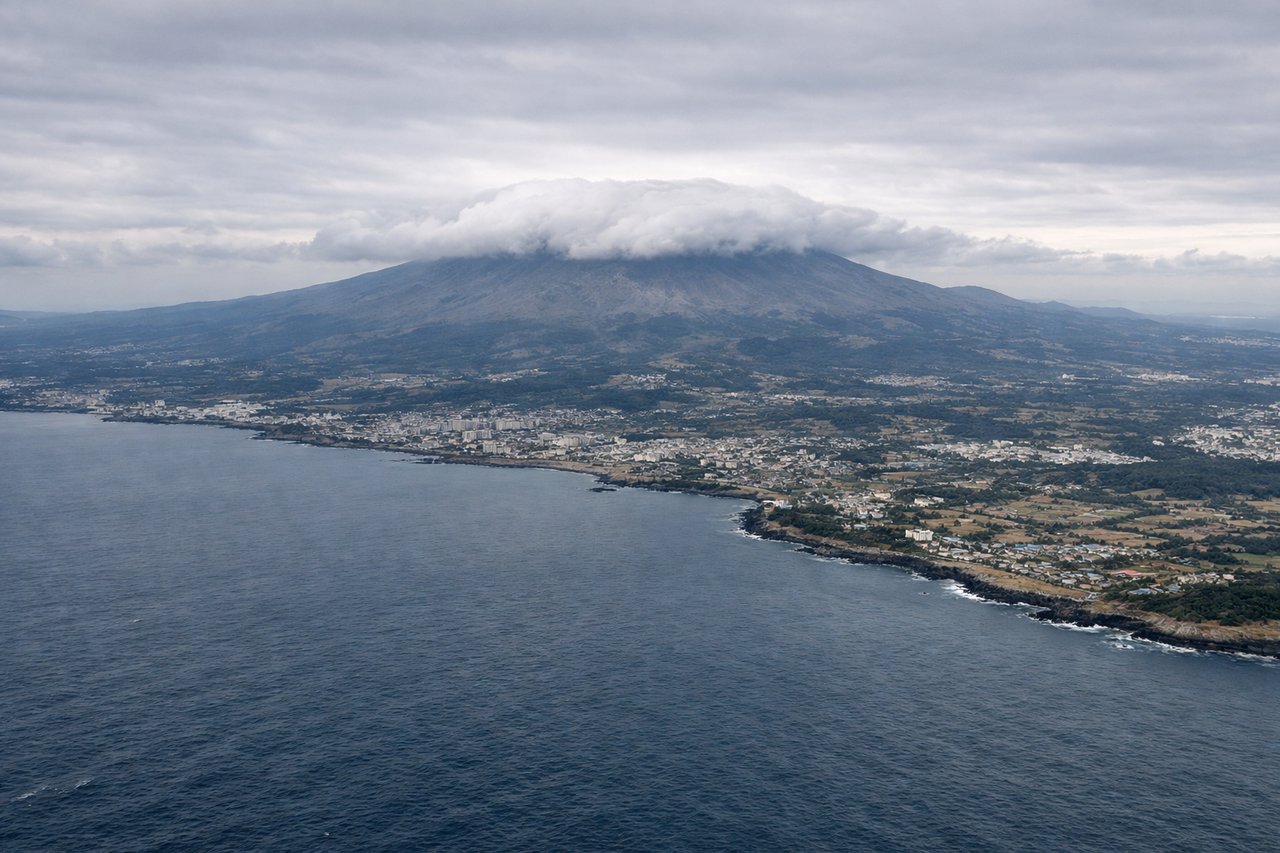
Landing at CJU
LEFTLeft-side seats provide excellent views during descent into Jeju. You'll see Jeju Island's distinctive volcanic landscape, including Hallasan mountain at the island's center and the surrounding coastal features as you approach from the north.
Landmarks on this routeAll landmarks →
Will your flight be in sunlight?
Pick a date and time in the Sun Map to watch the sun move across your whole flight.
About This Route
Which side of the plane should I sit on flying from New Tokyo International (NRT) to Jeju International (CJU)?
Sit on the Left side of the plane for the best views on flights from Tokyo to Cheju. While takeoff offers good Tokyo Bay views from the right, the landing approach from the left provides more dramatic and distinctive scenery—Hallasan's volcanic cone and Jeju Island's unique geological character are more visually striking than the urban sprawl of Tokyo.
What can I see during takeoff from New Tokyo International in Tokyo?
During takeoff from New Tokyo International (NRT), sit on the Right side for the best views. Right-side seats offer views of Tokyo Bay and the Kanto Plain as the aircraft climbs southeastward from NRT. You'll see the sprawl of greater Tokyo, including the distinctive curve of Tokyo Bay and the urban grid extending toward the coast. Notable sights include: Tokyo Bay, Kanto Plain urban sprawl, Mount Fuji (visible on clear days to the southwest, appearing as a distant peak), Chiba Prefecture coastline.
What can I see when landing at Jeju International in Cheju?
When landing at Jeju International (CJU), sit on the Left side for the best views. Left-side seats provide excellent views during descent into Jeju. You'll see Jeju Island's distinctive volcanic landscape, including Hallasan mountain at the island's center and the surrounding coastal features as you approach from the north. Notable sights include: Hallasan (central volcanic peak), Jeju Island's northern coastline, Korean Strait, Seogwipo city area.
How long is the flight from Tokyo to Cheju?
The flight from New Tokyo International (NRT) to Jeju International (CJU) takes about 1 hour 45 minutes. The shortest flight path between them is 804 miles (1,295 km); winds and air traffic control usually add a few percent.
What does the Tokyo to Cheju flight path pass over?
The flight crosses the Korean Strait, passing over open water for roughly 45 minutes. The Tsushima Strait lies to the west (left) during cruise. On clear days, you may glimpse the southern tip of South Korea's mainland (Jeollanam-do province) on the left side during descent, but the midpoint is primarily open water with no major landmarks visible.