The left side wins on both ends: a chance at Mount Fuji and Tokyo Bay during departure, plus the Los Angeles skyline and Pacific coastline during arrival, while the right side spends most of takeoff and landing over less distinctive suburban terrain or open ocean.
Flight Path
The route crosses the vast North Pacific Ocean, passing north of the Hawaiian Islands and often near the Aleutian region or Gulf of Alaska on a great-circle path, with no land visible for most of the crossing.
Great circle distance and headings ›Phase by phase
Takeoff from NRT
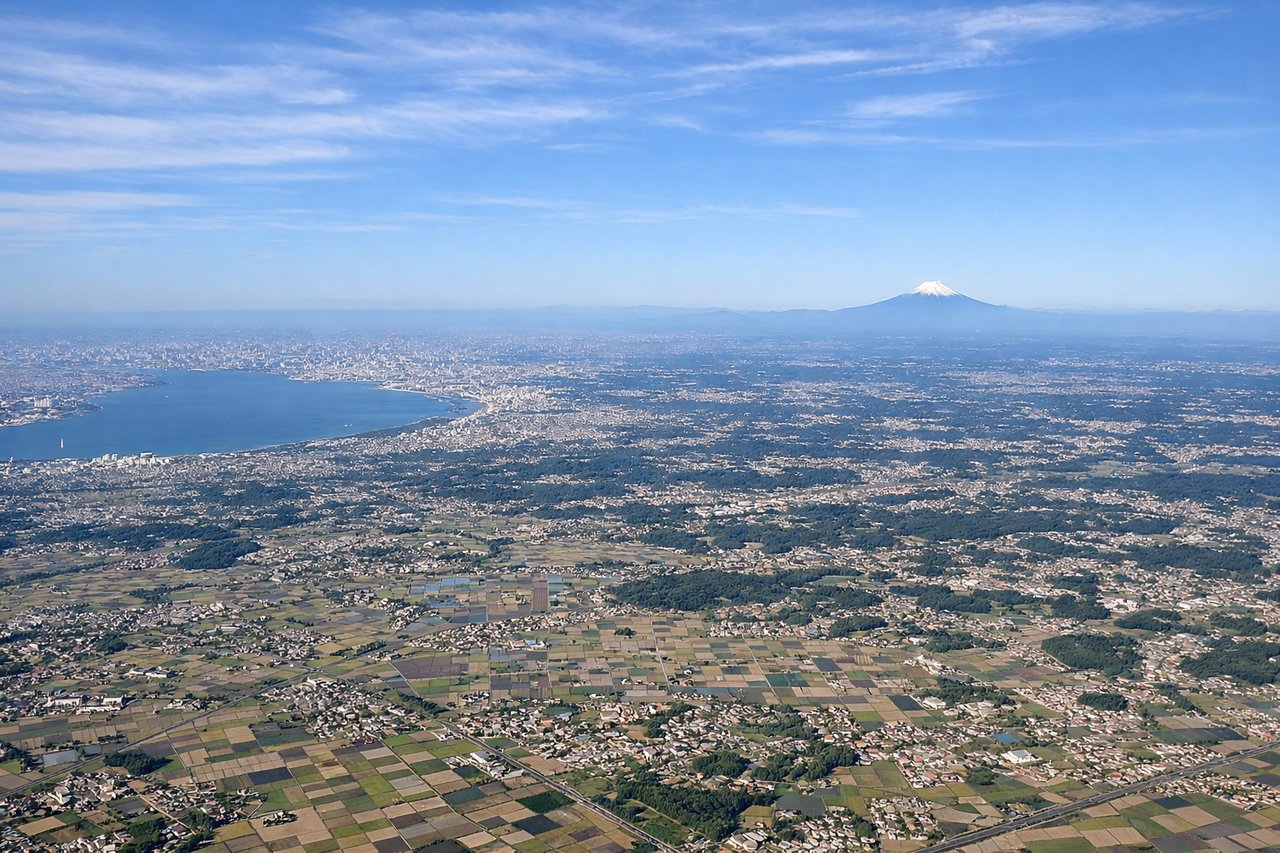
LEFTDeparting NRT, flights typically climb out and turn east/northeast over Chiba before heading out to sea, giving left-side passengers views of Tokyo Bay and the sprawling urban expanse of greater Tokyo. On clear days, Mount Fuji can appear in the distance to the southwest, visible from the left side as the aircraft gains altitude.
Landing at LAX
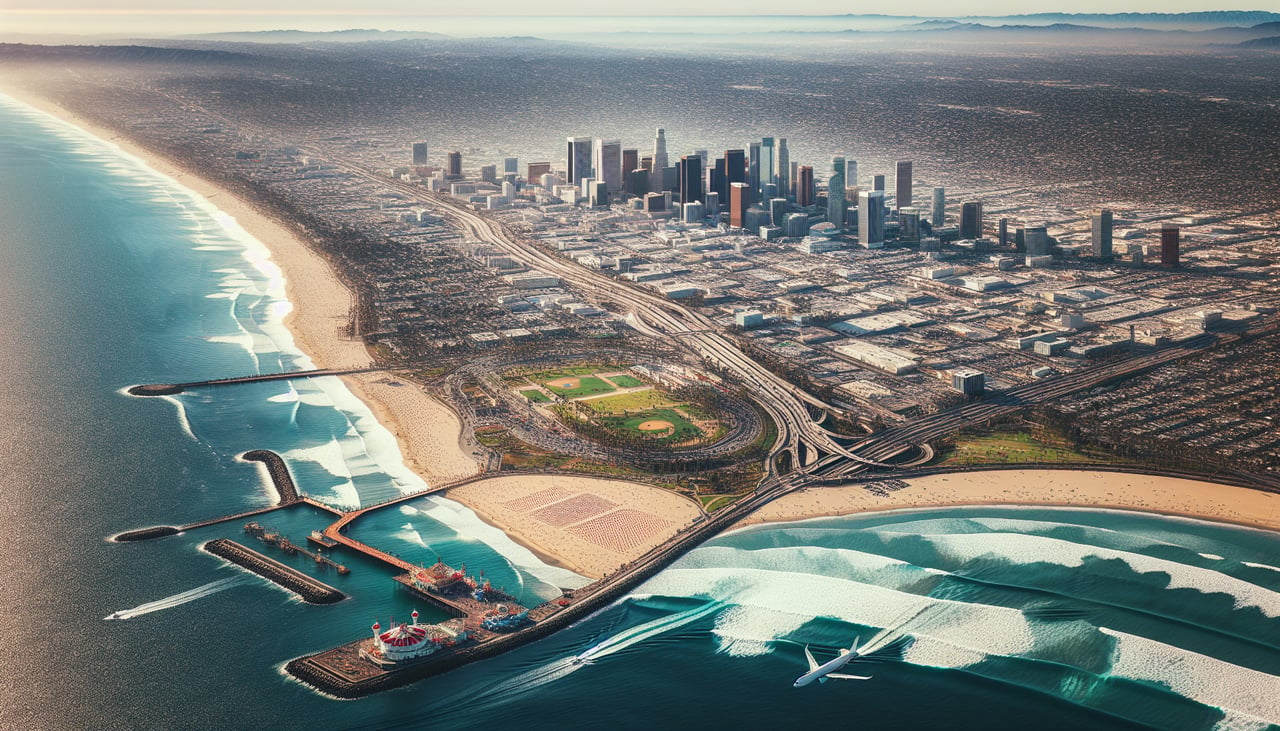
LEFTArriving into LAX from the east or northeast, the approach path often crosses the San Gabriel Mountains before descending over the Los Angeles basin, giving left-side passengers views of downtown LA's skyline and the coastline near the airport. The final approach also offers a good look at the Pacific coastline and Santa Monica Bay just before touchdown.
Landmarks on this routeAll landmarks →
Will your flight be in sunlight?
See exactly which side of the plane gets sun and shade at your departure time.
About This Route
Which side of the plane should I sit on flying from New Tokyo International (NRT) to Los Angeles International (LAX)?
Sit on the Left side of the plane for the best views on flights from Tokyo to Los Angeles. The left side wins on both ends: a chance at Mount Fuji and Tokyo Bay during departure, plus the Los Angeles skyline and Pacific coastline during arrival, while the right side spends most of takeoff and landing over less distinctive suburban terrain or open ocean.
What can I see during takeoff from New Tokyo International in Tokyo?
During takeoff from New Tokyo International (NRT), sit on the Left side for the best views. Departing NRT, flights typically climb out and turn east/northeast over Chiba before heading out to sea, giving left-side passengers views of Tokyo Bay and the sprawling urban expanse of greater Tokyo. On clear days, Mount Fuji can appear in the distance to the southwest, visible from the left side as the aircraft gains altitude. Notable sights include: Tokyo Bay, Chiba coastline, Mount Fuji (distant, weather-permitting), Boso Peninsula.
What can I see when landing at Los Angeles International in Los Angeles?
When landing at Los Angeles International (LAX), sit on the Left side for the best views. Arriving into LAX from the east or northeast, the approach path often crosses the San Gabriel Mountains before descending over the Los Angeles basin, giving left-side passengers views of downtown LA's skyline and the coastline near the airport. The final approach also offers a good look at the Pacific coastline and Santa Monica Bay just before touchdown. Notable sights include: San Gabriel Mountains, Downtown Los Angeles skyline, Santa Monica Bay, Pacific coastline near El Segundo.
How long is the flight from Tokyo to Los Angeles?
The flight from New Tokyo International (NRT) to Los Angeles International (LAX) takes 10h 35m.
What does the Tokyo to Los Angeles flight path pass over?
The route crosses the vast North Pacific Ocean, passing north of the Hawaiian Islands and often near the Aleutian region or Gulf of Alaska on a great-circle path, with no land visible for most of the crossing.