The left side wins at both ends of this transpacific route. Over Tokyo Bay on departure and over Jamaica Bay and the Manhattan skyline on approach, the left seat delivers the most geographically interesting views. The mid-Pacific cruise portion offers little to distinguish sides.
Flight Path
The great circle route from NRT to JFK tracks northeast over the North Pacific, passing south of the Aleutian Islands chain, then across the Gulf of Alaska, over the Canadian Rockies in British Columbia and Alberta, across the Great Lakes region, and down through New England before descending into New York. The Canadian Rockies are the most visually dramatic mid-flight feature, visible as a corrugated white and gray mountain spine below, typically around the 9 to 10 hour mark. The Aleutian Islands may be visible as dark volcanic forms in a gray sea during the first few hours if flying at lower latitudes of the arc.
Great circle distance and headings ›

.jpeg?width=600)
.jpg?width=600)
Phase by phase
Takeoff from NRT
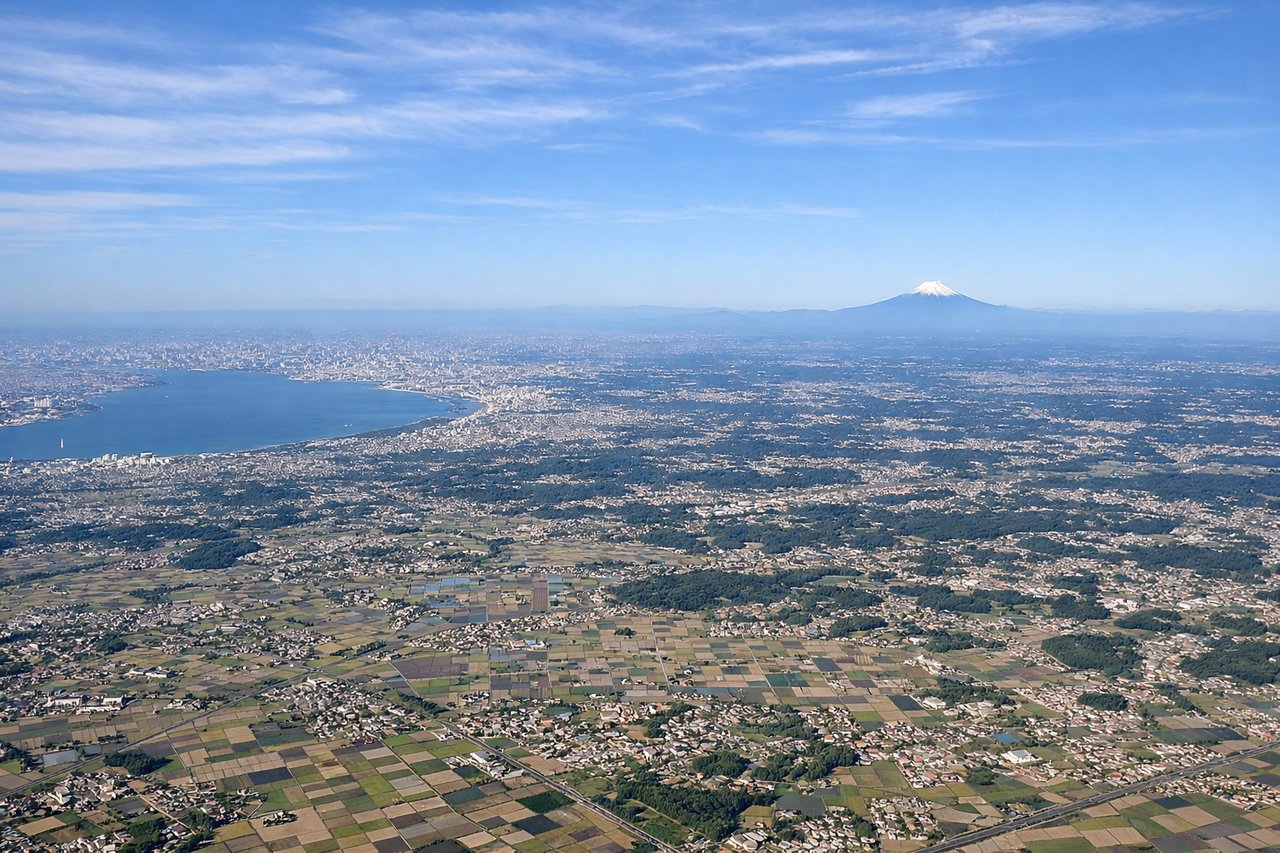
LEFTNRT typically departs on runway 16R/34L or 16L/34R. Northbound departures heading toward the Pacific route give the left side a clear view over the Kanto Plain toward Tokyo's urban sprawl and Tokyo Bay. The right side faces inland toward less distinctive terrain.
Landing at JFK
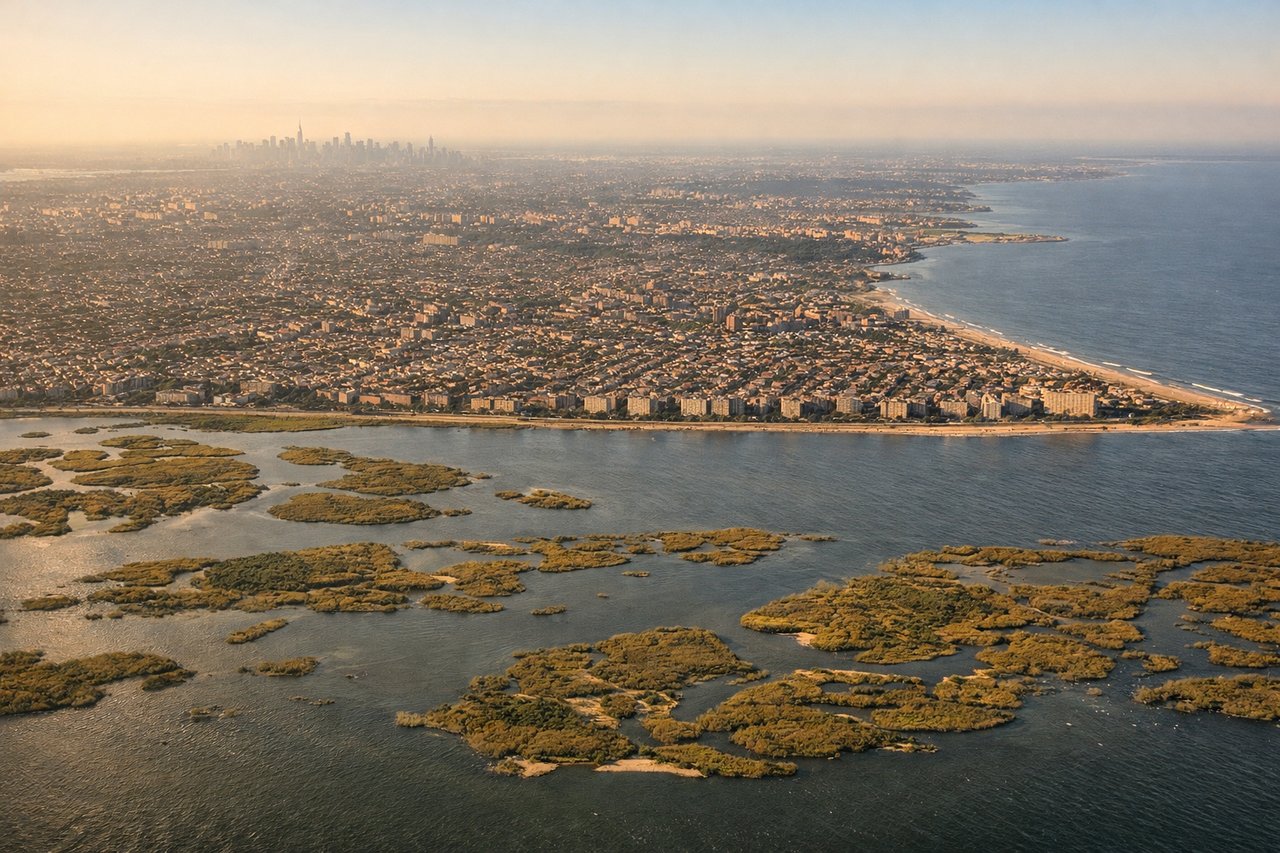
LEFTJFK typically lands on runway 31L/31R from the southeast, or runway 22L/22R. On the common 31L approach over Jamaica Bay, the left side gets a direct view of Jamaica Bay, the Manhattan skyline on the horizon, and the Brooklyn waterfront. The right side faces south toward the open Atlantic.
Landmarks on this routeAll landmarks →
Will your flight be in sunlight?
See exactly which side of the plane gets sun and shade at your departure time.
About This Route
Which side of the plane should I sit on flying from New Tokyo International (NRT) to John F Kennedy International (JFK)?
Sit on the Left side of the plane for the best views on flights from Tokyo to New York. The left side wins at both ends of this transpacific route. Over Tokyo Bay on departure and over Jamaica Bay and the Manhattan skyline on approach, the left seat delivers the most geographically interesting views. The mid-Pacific cruise portion offers little to distinguish sides.
What can I see during takeoff from New Tokyo International in Tokyo?
During takeoff from New Tokyo International (NRT), sit on the Left side for the best views. NRT typically departs on runway 16R/34L or 16L/34R. Northbound departures heading toward the Pacific route give the left side a clear view over the Kanto Plain toward Tokyo's urban sprawl and Tokyo Bay. The right side faces inland toward less distinctive terrain. Notable sights include: Tokyo Bay, the Kanto Plain urban grid, Mount Tsukuba to the north, and the distant shimmer of the Pacific coastline.
What can I see when landing at John F Kennedy International in New York?
When landing at John F Kennedy International (JFK), sit on the Left side for the best views. JFK typically lands on runway 31L/31R from the southeast, or runway 22L/22R. On the common 31L approach over Jamaica Bay, the left side gets a direct view of Jamaica Bay, the Manhattan skyline on the horizon, and the Brooklyn waterfront. The right side faces south toward the open Atlantic. Notable sights include: Jamaica Bay, the Manhattan skyline on the horizon, Brooklyn and Queens urban grid, the Verrazano-Narrows Bridge.
How long is the flight from Tokyo to New York?
The flight from New Tokyo International (NRT) to John F Kennedy International (JFK) takes Approximately 13 to 14 hours eastbound.
What does the Tokyo to New York flight path pass over?
The great circle route from NRT to JFK tracks northeast over the North Pacific, passing south of the Aleutian Islands chain, then across the Gulf of Alaska, over the Canadian Rockies in British Columbia and Alberta, across the Great Lakes region, and down through New England before descending into New York. The Canadian Rockies are the most visually dramatic mid-flight feature, visible as a corrugated white and gray mountain spine below, typically around the 9 to 10 hour mark. The Aleutian Islands may be visible as dark volcanic forms in a gray sea during the first few hours if flying at lower latitudes of the arc.