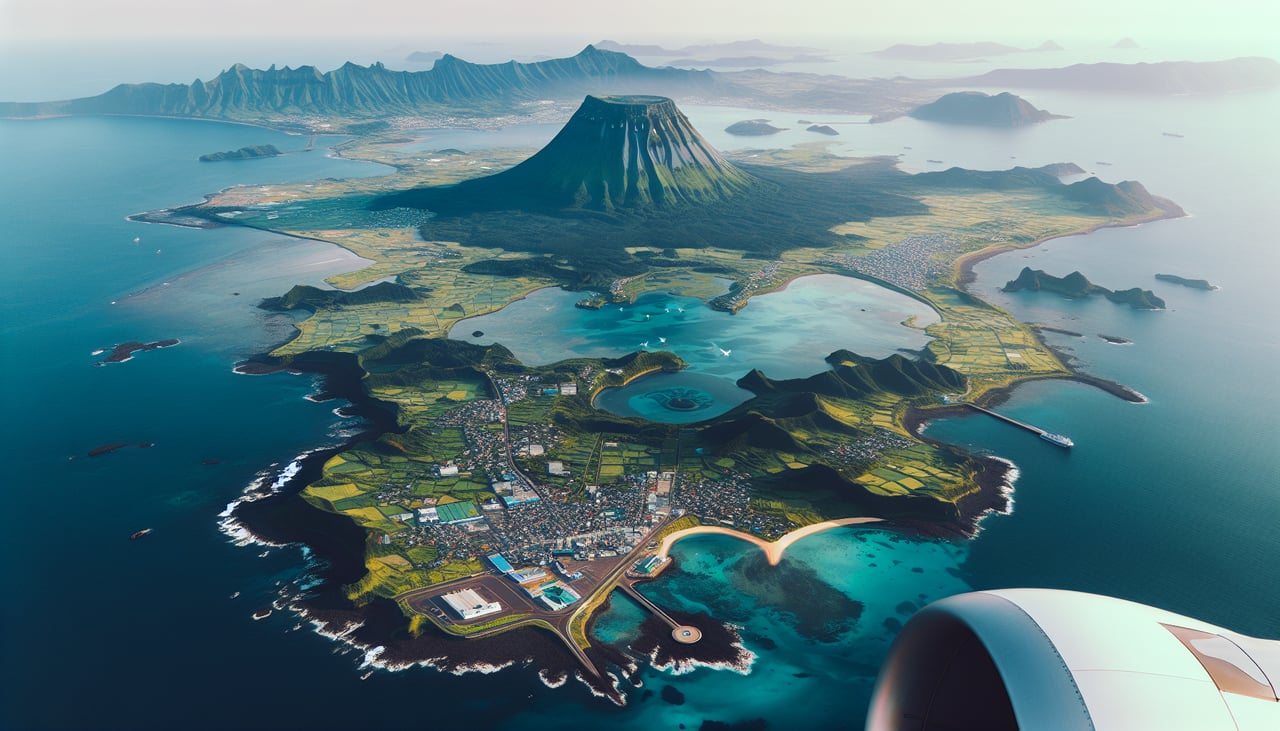
Hallasan, Jeju City's coastal sprawl, the rolling volcanic countryside of central Jeju
🛬 Landing at Cheju (CJU)
 Left Side
 Right Side
CJU is one of the busiest airports in the world by passenger volume, driven largely by the high-frequency Seoul-Jeju domestic route, one of the world's busiest air corridors. It has a single passenger terminal and two runways, with the longer 07/25 handling the bulk of traffic.
Landmarks on routes to ChejuAll landmarks →
Connecting at CJU?
Find out if your layover is long enough at Jeju International.
Check layover times →Popular Routes to Jeju International (CJU)
About This Airport
Which side of the plane has the best views landing at Jeju International (CJU)?
When landing at Jeju International (CJU), sit on the Left side for the best views. On the typical runway 25 approach, aircraft come in from the northeast over the Jeju Strait and fly a southwest track toward the coast. That puts the island's interior — including Hallasan, the dormant volcano that dominates Jeju's skyline — off the left side, while the right side mostly shows open sea. Notable sights include: Hallasan (South Korea's highest peak), Jeju City's coastal sprawl, the rolling volcanic countryside of central Jeju, occasional glimpses of smaller coastal islets to the southwest.
What can I see when arriving at Cheju?
Arriving at Jeju International in Cheju, passengers on the Left side enjoy views of Hallasan (South Korea's highest peak), Jeju City's coastal sprawl, the rolling volcanic countryside of central Jeju, occasional glimpses of smaller coastal islets to the southwest. On the typical runway 25 approach, aircraft come in from the northeast over the Jeju Strait and fly a southwest track toward the coast. That puts the island's interior — including Hallasan, the dormant volcano that dominates Jeju's skyline — off the left side, while the right side mostly shows open sea.
What factors affect the best window seat landing at Jeju International?
The best window seat landing at Jeju International (CJU) depends on several factors: the approach path and runway in use, geographic features around Cheju (mountains, coastlines, city skylines), weather conditions, and time of day. Morning and evening arrivals often offer the best lighting.