Seoul to Cheju is 280 miles (451 km), a flight of about 1 hour 5 minutes.
The right (west-facing) side offers the more consistent scenic package: Seoul's river delta and Incheon's coastline at takeoff, Yellow Sea islands during cruise, and a dramatic view of Hallasan volcano and Jeju's black-rock coast on landing. The left side is dominated by flatter inland terrain and open water with fewer identifiable features.
Flight Path
The route crosses the Yellow Sea's southern reaches, passing near scattered islands off Jeollanam-do such as Wando and the Chuja Islands before making landfall on Jeju Island.
Great circle distance and headings ›Phase by phase
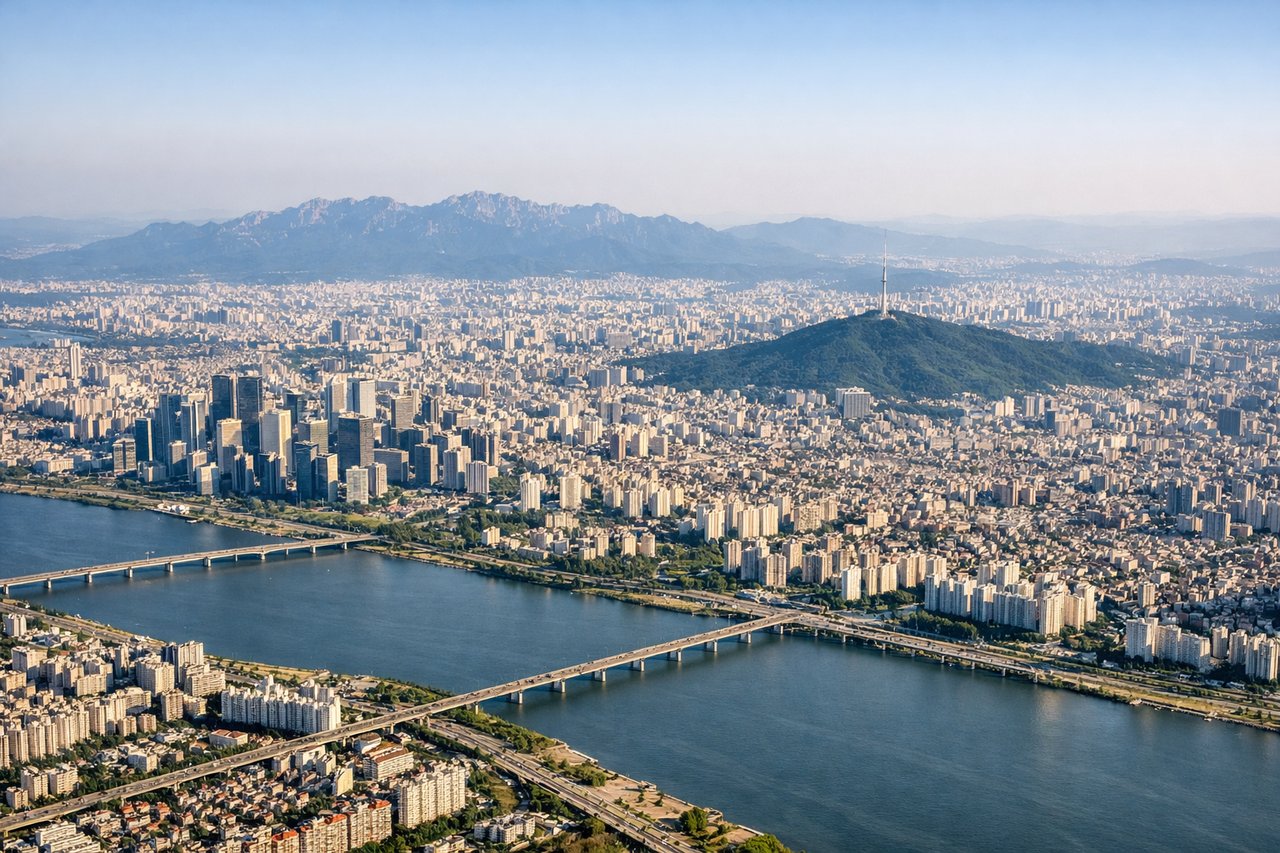
Takeoff from GMP
RIGHTAs the aircraft climbs out of Gimpo and turns south, the right side faces west toward the Han River's mouth, Incheon's harbor and the Yellow Sea coastline dotted with tidal-flat islands like Ganghwa-do. The left side mostly shows the flatter inland suburbs and hazy hills of Gyeonggi-do, which are far less distinctive.
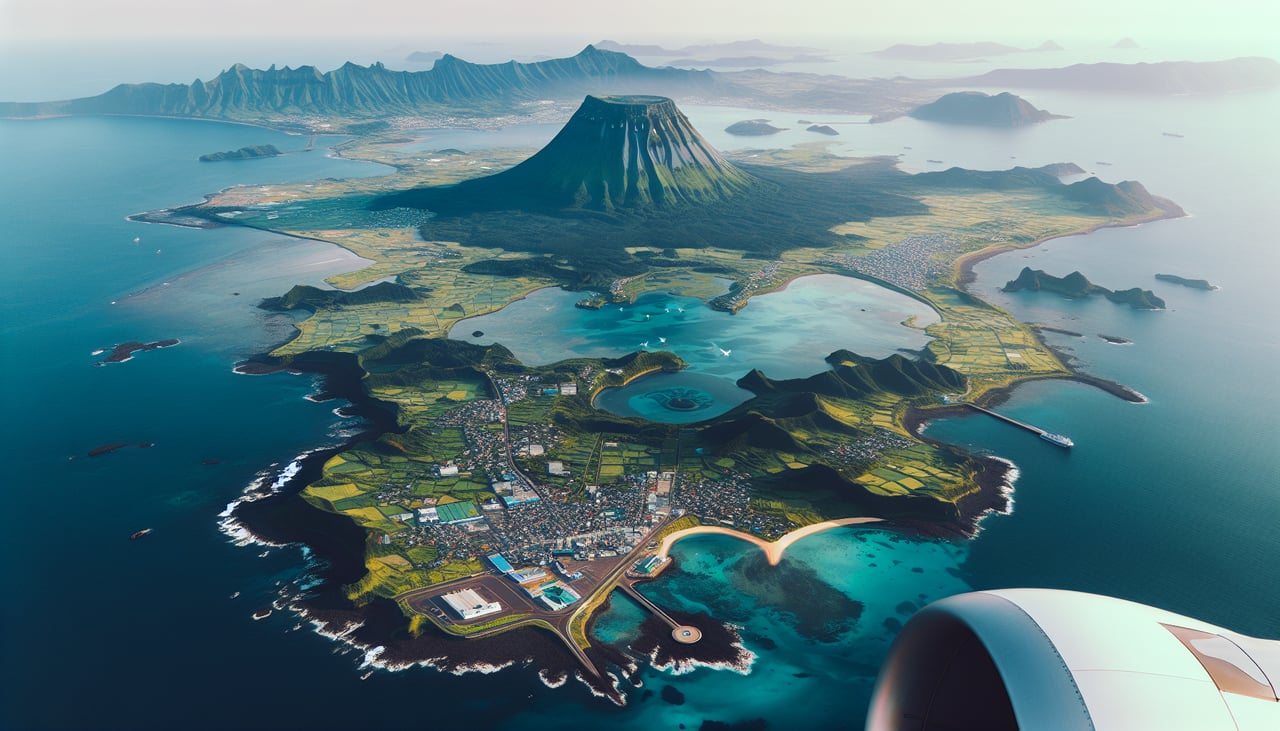
Landing at CJU
RIGHTOn approach into Jeju, the aircraft typically crosses the sea from the north, and the right side gives a clear view of Hallasan's volcanic cone rising over the island's interior alongside the black-rock coastline and Jeju City's harbor. The left side mainly shows open ocean until touchdown.
Landmarks on this routeAll landmarks →
Will your flight be in sunlight?
Pick a date and time in the Sun Map to watch the sun move across your whole flight.
About This Route
Which side of the plane should I sit on flying from Gimpo (GMP) to Jeju International (CJU)?
Sit on the Right side of the plane for the best views on flights from Seoul to Cheju. The right (west-facing) side offers the more consistent scenic package: Seoul's river delta and Incheon's coastline at takeoff, Yellow Sea islands during cruise, and a dramatic view of Hallasan volcano and Jeju's black-rock coast on landing. The left side is dominated by flatter inland terrain and open water with fewer identifiable features.
What can I see during takeoff from Gimpo in Seoul?
During takeoff from Gimpo (GMP), sit on the Right side for the best views. As the aircraft climbs out of Gimpo and turns south, the right side faces west toward the Han River's mouth, Incheon's harbor and the Yellow Sea coastline dotted with tidal-flat islands like Ganghwa-do. The left side mostly shows the flatter inland suburbs and hazy hills of Gyeonggi-do, which are far less distinctive. Notable sights include: Han River estuary, Incheon harbor and skyline, Ganghwa-do island, Yellow Sea tidal flats.
What can I see when landing at Jeju International in Cheju?
When landing at Jeju International (CJU), sit on the Right side for the best views. On approach into Jeju, the aircraft typically crosses the sea from the north, and the right side gives a clear view of Hallasan's volcanic cone rising over the island's interior alongside the black-rock coastline and Jeju City's harbor. The left side mainly shows open ocean until touchdown. Notable sights include: Hallasan volcano, Jeju City coastline and harbor, Biyang-do island, dark volcanic shoreline.
How long is the flight from Seoul to Cheju?
The flight from Gimpo (GMP) to Jeju International (CJU) takes about 1 hour 5 minutes. The shortest flight path between them is 280 miles (451 km); winds and air traffic control usually add a few percent.
What does the Seoul to Cheju flight path pass over?
The route crosses the Yellow Sea's southern reaches, passing near scattered islands off Jeollanam-do such as Wando and the Chuja Islands before making landfall on Jeju Island.