Cheju to Shanghai is 319 miles (513 km), a flight of about 2 hours.
While takeoff offers good island views from the right, the landing approach into Pudong provides more dramatic and recognizable urban geography. The Huangpu River and Shanghai's skyline are iconic visual landmarks that make the left side the stronger choice for the overall journey.
Flight Path
The flight path crosses the Korea Strait (visible as open water with occasional fishing vessels), then passes over the Shandong Peninsula's eastern edge and Yellow Sea approaches. The Yangtze River delta's complex network of waterways, islands, and tidal flats becomes visible during descent into Shanghai. At cruise altitude, the coastline of eastern China gradually emerges with its characteristic low-lying, water-logged terrain.
Great circle distance and headings ›

.jpg?width=600)
Phase by phase
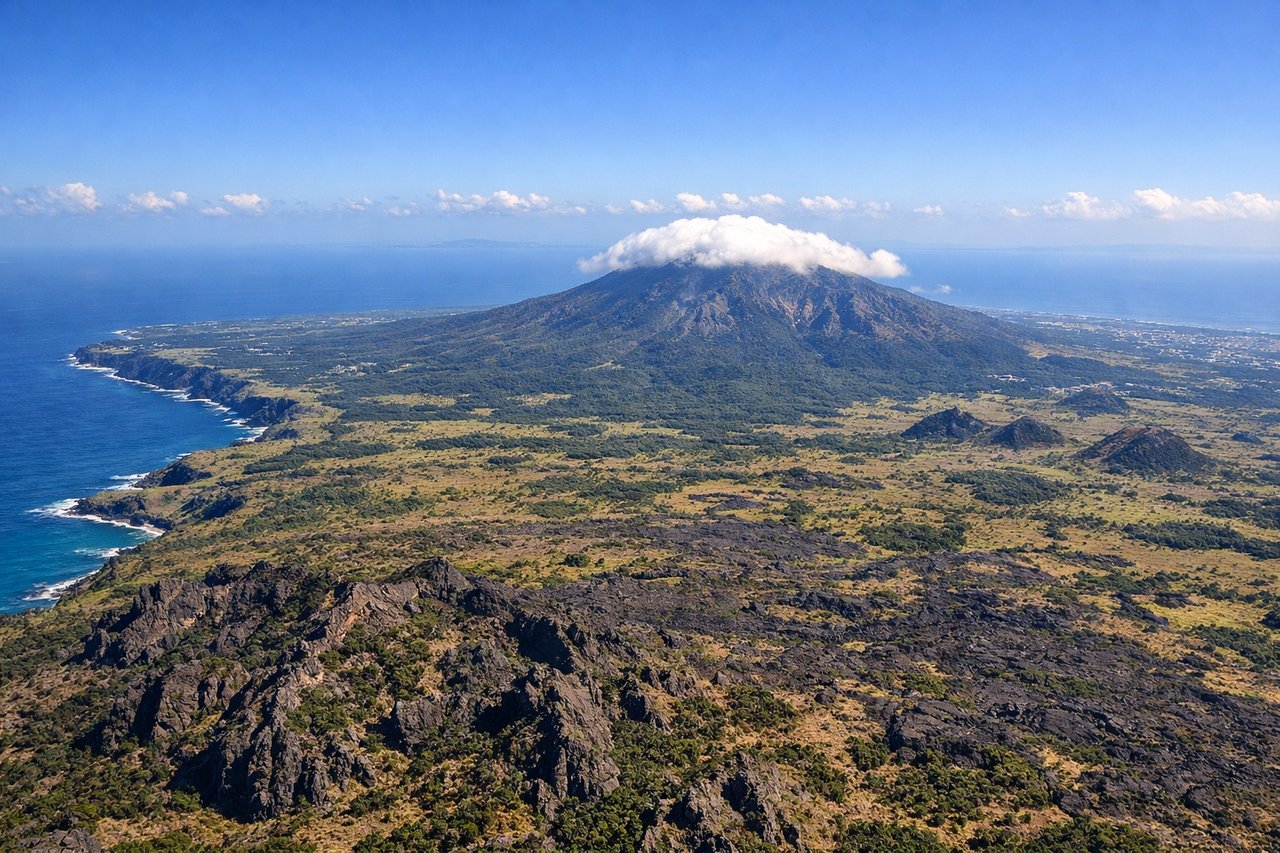
Takeoff from CJU
RIGHTRight-side seats capture Jeju Island's volcanic landscape and the Korea Strait during initial climb. Jeju's distinctive terrain and surrounding waters are best framed from the right as the aircraft departs eastward or northeastward on typical runway headings (07/25).
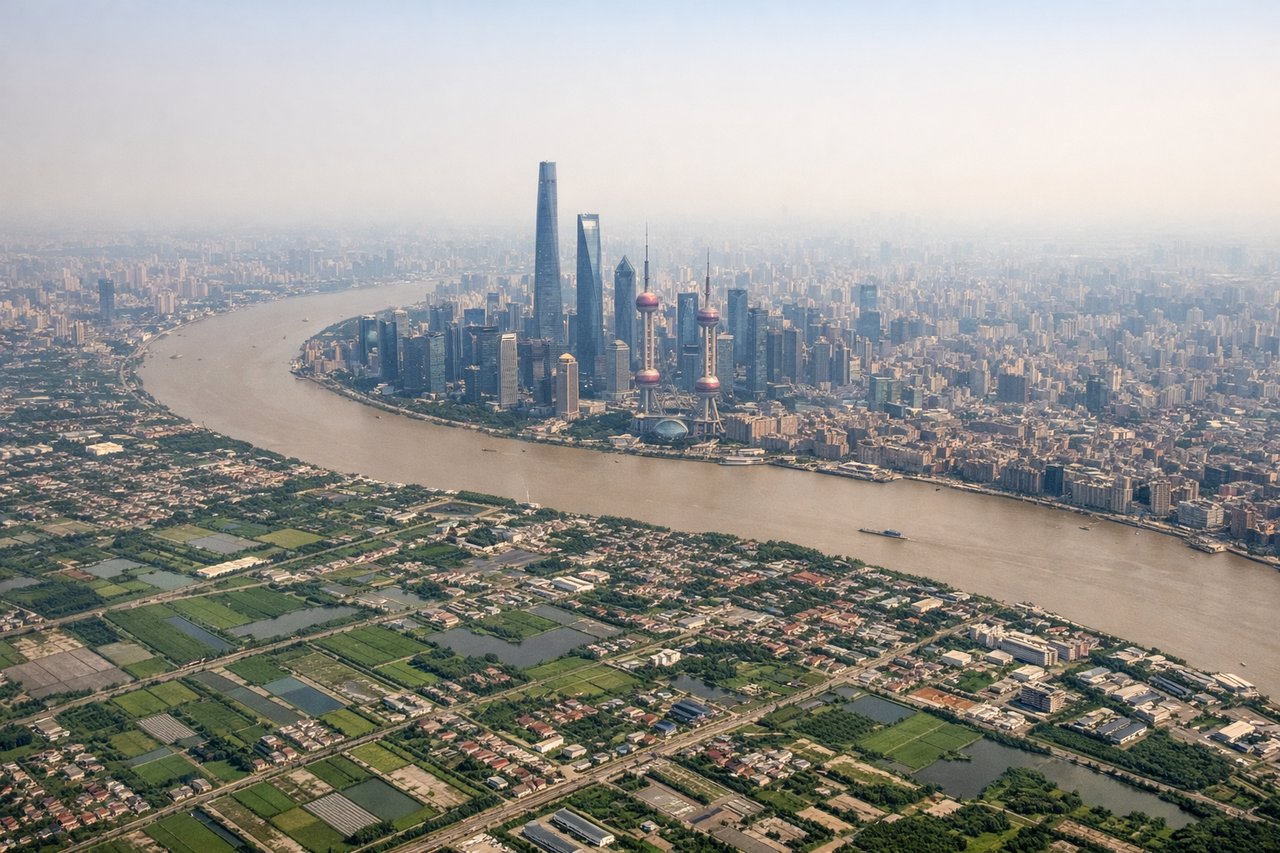
Landing at PVG
LEFTLeft-side seats offer superior views during descent into Shanghai Pudong. The Huangpu River's distinctive curves, Pudong's high-rise skyline, and the East China Sea are all better positioned on the left during typical approach vectors (16/34). The river's serpentine path through the city is a striking visual reference.
Landmarks on this routeAll landmarks →
Will your flight be in sunlight?
Pick a date and time in the Sun Map to watch the sun move across your whole flight.
About This Route
Which side of the plane should I sit on flying from Jeju International (CJU) to Shanghai Pudong International (PVG)?
Sit on the Left side of the plane for the best views on flights from Cheju to Shanghai. While takeoff offers good island views from the right, the landing approach into Pudong provides more dramatic and recognizable urban geography. The Huangpu River and Shanghai's skyline are iconic visual landmarks that make the left side the stronger choice for the overall journey.
What can I see during takeoff from Jeju International in Cheju?
During takeoff from Jeju International (CJU), sit on the Right side for the best views. Right-side seats capture Jeju Island's volcanic landscape and the Korea Strait during initial climb. Jeju's distinctive terrain and surrounding waters are best framed from the right as the aircraft departs eastward or northeastward on typical runway headings (07/25). Notable sights include: Hallasan volcano (1,950m, visible as central peak), Jeju's coastal cliffs on the southern shore, Korea Strait to the north, Moseulpo Harbor area.
What can I see when landing at Shanghai Pudong International in Shanghai?
When landing at Shanghai Pudong International (PVG), sit on the Left side for the best views. Left-side seats offer superior views during descent into Shanghai Pudong. The Huangpu River's distinctive curves, Pudong's high-rise skyline, and the East China Sea are all better positioned on the left during typical approach vectors (16/34). The river's serpentine path through the city is a striking visual reference. Notable sights include: Huangpu River with its characteristic bends, Pudong financial district skyline (Oriental Pearl Tower, Lujiazui towers), Hangzhou Bay to the southeast, Yangtze River delta wetlands.
How long is the flight from Cheju to Shanghai?
The flight from Jeju International (CJU) to Shanghai Pudong International (PVG) takes about 2 hours. The shortest flight path between them is 319 miles (513 km); winds and air traffic control usually add a few percent.
What does the Cheju to Shanghai flight path pass over?
The flight path crosses the Korea Strait (visible as open water with occasional fishing vessels), then passes over the Shandong Peninsula's eastern edge and Yellow Sea approaches. The Yangtze River delta's complex network of waterways, islands, and tidal flats becomes visible during descent into Shanghai. At cruise altitude, the coastline of eastern China gradually emerges with its characteristic low-lying, water-logged terrain.