While takeoff offers Hallasan's dramatic volcanic cone, the landing approach into Taipei provides more sustained visual interest with the Xueshan Range, river systems, and basin geography. Left seating captures the approach corridor's best features.
Flown CJU to TPE? Did we get it right?
Flight Path
Cheju to Taipei is 663 miles (1,067 km), a flight of about 2 hours 15 minutes.
The flight path crosses the Taiwan Strait at roughly 24.5°N. Midway, you'll pass over open water with occasional fishing vessel clusters visible. The Penghu Islands (Pescadores) lie to the southwest of the direct route but may be visible as small dark specks on clear days. The Taiwanese coast becomes increasingly visible 45 minutes before landing, with the northern tip of Taiwan and the Keelung area appearing first, followed by the Taipei Basin's urban sprawl.
Great circle distance and headings ›Phase by phase
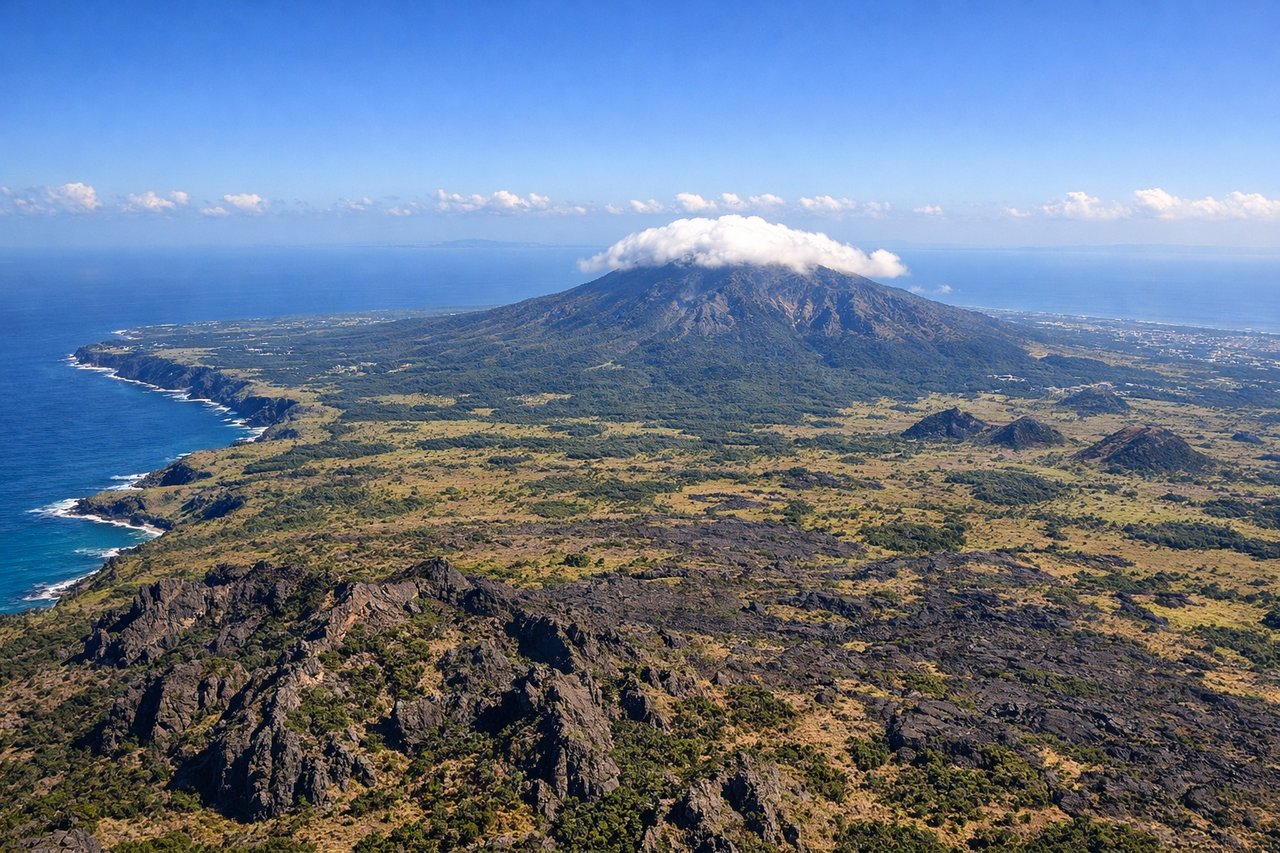
Takeoff from CJU
RIGHTJeju typically departs runway 07/25 depending on wind. Rightward seating captures the Hallasan volcanic cone and the island's southern coastline as you climb. The mountain dominates the island's center and is clearly visible during the initial climb-out.
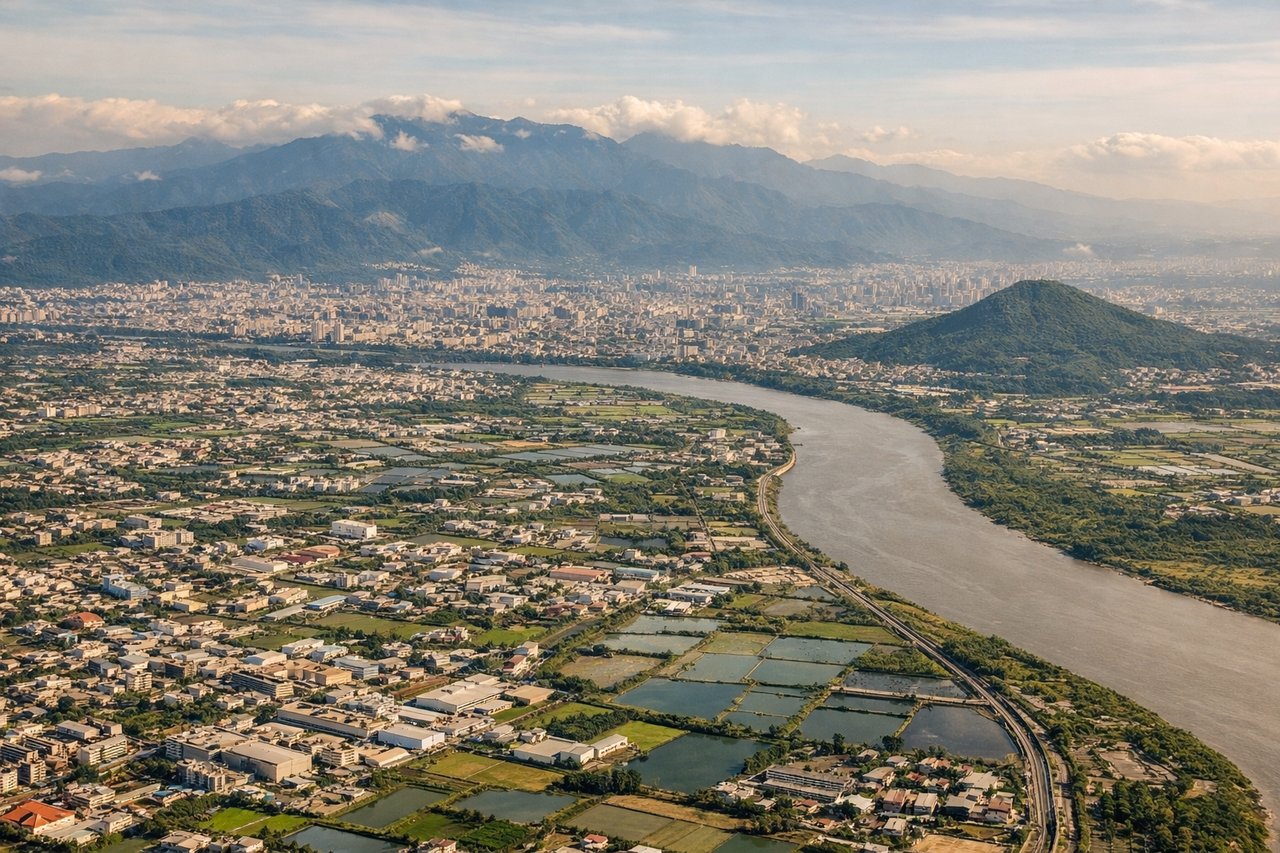
Landing at TPE
LEFTTaipei typically lands runway 05/23 depending on wind. Left-side seating during descent provides views of Taiwan's northern coast, the Taipei Basin, and the Xueshan Range to the south. You'll see the city sprawl and Taipei 101 becoming visible as you descend into the basin.
Will your flight be in sunlight?
Pick a date and time in the Sun Map to watch the sun move across your whole flight.
About This Route
Which side of the plane should I sit on flying from Jeju International (CJU) to Chiang Kai Shek International (TPE)?
Sit on the Left side of the plane for the best views on flights from Cheju to Taipei. While takeoff offers Hallasan's dramatic volcanic cone, the landing approach into Taipei provides more sustained visual interest with the Xueshan Range, river systems, and basin geography. Left seating captures the approach corridor's best features.
What can I see during takeoff from Jeju International in Cheju?
During takeoff from Jeju International (CJU), sit on the Right side for the best views. Jeju typically departs runway 07/25 depending on wind. Rightward seating captures the Hallasan volcanic cone and the island's southern coastline as you climb. The mountain dominates the island's center and is clearly visible during the initial climb-out. Notable sights include: Hallasan (1,947m volcanic peak), Jeju Island southern coastline with dark lava rock formations, Korea Strait to the north, Seogwipo city on the southern slope.
What can I see when landing at Chiang Kai Shek International in Taipei?
When landing at Chiang Kai Shek International (TPE), sit on the Left side for the best views. Taipei typically lands runway 05/23 depending on wind. Left-side seating during descent provides views of Taiwan's northern coast, the Taipei Basin, and the Xueshan Range to the south. You'll see the city sprawl and Taipei 101 becoming visible as you descend into the basin. Notable sights include: Xueshan Range (Snow Mountain massif) to the south, Taipei Basin with urban grid pattern, Tamsui River winding through the city, Taiwan Strait to the north.
How long is the flight from Cheju to Taipei?
The flight from Jeju International (CJU) to Chiang Kai Shek International (TPE) takes about 2 hours 15 minutes. The shortest flight path between them is 663 miles (1,067 km); winds and air traffic control usually add a few percent.
What does the Cheju to Taipei flight path pass over?
The flight path crosses the Taiwan Strait at roughly 24.5°N. Midway, you'll pass over open water with occasional fishing vessel clusters visible. The Penghu Islands (Pescadores) lie to the southwest of the direct route but may be visible as small dark specks on clear days. The Taiwanese coast becomes increasingly visible 45 minutes before landing, with the northern tip of Taiwan and the Keelung area appearing first, followed by the Taipei Basin's urban sprawl.