While the left seat offers a decent Charlotte departure view, the right seat delivers the more dramatic scenery overall. Mid-flight you get views of the Rockies and Great Basin from either side, but on the right you pick up better angles on the Cascades during descent and the spectacular Seattle-Puget Sound-Rainier combination on approach to BFI is hard to beat.
Flown CLT to BFI? Did we get it right?
Flight Path
Charlotte to Seattle is 2,275 miles (3,661 km), a flight of about 5 hours 15 minutes.
The flight tracks northwest over the Tennessee Valley, crosses the Mississippi River near Memphis, traverses the Great Plains of Kansas and Nebraska, crosses the Rocky Mountains over Wyoming or southern Montana (expect views of the Wind River Range and Bighorn Mountains), then crosses the Snake River Plain of Idaho before reaching the Cascades and Mount Rainier corridor into Seattle.
Great circle distance and headings ›


Phase by phase
Takeoff from CLT
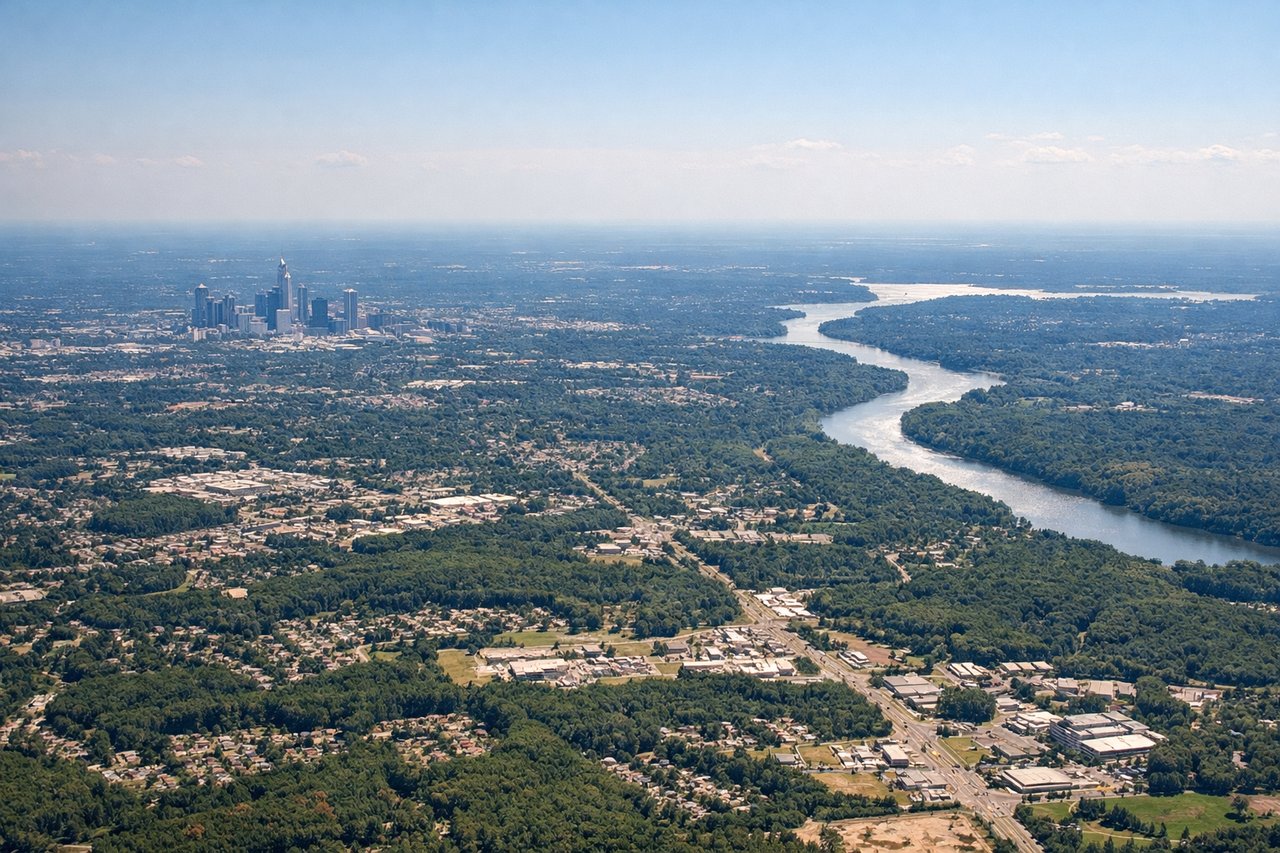
LEFTCharlotte Douglas primarily departs to the west on runway 18C/36C or 18L/36R. Departing northbound (runway 36), a left seat gives you a view back over uptown Charlotte's skyline as you climb out. The city grid and Bank of America Stadium are clearly visible before you turn northwest.
Landing at BFI
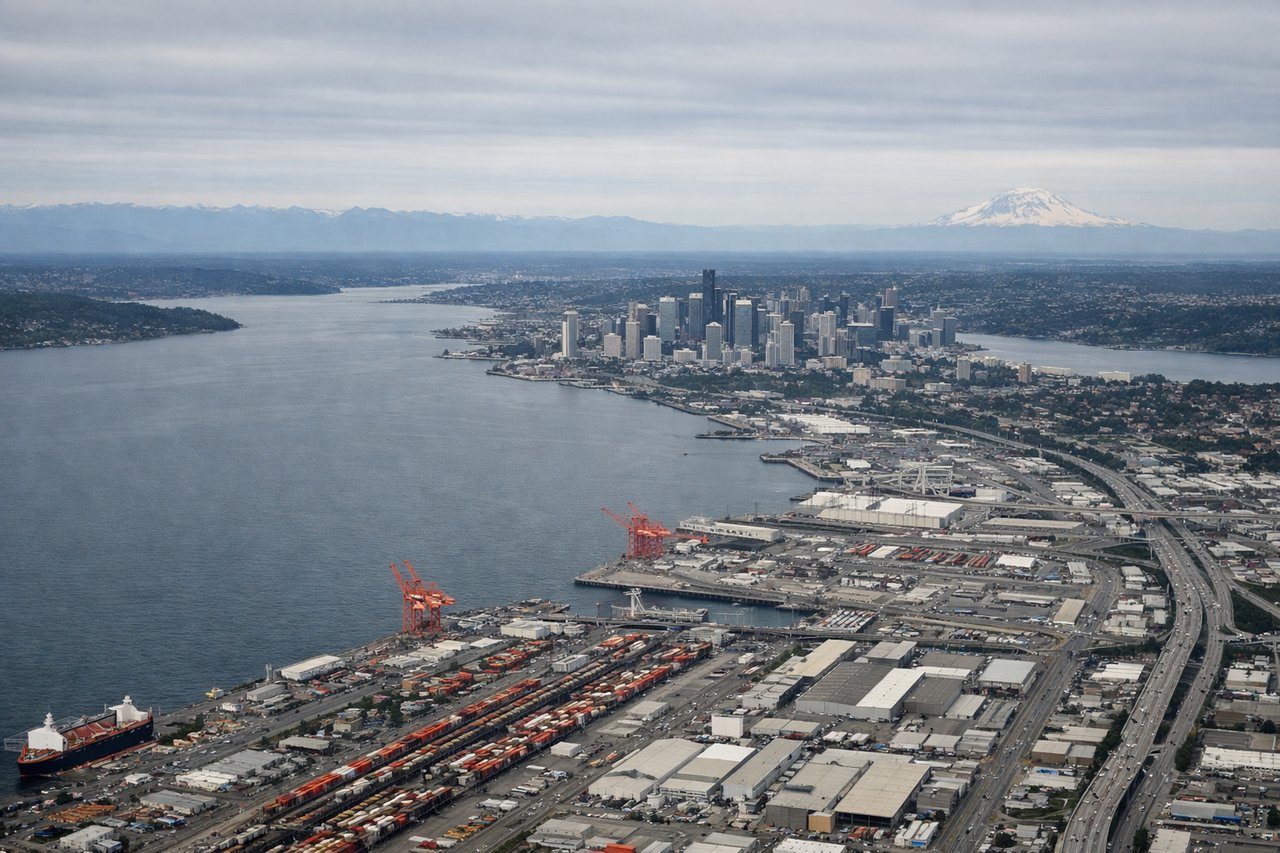
RIGHTBoeing Field sits on the east shore of the Duwamish River valley, and aircraft typically approach from the south on runway 13R/31L or straight-in from the south. A right seat on approach gives you the best view of Elliott Bay, the Seattle skyline, and Puget Sound to the west, while Mount Rainier dominates the southeast horizon during descent.
Will your flight be in sunlight?
Pick a date and time in the Sun Map to watch the sun move across your whole flight.
About This Route
Which side of the plane should I sit on flying from Charlotte Douglas International (CLT) to Boeing Fld King Co International (BFI)?
Sit on the Right side of the plane for the best views on flights from Charlotte to Seattle. While the left seat offers a decent Charlotte departure view, the right seat delivers the more dramatic scenery overall. Mid-flight you get views of the Rockies and Great Basin from either side, but on the right you pick up better angles on the Cascades during descent and the spectacular Seattle-Puget Sound-Rainier combination on approach to BFI is hard to beat.
What can I see during takeoff from Charlotte Douglas International in Charlotte?
During takeoff from Charlotte Douglas International (CLT), sit on the Left side for the best views. Charlotte Douglas primarily departs to the west on runway 18C/36C or 18L/36R. Departing northbound (runway 36), a left seat gives you a view back over uptown Charlotte's skyline as you climb out. The city grid and Bank of America Stadium are clearly visible before you turn northwest. Notable sights include: Uptown Charlotte skyline, Bank of America Stadium, Lake Norman to the north, Catawba River corridor.
What can I see when landing at Boeing Fld King Co International in Seattle?
When landing at Boeing Fld King Co International (BFI), sit on the Right side for the best views. Boeing Field sits on the east shore of the Duwamish River valley, and aircraft typically approach from the south on runway 13R/31L or straight-in from the south. A right seat on approach gives you the best view of Elliott Bay, the Seattle skyline, and Puget Sound to the west, while Mount Rainier dominates the southeast horizon during descent. Notable sights include: Mount Rainier, Elliott Bay and Seattle skyline, Puget Sound, Lake Washington.
How long is the flight from Charlotte to Seattle?
The flight from Charlotte Douglas International (CLT) to Boeing Fld King Co International (BFI) takes about 5 hours 15 minutes. The shortest flight path between them is 2,275 miles (3,661 km); winds and air traffic control usually add a few percent.
What does the Charlotte to Seattle flight path pass over?
The flight tracks northwest over the Tennessee Valley, crosses the Mississippi River near Memphis, traverses the Great Plains of Kansas and Nebraska, crosses the Rocky Mountains over Wyoming or southern Montana (expect views of the Wind River Range and Bighorn Mountains), then crosses the Snake River Plain of Idaho before reaching the Cascades and Mount Rainier corridor into Seattle.