The left side bookends the flight with genuine scenery — Appalachian foothills on departure and a London flyover on arrival — while the right side offers flat Piedmont terrain and unremarkable suburbs, with both sides otherwise sharing the same long Atlantic crossing.
Flight Path
Mid-Atlantic Ocean crossing with landfall typically over southwestern Ireland near County Kerry before continuing across the Irish Sea and Wales toward southern England.
Great circle distance and headings ›.jpg?width=600)

.jpeg?width=600)
Phase by phase
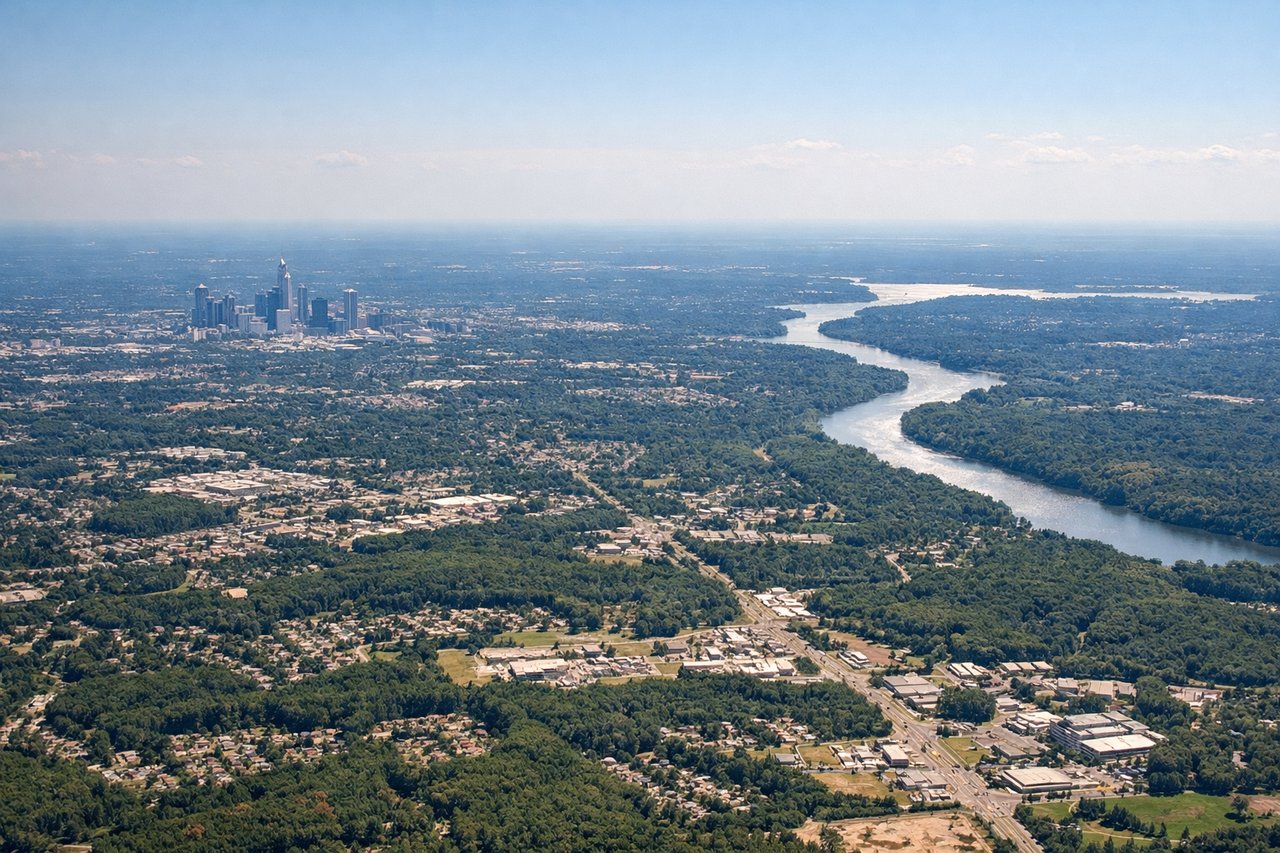
Takeoff from CLT
LEFTDeparting CLT in south-flow conditions, the aircraft turns onto its northeast track toward the coast, putting the Blue Ridge foothills and the distant Appalachian ridgeline off the left side as the plane climbs. The right side only shows the flat Piedmont plateau fading into haze with no distinctive terrain.
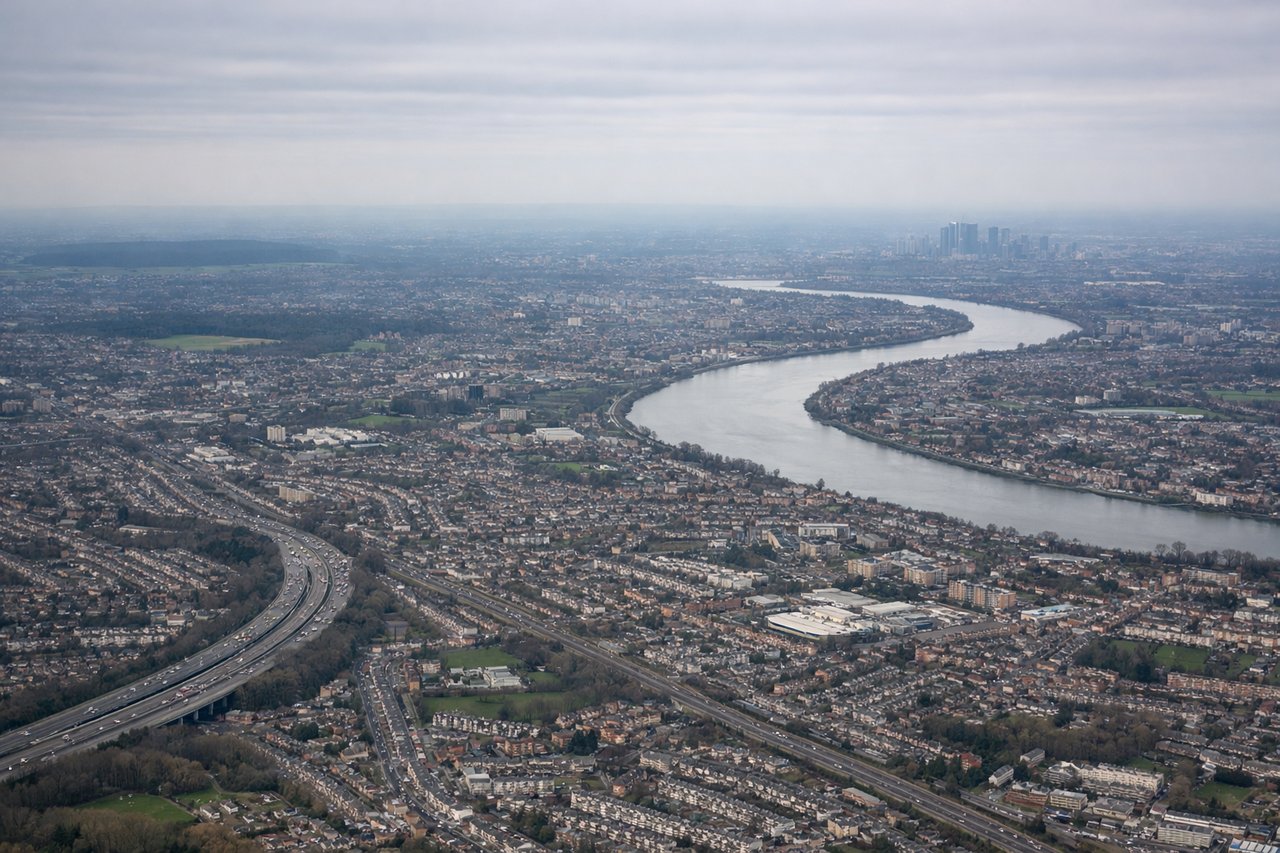
Landing at LHR
LEFTOn a typical westerly-operations arrival into LHR, aircraft fly over Greater London before turning onto final approach, and the left side offers a clear look down at the Thames and central London landmarks. The right side instead faces the quieter suburban sprawl and reservoirs west of the city, with no major landmarks.
Landmarks on this routeAll landmarks →
Will your flight be in sunlight?
See exactly which side of the plane gets sun and shade at your departure time.
About This Route
Which side of the plane should I sit on flying from Charlotte Douglas International (CLT) to Heathrow (LHR)?
Sit on the Left side of the plane for the best views on flights from Charlotte to London. The left side bookends the flight with genuine scenery — Appalachian foothills on departure and a London flyover on arrival — while the right side offers flat Piedmont terrain and unremarkable suburbs, with both sides otherwise sharing the same long Atlantic crossing.
What can I see during takeoff from Charlotte Douglas International in Charlotte?
During takeoff from Charlotte Douglas International (CLT), sit on the Left side for the best views. Departing CLT in south-flow conditions, the aircraft turns onto its northeast track toward the coast, putting the Blue Ridge foothills and the distant Appalachian ridgeline off the left side as the plane climbs. The right side only shows the flat Piedmont plateau fading into haze with no distinctive terrain. Notable sights include: Blue Ridge Mountains foothills, Lake Norman, South Mountains ridge, Charlotte's Piedmont farmland.
What can I see when landing at Heathrow in London?
When landing at Heathrow (LHR), sit on the Left side for the best views. On a typical westerly-operations arrival into LHR, aircraft fly over Greater London before turning onto final approach, and the left side offers a clear look down at the Thames and central London landmarks. The right side instead faces the quieter suburban sprawl and reservoirs west of the city, with no major landmarks. Notable sights include: River Thames, Big Ben and the Houses of Parliament, The Shard, Canary Wharf skyline.
How long is the flight from Charlotte to London?
The flight from Charlotte Douglas International (CLT) to Heathrow (LHR) takes 7h 35m.
What does the Charlotte to London flight path pass over?
Mid-Atlantic Ocean crossing with landfall typically over southwestern Ireland near County Kerry before continuing across the Irish Sea and Wales toward southern England.