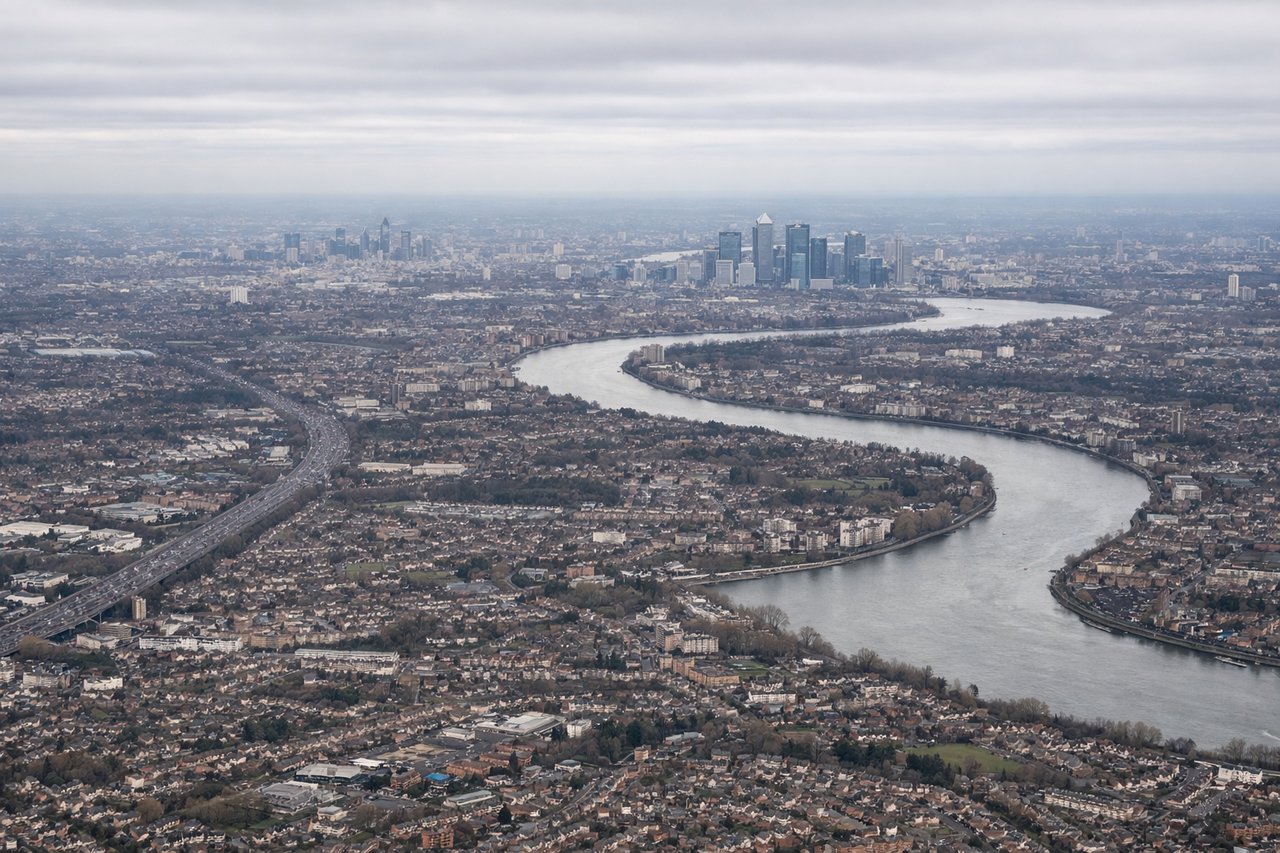
The left side wins overall because the London departure view is genuinely spectacular and hard to beat — the Thames and central London skyline on climb-out is one of the great urban aerial views in the world. Mid-flight both sides see open North Atlantic, and the Charlotte arrival on the right is good but relatively modest. The London departure tips it decisively to the left.
Flight Path
The route tracks northwest over Ireland and the Celtic Sea, then crosses the North Atlantic along a great circle arc passing south of Greenland and Iceland. Mid-ocean you may see sea ice or icebergs at high latitudes. The route then crosses Newfoundland and Nova Scotia, where the Canadian Maritime coastline, the Bay of Fundy, and the forested interior of New England become visible before descending over the Appalachian ridges of Virginia and the Carolinas into Charlotte.
Great circle distance and headings ›.jpeg?width=600)

.jpg?width=600)
Phase by phase
Takeoff from LHR
LEFTHeathrow departures on the dominant westbound runways (09L/09R departing east, then turning) or eastbound runways (27L/27R heading west) typically route aircraft northbound over London. Left side gives you the Thames snaking through central London, the City skyline, and the dense urban grid heading toward the M25. Right side gets suburban west London and not much else.

Landing at CLT
RIGHTCharlotte Douglas typically uses runways 18C/36C and 18L/36R oriented north-south. Arrivals from the northeast on runway 18 approach from the north, giving the right side a view over uptown Charlotte's compact skyline before touchdown. Left side gets industrial and suburban sprawl with no focal point.
Landmarks on this routeAll landmarks →
Will your flight be in sunlight?
See exactly which side of the plane gets sun and shade at your departure time.
About This Route
Which side of the plane should I sit on flying from Heathrow (LHR) to Charlotte Douglas International (CLT)?
Sit on the Left side of the plane for the best views on flights from London to Charlotte. The left side wins overall because the London departure view is genuinely spectacular and hard to beat — the Thames and central London skyline on climb-out is one of the great urban aerial views in the world. Mid-flight both sides see open North Atlantic, and the Charlotte arrival on the right is good but relatively modest. The London departure tips it decisively to the left.
What can I see during takeoff from Heathrow in London?
During takeoff from Heathrow (LHR), sit on the Left side for the best views. Heathrow departures on the dominant westbound runways (09L/09R departing east, then turning) or eastbound runways (27L/27R heading west) typically route aircraft northbound over London. Left side gives you the Thames snaking through central London, the City skyline, and the dense urban grid heading toward the M25. Right side gets suburban west London and not much else. Notable sights include: River Thames bending through central London, The Shard and City of London cluster, Wembley Stadium arch, Windsor Castle and Great Park to the southwest.
What can I see when landing at Charlotte Douglas International in Charlotte?
When landing at Charlotte Douglas International (CLT), sit on the Right side for the best views. Charlotte Douglas typically uses runways 18C/36C and 18L/36R oriented north-south. Arrivals from the northeast on runway 18 approach from the north, giving the right side a view over uptown Charlotte's compact skyline before touchdown. Left side gets industrial and suburban sprawl with no focal point. Notable sights include: Uptown Charlotte skyline cluster, Lake Norman to the north, Catawba River corridor, Charlotte Motor Speedway oval visible northeast of the city.
How long is the flight from London to Charlotte?
The flight from Heathrow (LHR) to Charlotte Douglas International (CLT) takes Approximately 8 to 9 hours westbound.
What does the London to Charlotte flight path pass over?
The route tracks northwest over Ireland and the Celtic Sea, then crosses the North Atlantic along a great circle arc passing south of Greenland and Iceland. Mid-ocean you may see sea ice or icebergs at high latitudes. The route then crosses Newfoundland and Nova Scotia, where the Canadian Maritime coastline, the Bay of Fundy, and the forested interior of New England become visible before descending over the Appalachian ridges of Virginia and the Carolinas into Charlotte.