Copenhagen to New York is 3,845 miles (6,189 km), a flight of about 9 hours 20 minutes.
The right side wins on both ends of the flight: Copenhagen and the Öresund at departure, then the Manhattan skyline at arrival, with the cruise phase also favoring that side thanks to glimpses of the Norwegian coastline and Newfoundland rather than unbroken ocean.
Flight Path
Southern Norwegian coast near Stavanger, the open North Atlantic between Iceland and Greenland, and the coastal approach to Newfoundland and Nova Scotia before the route continues down the New England seaboard.
Great circle distance and headings ›
.jpg?width=600)
Phase by phase

Takeoff from CPH
RIGHTCPH departures toward North America typically climb out from the southbound runways and turn northwest, putting Copenhagen's city center and the Öresund Strait on the right side of the aircraft. Passengers get a brief but clear view of the Öresund Bridge linking Denmark to Sweden before the plane heads out over open water.
Landing at JFK
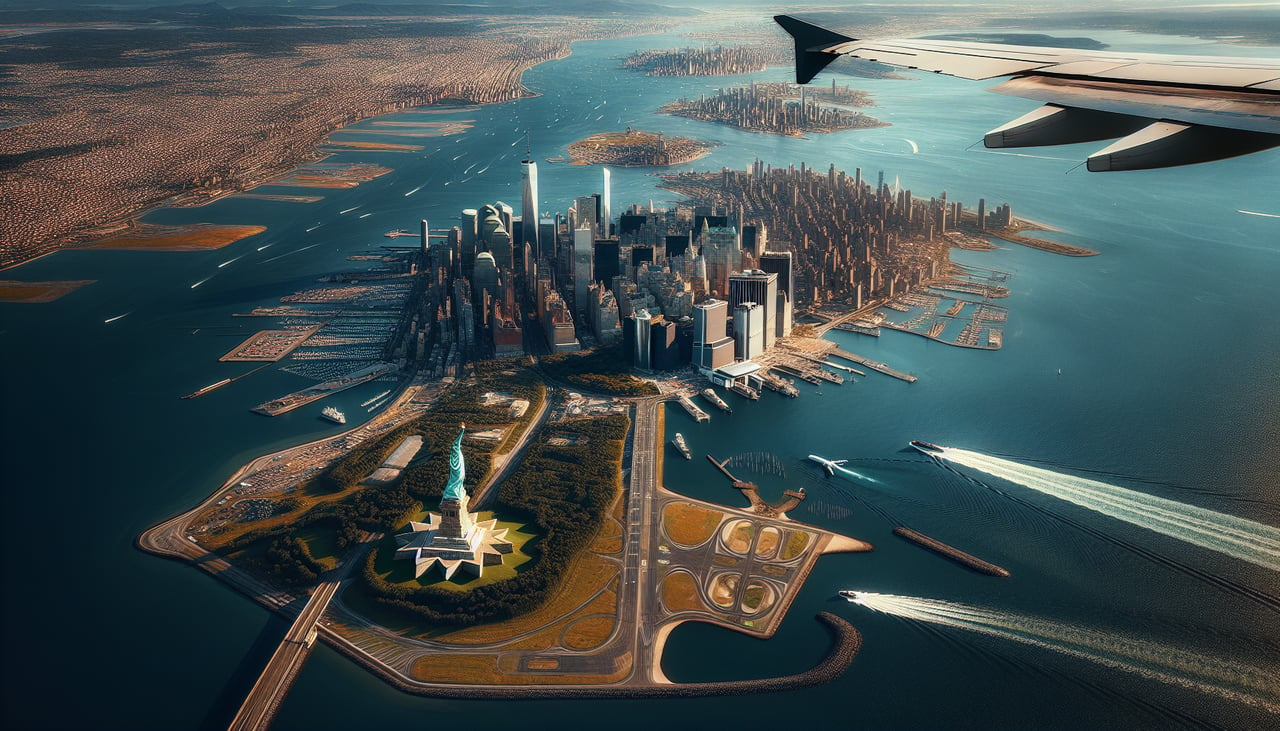
RIGHTFlights arriving at JFK from Europe commonly cross Long Island and turn south for the 22-runways, putting Manhattan and the East River boroughs on the right side during the final descent. This gives a classic skyline view that the ocean-facing left side simply can't match.
Landmarks on this routeAll landmarks →
Will your flight be in sunlight?
Pick a date and time in the Sun Map to watch the sun move across your whole flight.
About This Route
Which side of the plane should I sit on flying from Kastrup (CPH) to John F Kennedy International (JFK)?
Sit on the Right side of the plane for the best views on flights from Copenhagen to New York. The right side wins on both ends of the flight: Copenhagen and the Öresund at departure, then the Manhattan skyline at arrival, with the cruise phase also favoring that side thanks to glimpses of the Norwegian coastline and Newfoundland rather than unbroken ocean.
What can I see during takeoff from Kastrup in Copenhagen?
During takeoff from Kastrup (CPH), sit on the Right side for the best views. CPH departures toward North America typically climb out from the southbound runways and turn northwest, putting Copenhagen's city center and the Öresund Strait on the right side of the aircraft. Passengers get a brief but clear view of the Öresund Bridge linking Denmark to Sweden before the plane heads out over open water. Notable sights include: Copenhagen city center, Öresund Strait, Öresund Bridge, Malmö skyline (Sweden).
What can I see when landing at John F Kennedy International in New York?
When landing at John F Kennedy International (JFK), sit on the Right side for the best views. Flights arriving at JFK from Europe commonly cross Long Island and turn south for the 22-runways, putting Manhattan and the East River boroughs on the right side during the final descent. This gives a classic skyline view that the ocean-facing left side simply can't match. Notable sights include: Manhattan skyline, East River, Throgs Neck Bridge, LaGuardia Airport.
How long is the flight from Copenhagen to New York?
The flight from Kastrup (CPH) to John F Kennedy International (JFK) takes about 9 hours 20 minutes. The shortest flight path between them is 3,845 miles (6,189 km); winds and air traffic control usually add a few percent.
What does the Copenhagen to New York flight path pass over?
Southern Norwegian coast near Stavanger, the open North Atlantic between Iceland and Greenland, and the coastal approach to Newfoundland and Nova Scotia before the route continues down the New England seaboard.