The right side delivers the genuinely spectacular takeoff view of Table Mountain and the Cape Peninsula, which is one of the most dramatic urban-mountain departures in the world. The landing views at JFK are more modest on either side, so the takeoff experience tips the balance decisively to the right.
Flight Path
The route tracks northwest across the South Atlantic Ocean, crossing the equator roughly over the open ocean west of the Gulf of Guinea. It then passes over the western bulge of West Africa near Senegal or Mauritania, crosses the North Atlantic, and approaches the US East Coast. The mid-Atlantic is largely featureless ocean, but the West African coastline near Dakar and the Canary Islands may be visible depending on exact routing. The Azores archipelago can sometimes be spotted far to the right on the northern Atlantic crossing.
Great circle distance and headings ›

.jpg?width=600)
Phase by phase
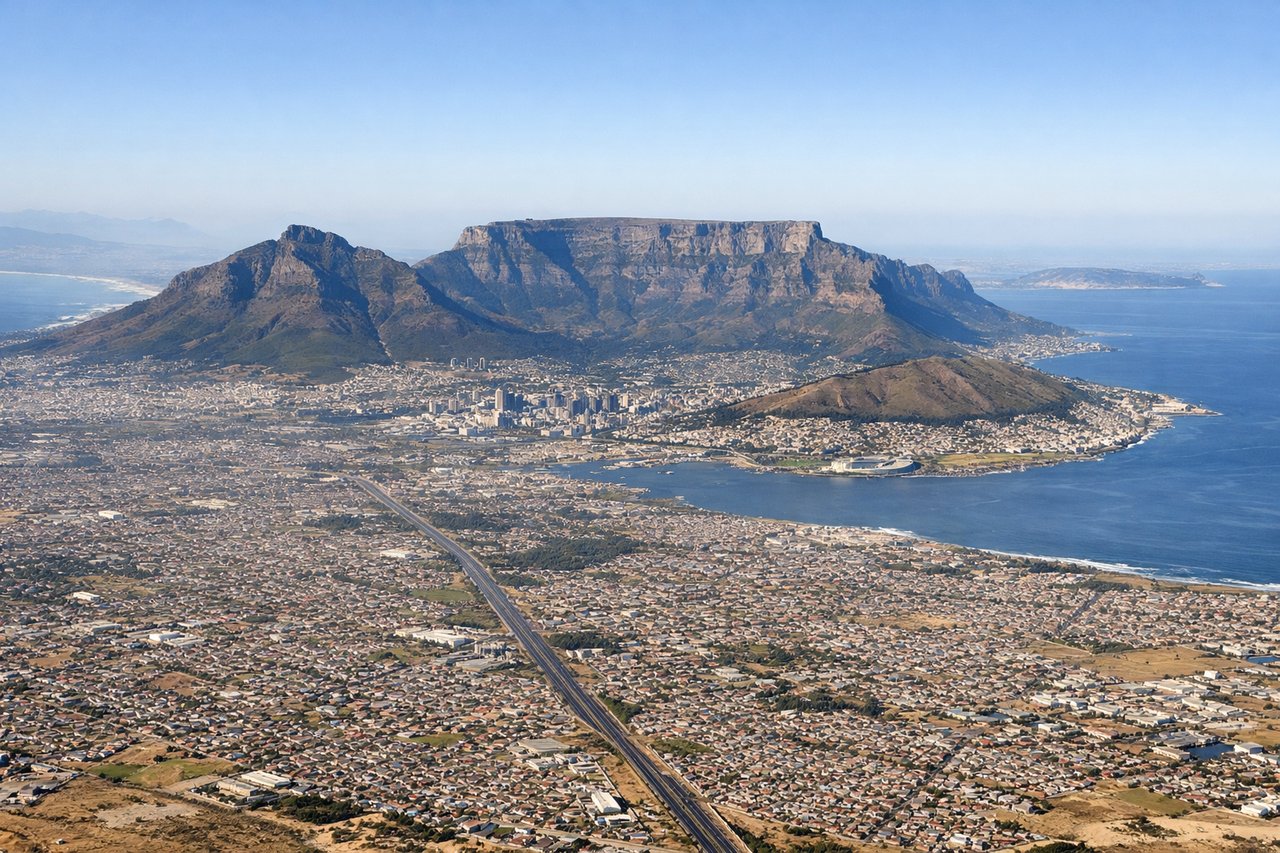
Takeoff from CPT
RIGHTCape Town International's primary departure runway 01 sends aircraft northward, placing Table Mountain, the Cape Peninsula, and the Atlantic coastline on the right (east) side. You get a direct view of the iconic flat-topped massif and the city bowl below it as you climb out over the Cape Flats.
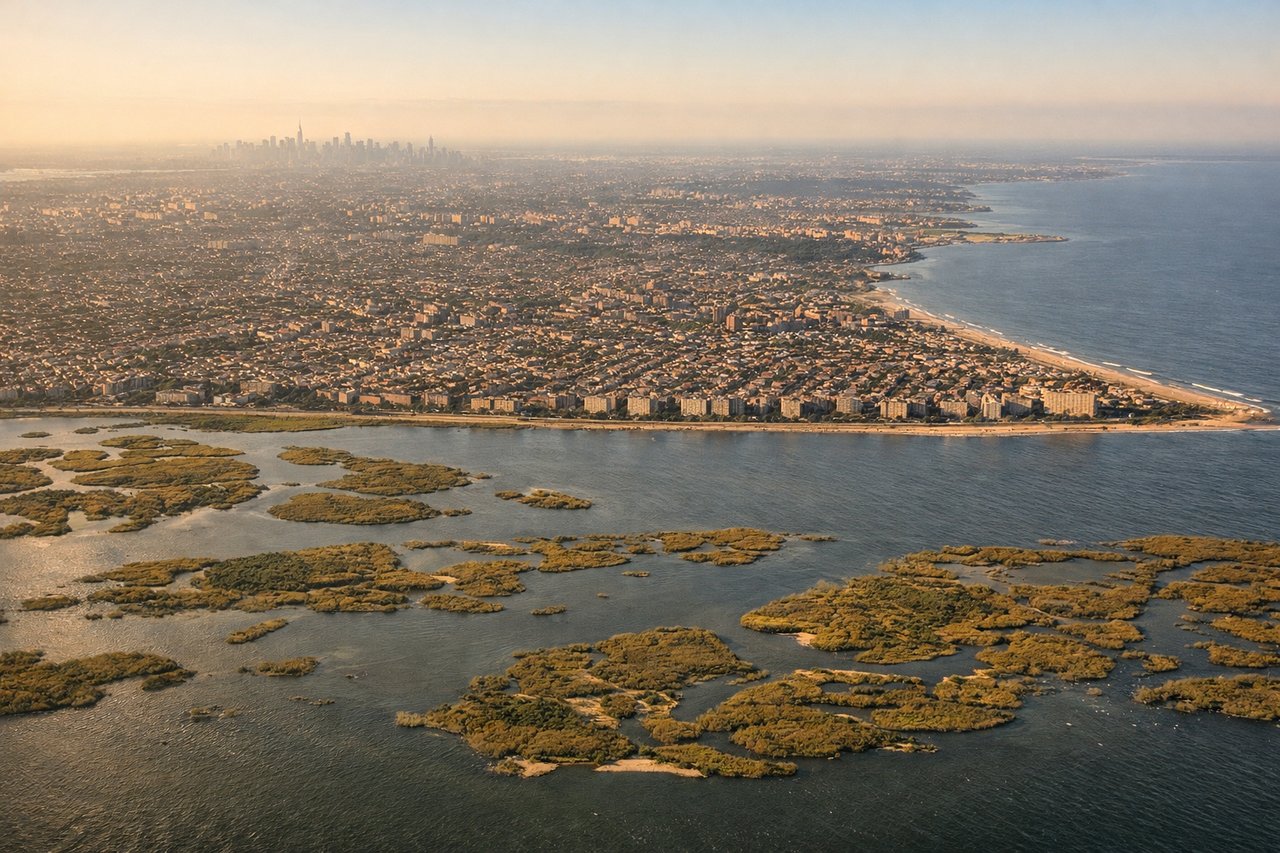
Landing at JFK
LEFTJFK's primary arrival runways 31L and 31R have aircraft approaching from the southeast over the Atlantic, turning onto final heading northwest. The left side faces south toward the Rockaway Peninsula, Jamaica Bay, and the Manhattan skyline visible in the distance to the northwest. Right side looks toward the open Atlantic and Long Island suburbs with less visual interest.
Landmarks on this routeAll landmarks →
Will your flight be in sunlight?
See exactly which side of the plane gets sun and shade at your departure time.
About This Route
Which side of the plane should I sit on flying from Cape Town International (CPT) to John F Kennedy International (JFK)?
Sit on the Right side of the plane for the best views on flights from Cape Town to New York. The right side delivers the genuinely spectacular takeoff view of Table Mountain and the Cape Peninsula, which is one of the most dramatic urban-mountain departures in the world. The landing views at JFK are more modest on either side, so the takeoff experience tips the balance decisively to the right.
What can I see during takeoff from Cape Town International in Cape Town?
During takeoff from Cape Town International (CPT), sit on the Right side for the best views. Cape Town International's primary departure runway 01 sends aircraft northward, placing Table Mountain, the Cape Peninsula, and the Atlantic coastline on the right (east) side. You get a direct view of the iconic flat-topped massif and the city bowl below it as you climb out over the Cape Flats. Notable sights include: Table Mountain and its flat summit, the Cape Town city bowl and harbour, Robben Island in Table Bay, the Hottentots Holland Mountains to the east.
What can I see when landing at John F Kennedy International in New York?
When landing at John F Kennedy International (JFK), sit on the Left side for the best views. JFK's primary arrival runways 31L and 31R have aircraft approaching from the southeast over the Atlantic, turning onto final heading northwest. The left side faces south toward the Rockaway Peninsula, Jamaica Bay, and the Manhattan skyline visible in the distance to the northwest. Right side looks toward the open Atlantic and Long Island suburbs with less visual interest. Notable sights include: Jamaica Bay and its barrier islands, the Rockaway Peninsula, the Manhattan skyline on the distant horizon, Brooklyn's dense urban grid.
How long is the flight from Cape Town to New York?
The flight from Cape Town International (CPT) to John F Kennedy International (JFK) takes Approximately 16 to 17 hours nonstop, though this route typically operates with a connection as no airline currently flies it nonstop.
What does the Cape Town to New York flight path pass over?
The route tracks northwest across the South Atlantic Ocean, crossing the equator roughly over the open ocean west of the Gulf of Guinea. It then passes over the western bulge of West Africa near Senegal or Mauritania, crosses the North Atlantic, and approaches the US East Coast. The mid-Atlantic is largely featureless ocean, but the West African coastline near Dakar and the Canary Islands may be visible depending on exact routing. The Azores archipelago can sometimes be spotted far to the right on the northern Atlantic crossing.