The takeoff from Cape Town offers more dramatic and concentrated scenery—Table Mountain and the Cape Peninsula are iconic and visually striking. The landing approach to LAX is primarily urban sprawl with distant mountains; while the San Gabriel Mountains are visible, they lack the immediate visual impact of Table Mountain. Left seats capture the superior scenic value on this route.
Flown CPT to LAX? Did we get it right?
Flight Path
Cape Town to Los Angeles is 9,992 miles (16,080 km), a flight of about 14 hours 30 minutes.
The flight path crosses the South Atlantic, passing south of the Mid-Atlantic Ridge and north of the South Atlantic gyre. No significant land features are visible during the mid-ocean crossing. The aircraft will pass south of the equator over open ocean, then cross the Caribbean region (potentially visible: the Bahamas, Cuba, or Hispaniola depending on exact routing) before approaching North America. The approach to the US West Coast may offer views of the Sierra Nevada mountains and Central Valley of California if the aircraft descends along a more inland routing, but most of the transatlantic portion is featureless ocean.
Great circle distance and headings ›


Phase by phase

Takeoff from CPT
LEFTLeft side captures Table Mountain and the Cape Peninsula's dramatic topography immediately after departure. CPT typically departs runways 01 or 03 (northbound), so left seats face west toward the iconic mountain and Atlantic coastline.
Landing at LAX
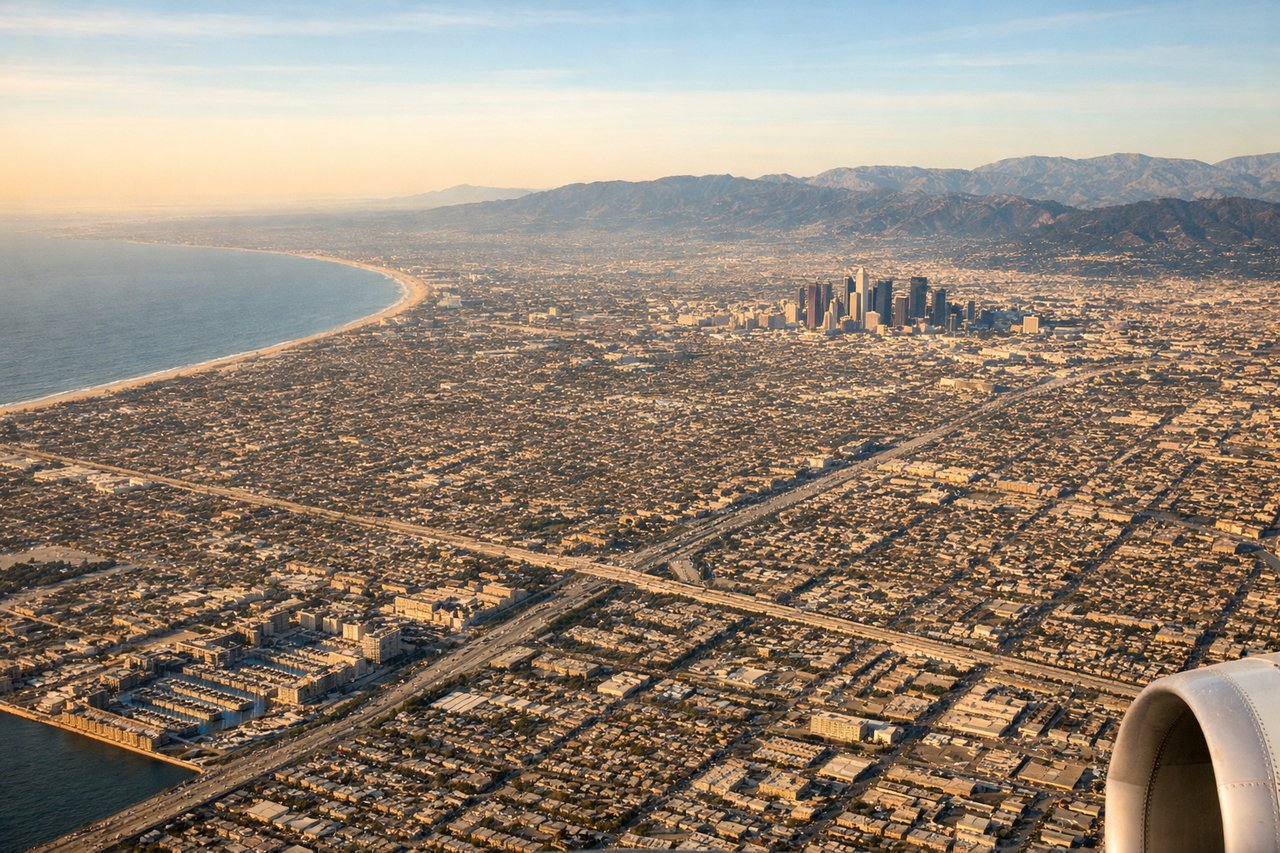
RIGHTRight side offers views of the Los Angeles basin, downtown LA skyline, and the San Gabriel Mountains during approach. LAX typically lands on runways 24L/R (eastbound), so right seats face north toward the city and mountains.
Will your flight be in sunlight?
Pick a date and time in the Sun Map to watch the sun move across your whole flight.
About This Route
Which side of the plane should I sit on flying from Cape Town International (CPT) to Los Angeles International (LAX)?
Sit on the Left side of the plane for the best views on flights from Cape Town to Los Angeles. The takeoff from Cape Town offers more dramatic and concentrated scenery—Table Mountain and the Cape Peninsula are iconic and visually striking. The landing approach to LAX is primarily urban sprawl with distant mountains; while the San Gabriel Mountains are visible, they lack the immediate visual impact of Table Mountain. Left seats capture the superior scenic value on this route.
What can I see during takeoff from Cape Town International in Cape Town?
During takeoff from Cape Town International (CPT), sit on the Left side for the best views. Left side captures Table Mountain and the Cape Peninsula's dramatic topography immediately after departure. CPT typically departs runways 01 or 03 (northbound), so left seats face west toward the iconic mountain and Atlantic coastline. Notable sights include: Table Mountain (1,086 m, distinctive flat-topped peak), Cape Peninsula extending southwest into the Atlantic, Signal Hill and Lion's Head to the northwest, Robben Island in Table Bay to the northwest.
What can I see when landing at Los Angeles International in Los Angeles?
When landing at Los Angeles International (LAX), sit on the Right side for the best views. Right side offers views of the Los Angeles basin, downtown LA skyline, and the San Gabriel Mountains during approach. LAX typically lands on runways 24L/R (eastbound), so right seats face north toward the city and mountains. Notable sights include: San Gabriel Mountains (snow-capped in winter, visible 30+ miles inland), Downtown Los Angeles skyline, Santa Monica Mountains to the northwest, Pacific Ocean and Santa Monica Bay.
How long is the flight from Cape Town to Los Angeles?
The flight from Cape Town International (CPT) to Los Angeles International (LAX) takes about 14 hours 30 minutes. The shortest flight path between them is 9,992 miles (16,080 km); winds and air traffic control usually add a few percent.
What does the Cape Town to Los Angeles flight path pass over?
The flight path crosses the South Atlantic, passing south of the Mid-Atlantic Ridge and north of the South Atlantic gyre. No significant land features are visible during the mid-ocean crossing. The aircraft will pass south of the equator over open ocean, then cross the Caribbean region (potentially visible: the Bahamas, Cuba, or Hispaniola depending on exact routing) before approaching North America. The approach to the US West Coast may offer views of the Sierra Nevada mountains and Central Valley of California if the aircraft descends along a more inland routing, but most of the transatlantic portion is featureless ocean.