Left side wins at both ends of the flight. During the cruise over the East China Sea and the Ryukyu island chain, the left side also offers occasional views of islands like Amami Oshima and the Ryukyu archipelago as the route tracks northeast, making it the consistently better side throughout.
Flight Path
The route tracks northeast over the South China Sea briefly, then crosses the East China Sea. The Ryukyu Islands (Okinawa chain) pass below or to the left side roughly mid-flight, with Okinawa's main island potentially visible on clear days. The route then crosses the Philippine Sea before reaching Kyushu and Honshu airspace. The East China Sea is the dominant feature for much of the cruise, with occasional glimpses of Chinese coastal provinces on the far left horizon at cruise altitude.
Great circle distance and headings ›

Phase by phase
Takeoff from DAD
LEFTDanang typically departs runway 17/35, heading north. On a northbound departure, the left (west) side gives you the dramatic Hai Van Pass and the Truong Son mountain range rising directly from the coast, while the right side faces open ocean. The mountains here drop steeply into the sea and are genuinely striking from low altitude.
Landing at NRT
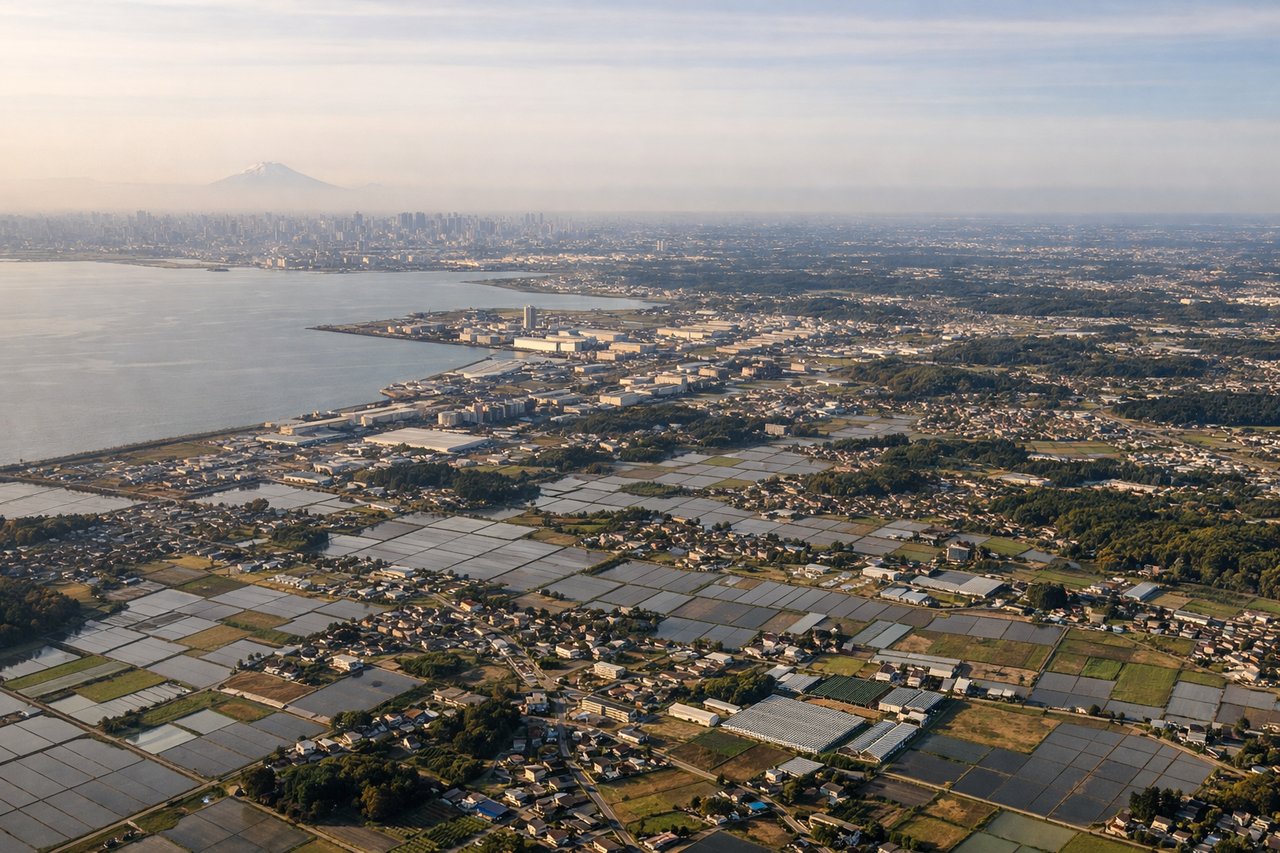
LEFTNarita typically lands on runway 34L/34R, approaching from the south over Chiba Prefecture. The left side gives a clear view of Tokyo Bay, the Tokyo metropolitan skyline in the distance to the west, and the flat Kanto Plain spreading out below. The right side faces rural Chiba with less visual interest.
Landmarks on this routeAll landmarks →
Will your flight be in sunlight?
See exactly which side of the plane gets sun and shade at your departure time.
About This Route
Which side of the plane should I sit on flying from Danang International (DAD) to New Tokyo International (NRT)?
Sit on the Left side of the plane for the best views on flights from Danang to Tokyo. Left side wins at both ends of the flight. During the cruise over the East China Sea and the Ryukyu island chain, the left side also offers occasional views of islands like Amami Oshima and the Ryukyu archipelago as the route tracks northeast, making it the consistently better side throughout.
What can I see during takeoff from Danang International in Danang?
During takeoff from Danang International (DAD), sit on the Left side for the best views. Danang typically departs runway 17/35, heading north. On a northbound departure, the left (west) side gives you the dramatic Hai Van Pass and the Truong Son mountain range rising directly from the coast, while the right side faces open ocean. The mountains here drop steeply into the sea and are genuinely striking from low altitude. Notable sights include: Hai Van Pass (mountain saddle visible at coastline), Truong Son Range (forested ridgeline running north-south), Da Nang Bay (curving bay below), Son Tra Peninsula (forested headland to the northeast).
What can I see when landing at New Tokyo International in Tokyo?
When landing at New Tokyo International (NRT), sit on the Left side for the best views. Narita typically lands on runway 34L/34R, approaching from the south over Chiba Prefecture. The left side gives a clear view of Tokyo Bay, the Tokyo metropolitan skyline in the distance to the west, and the flat Kanto Plain spreading out below. The right side faces rural Chiba with less visual interest. Notable sights include: Tokyo Bay (large body of water to the west), Chiba city and port (directly below on approach), Tokyo metropolitan skyline (distant to the west-northwest), Boso Peninsula coastline (visible to the south).
How long is the flight from Danang to Tokyo?
The flight from Danang International (DAD) to New Tokyo International (NRT) takes Approximately 4 hours 30 minutes to 5 hours.
What does the Danang to Tokyo flight path pass over?
The route tracks northeast over the South China Sea briefly, then crosses the East China Sea. The Ryukyu Islands (Okinawa chain) pass below or to the left side roughly mid-flight, with Okinawa's main island potentially visible on clear days. The route then crosses the Philippine Sea before reaching Kyushu and Honshu airspace. The East China Sea is the dominant feature for much of the cruise, with occasional glimpses of Chinese coastal provinces on the far left horizon at cruise altitude.