The right side offers the most scenic continuity: Danang's bay and peninsula at departure, then Taiwan's western coastline and mountain foothills during arrival, while the left side faces mostly flat inland terrain and open water with fewer distinct features.
Flight Path
Most of the cruise is over the open waters of the South China Sea and Taiwan Strait, with no major landmasses visible until the Taiwan coastline comes into view during descent.
Great circle distance and headings ›Phase by phase
Takeoff from DAD
RIGHTDeparting Danang, the aircraft typically climbs out over Danang Bay before turning toward Taiwan, putting the coastline, Son Tra Peninsula, and the forested slopes leading to Hai Van Pass on the right side. The left side mostly shows the flatter city and rice-paddy plains inland.
Landing at TPE
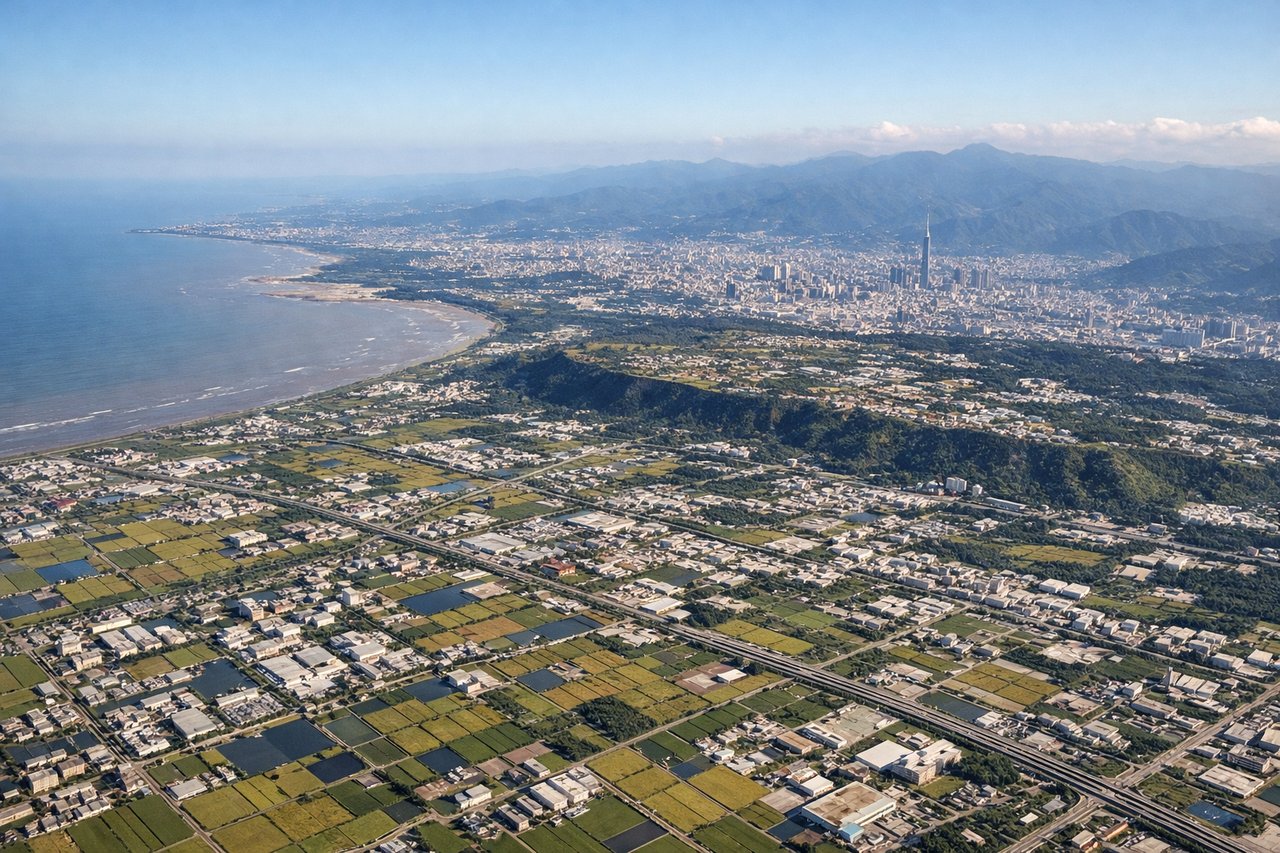
RIGHTOn approach into Taipei from the south, arriving aircraft often track along Taiwan's western coastal plain before curving toward Taoyuan, giving right-side passengers a view of the Taiwan Strait coastline and the Central Mountain foothills rising inland, followed by the sprawling Taipei Basin near touchdown.
Will your flight be in sunlight?
See exactly which side of the plane gets sun and shade at your departure time.
About This Route
Which side of the plane should I sit on flying from Danang International (DAD) to Chiang Kai Shek International (TPE)?
Sit on the Right side of the plane for the best views on flights from Danang to Taipei. The right side offers the most scenic continuity: Danang's bay and peninsula at departure, then Taiwan's western coastline and mountain foothills during arrival, while the left side faces mostly flat inland terrain and open water with fewer distinct features.
What can I see during takeoff from Danang International in Danang?
During takeoff from Danang International (DAD), sit on the Right side for the best views. Departing Danang, the aircraft typically climbs out over Danang Bay before turning toward Taiwan, putting the coastline, Son Tra Peninsula, and the forested slopes leading to Hai Van Pass on the right side. The left side mostly shows the flatter city and rice-paddy plains inland. Notable sights include: Danang Bay, Son Tra Peninsula, Hai Van Pass foothills, Marble Mountains.
What can I see when landing at Chiang Kai Shek International in Taipei?
When landing at Chiang Kai Shek International (TPE), sit on the Right side for the best views. On approach into Taipei from the south, arriving aircraft often track along Taiwan's western coastal plain before curving toward Taoyuan, giving right-side passengers a view of the Taiwan Strait coastline and the Central Mountain foothills rising inland, followed by the sprawling Taipei Basin near touchdown. Notable sights include: Taiwan Strait coastline, Central Mountain Range foothills, Taoyuan plains, Taipei Basin skyline in distance.
How long is the flight from Danang to Taipei?
The flight from Danang International (DAD) to Chiang Kai Shek International (TPE) takes 2h 10m.
What does the Danang to Taipei flight path pass over?
Most of the cruise is over the open waters of the South China Sea and Taiwan Strait, with no major landmasses visible until the Taiwan coastline comes into view during descent.