Dubrovnik to Newark is 4,515 miles (7,265 km), a flight of about 10 hours 30 minutes.
Left side wins both the departure over the Dalmatian coast and the arrival into New York Harbor. Over the Atlantic the views are similar on both sides, but the left seat delivers the two most spectacular moments of the flight.
Flight Path
The flight tracks northwest over the Adriatic, crosses the Italian Alps near Bolzano, then transits southern Germany and France before reaching the Atlantic near Brittany or Ireland. The mid-Atlantic crossing passes over the Azores region (rarely visible due to cloud cover). Approaching North America, the coast of Newfoundland or Nova Scotia may be visible before descending toward New York.
Great circle distance and headings ›


.jpg?width=600)

.jpg?width=600)

.jpg?width=600)

.jpg?width=600)
.jpeg?width=600)
Phase by phase
Takeoff from DBV
LEFTDubrovnik Airport (runway 12/30) typically departs on runway 12, heading southeast before turning northwest. A left seat gives you the Old Town of Dubrovnik directly below, the Elaphiti Islands scattered across the Adriatic, and the dramatic limestone karst of the Dalmatian coast. The right side faces inland toward the Dinaric Alps but misses the coastal spectacle.
Landing at EWR
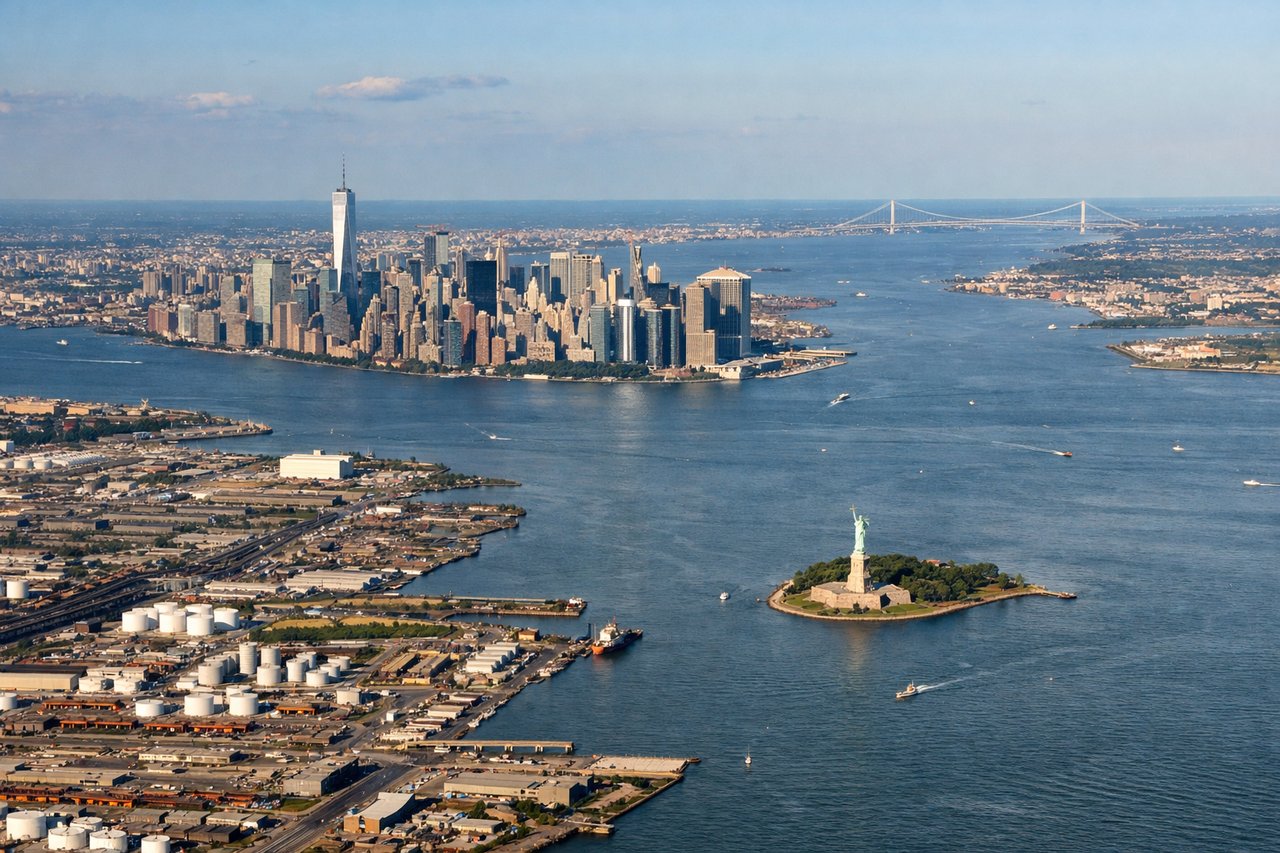
LEFTNewark typically lands on runway 22L/22R, approaching from the northeast over New York Harbor. A left seat gives you Lower Manhattan's skyline, the Statue of Liberty in the harbor, and the Verrazano-Narrows Bridge. The right side faces inland toward New Jersey suburbs with far less visual interest.
Landmarks on this routeAll landmarks →
Will your flight be in sunlight?
Pick a date and time in the Sun Map to watch the sun move across your whole flight.
About This Route
Which side of the plane should I sit on flying from Dubrovnik (DBV) to Newark Liberty International (EWR)?
Sit on the Left side of the plane for the best views on flights from Dubrovnik to Newark. Left side wins both the departure over the Dalmatian coast and the arrival into New York Harbor. Over the Atlantic the views are similar on both sides, but the left seat delivers the two most spectacular moments of the flight.
What can I see during takeoff from Dubrovnik in Dubrovnik?
During takeoff from Dubrovnik (DBV), sit on the Left side for the best views. Dubrovnik Airport (runway 12/30) typically departs on runway 12, heading southeast before turning northwest. A left seat gives you the Old Town of Dubrovnik directly below, the Elaphiti Islands scattered across the Adriatic, and the dramatic limestone karst of the Dalmatian coast. The right side faces inland toward the Dinaric Alps but misses the coastal spectacle. Notable sights include: Dubrovnik Old Town and city walls, Elaphiti Islands (Šipan, Lopud, Koločep), Pelješac Peninsula, Adriatic coastline.
What can I see when landing at Newark Liberty International in Newark?
When landing at Newark Liberty International (EWR), sit on the Left side for the best views. Newark typically lands on runway 22L/22R, approaching from the northeast over New York Harbor. A left seat gives you Lower Manhattan's skyline, the Statue of Liberty in the harbor, and the Verrazano-Narrows Bridge. The right side faces inland toward New Jersey suburbs with far less visual interest. Notable sights include: Lower Manhattan skyline, Statue of Liberty, Verrazano-Narrows Bridge, New York Harbor.
How long is the flight from Dubrovnik to Newark?
The flight from Dubrovnik (DBV) to Newark Liberty International (EWR) takes about 10 hours 30 minutes. The shortest flight path between them is 4,515 miles (7,265 km); winds and air traffic control usually add a few percent.
What does the Dubrovnik to Newark flight path pass over?
The flight tracks northwest over the Adriatic, crosses the Italian Alps near Bolzano, then transits southern Germany and France before reaching the Atlantic near Brittany or Ireland. The mid-Atlantic crossing passes over the Azores region (rarely visible due to cloud cover). Approaching North America, the coast of Newfoundland or Nova Scotia may be visible before descending toward New York.