Delhi to Münster is 3,832 miles (6,167 km), a flight of about 8 hours 15 minutes.
While the takeoff offers interesting Delhi geography, the landing provides more sustained scenic value. The Rhine River approach is visually distinctive and the descent offers extended views of Germany's characteristic landscape. The flight path itself crosses the Carpathians and Danube valley—better viewed from the right side during the central portion of the flight.
Flight Path
The flight path crosses several major geographic features: the Hindu Kush and Pamir mountain ranges (visible from either side depending on exact routing), the Caspian Sea (southern edge may be visible), the Caucasus Mountains, and the Carpathian Mountains in Romania/Slovakia. The Danube River valley becomes visible in the final approach to central Europe. Most of the central European portion crosses the flat North European Plain.
Great circle distance and headings ›Phase by phase
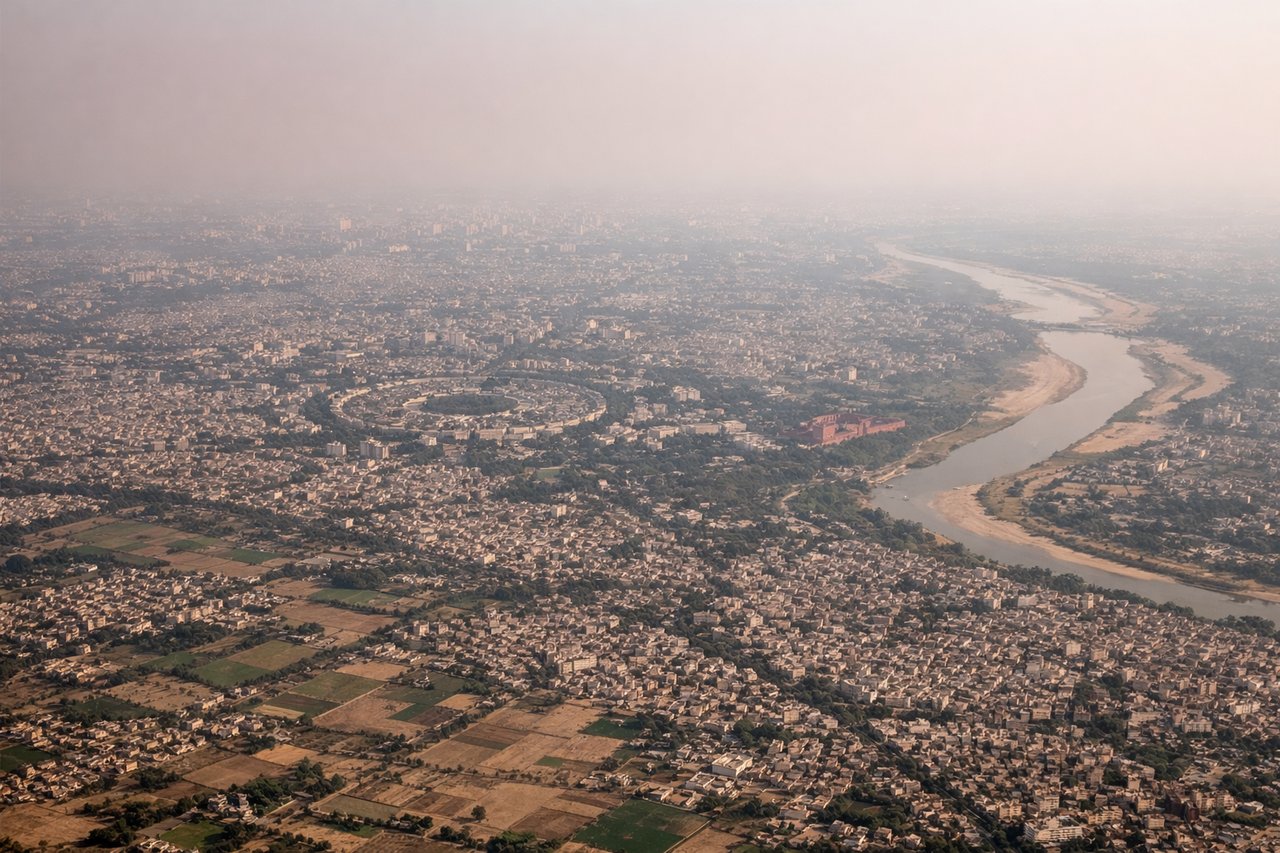
Takeoff from DEL
LEFTLeft side offers views of the Yamuna River winding through Delhi's urban sprawl, and the Aravalli Hills rising to the southwest. Right side faces the flat Indo-Gangetic Plain with less distinctive terrain.
Landing at FMO
RIGHTRight side provides views of the Rhine River and its floodplain as the aircraft descends toward Münster/Osnabrück. The river's distinctive meanders and surrounding agricultural landscape are clearly visible on approach from the west.
Landmarks on this routeAll landmarks →
Will your flight be in sunlight?
Pick a date and time in the Sun Map to watch the sun move across your whole flight.
About This Route
Which side of the plane should I sit on flying from Indira Gandhi International (DEL) to Munster Osnabruck (FMO)?
Sit on the Right side of the plane for the best views on flights from Delhi to Münster. While the takeoff offers interesting Delhi geography, the landing provides more sustained scenic value. The Rhine River approach is visually distinctive and the descent offers extended views of Germany's characteristic landscape. The flight path itself crosses the Carpathians and Danube valley—better viewed from the right side during the central portion of the flight.
What can I see during takeoff from Indira Gandhi International in Delhi?
During takeoff from Indira Gandhi International (DEL), sit on the Left side for the best views. Left side offers views of the Yamuna River winding through Delhi's urban sprawl, and the Aravalli Hills rising to the southwest. Right side faces the flat Indo-Gangetic Plain with less distinctive terrain. Notable sights include: Yamuna River (visible as a brown ribbon through the city), Aravalli Hills (low mountain range to the southwest), Delhi's urban grid and Indira Gandhi International Airport complex itself.
What can I see when landing at Munster Osnabruck in Münster?
When landing at Munster Osnabruck (FMO), sit on the Right side for the best views. Right side provides views of the Rhine River and its floodplain as the aircraft descends toward Münster/Osnabrück. The river's distinctive meanders and surrounding agricultural landscape are clearly visible on approach from the west. Notable sights include: Rhine River (major waterway with visible meanders), North German Plain (flat agricultural terrain), Münsterland region's patchwork fields and small towns, Teutoburg Forest (low wooded hills to the east).
How long is the flight from Delhi to Münster?
The flight from Indira Gandhi International (DEL) to Munster Osnabruck (FMO) takes about 8 hours 15 minutes. The shortest flight path between them is 3,832 miles (6,167 km); winds and air traffic control usually add a few percent.
What does the Delhi to Münster flight path pass over?
The flight path crosses several major geographic features: the Hindu Kush and Pamir mountain ranges (visible from either side depending on exact routing), the Caspian Sea (southern edge may be visible), the Caucasus Mountains, and the Carpathian Mountains in Romania/Slovakia. The Danube River valley becomes visible in the final approach to central Europe. Most of the central European portion crosses the flat North European Plain.