Both sides score equally for the cruise phase (14+ hours of open Indian Ocean with minimal visual interest), but the right side wins on landing quality. The approach to MBW over Port Phillip Bay and Melbourne's coastal suburbs provides more distinctive urban and water features than the inland plains approach on the left. Takeoff is slightly better on the left (Delhi urban views), but landing advantage outweighs this.
Flown DEL to MBW? Did we get it right?
Flight Path
Delhi to Melbourne is 6,356 miles (10,230 km), a flight of about 14 hours 20 minutes.
The flight crosses the Arabian Sea (minimal landmarks), then the Indian Ocean for approximately 12 hours with no significant visible features except occasional cloud formations. The route passes south of the Maldives (not visible at cruise altitude), then continues southeast over open ocean. Approaching Australia, the flight passes over the Great Australian Bight (open water, no landmarks), then the southern Australian coastline becomes visible approximately 1 hour before landing. The Grampians and Dandenong Ranges appear as distant ridges during final descent into Victoria.
Great circle distance and headings ›Phase by phase
Takeoff from DEL
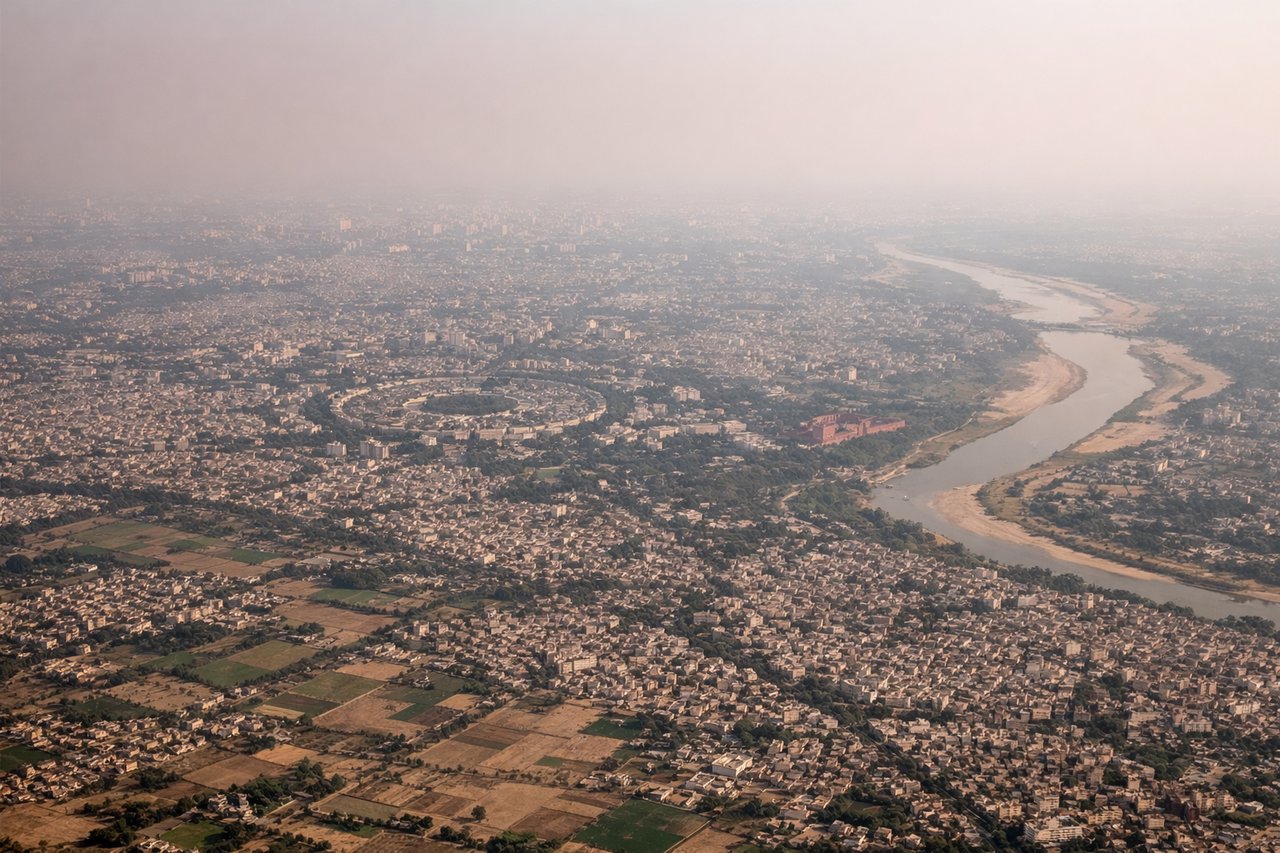
LEFTLeft side (north) offers views of Delhi's urban sprawl and the Yamuna River valley during initial climb. Right side faces open plains with minimal early landmarks.
Landing at MBW
RIGHTRight side (east) during approach to MBW provides views of Port Phillip Bay, the Melbourne coastline, and urban sprawl of outer Melbourne. Left side faces inland plains with minimal visual interest.
Will your flight be in sunlight?
Pick a date and time in the Sun Map to watch the sun move across your whole flight.
About This Route
Which side of the plane should I sit on flying from Indira Gandhi International (DEL) to Melbourne Moorabbin (MBW)?
Sit on the Right side of the plane for the best views on flights from Delhi to Melbourne. Both sides score equally for the cruise phase (14+ hours of open Indian Ocean with minimal visual interest), but the right side wins on landing quality. The approach to MBW over Port Phillip Bay and Melbourne's coastal suburbs provides more distinctive urban and water features than the inland plains approach on the left. Takeoff is slightly better on the left (Delhi urban views), but landing advantage outweighs this.
What can I see during takeoff from Indira Gandhi International in Delhi?
During takeoff from Indira Gandhi International (DEL), sit on the Left side for the best views. Left side (north) offers views of Delhi's urban sprawl and the Yamuna River valley during initial climb. Right side faces open plains with minimal early landmarks. Notable sights include: Yamuna River, Delhi urban grid, Aravalli Hills (distant northeast), Indira Gandhi International Airport complex.
What can I see when landing at Melbourne Moorabbin in Melbourne?
When landing at Melbourne Moorabbin (MBW), sit on the Right side for the best views. Right side (east) during approach to MBW provides views of Port Phillip Bay, the Melbourne coastline, and urban sprawl of outer Melbourne. Left side faces inland plains with minimal visual interest. Notable sights include: Port Phillip Bay, Melbourne urban sprawl, Dandenong Ranges (distant southeast), Moorabbin Airport runway complex.
How long is the flight from Delhi to Melbourne?
The flight from Indira Gandhi International (DEL) to Melbourne Moorabbin (MBW) takes about 14 hours 20 minutes. The shortest flight path between them is 6,356 miles (10,230 km); winds and air traffic control usually add a few percent.
What does the Delhi to Melbourne flight path pass over?
The flight crosses the Arabian Sea (minimal landmarks), then the Indian Ocean for approximately 12 hours with no significant visible features except occasional cloud formations. The route passes south of the Maldives (not visible at cruise altitude), then continues southeast over open ocean. Approaching Australia, the flight passes over the Great Australian Bight (open water, no landmarks), then the southern Australian coastline becomes visible approximately 1 hour before landing. The Grampians and Dandenong Ranges appear as distant ridges during final descent into Victoria.