The right side has the better bookends: the climb-out turn over Delhi and the Yamuna, and the approach with the San Francisco skyline and Bay Bridge in view. It also looks toward the Garhwal Himalaya after departure. The left side has strong Karakoram, Arctic and Alaska-BC mountain views, but its arrival is less iconic.
Flown DEL to SFO? Did we get it right?
Flight Path
Delhi to San Francisco is 7,694 miles (12,382 km), a flight of about 15 hours 40 minutes.
Routing varies with winds and airspace. The track usually heads north-northeast over the Himachal and Garhwal Himalaya, across the edge of the Tibetan Plateau and the Tian Shan or Altai ranges, then over Siberia and the Arctic coast near the Bering Strait. It then turns southeast across Alaska, the Gulf of Alaska and the British Columbia coast, passing the Coast Mountains and Vancouver Island before the descent into the Bay Area.
Great circle distance and headings ›


Phase by phase
Takeoff from DEL
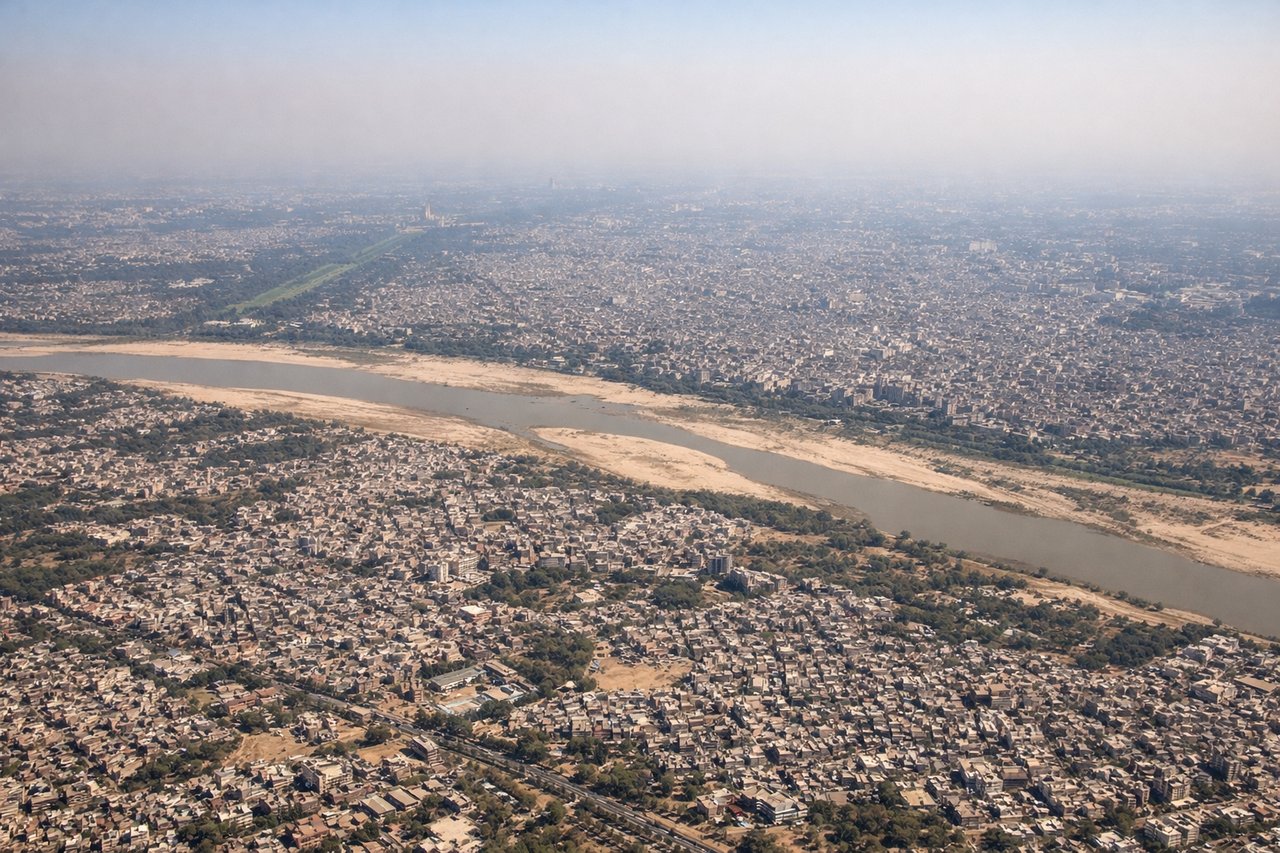
RIGHTIn Delhi's usual westerly departure flow (runway 29L/29R), the jet lifts off heading WNW and then banks right toward its north-northeast route. The right windows swing around to look over the city and the Yamuna River, while the left side mostly sees the flat plains and suburbs to the west.
Landing at SFO
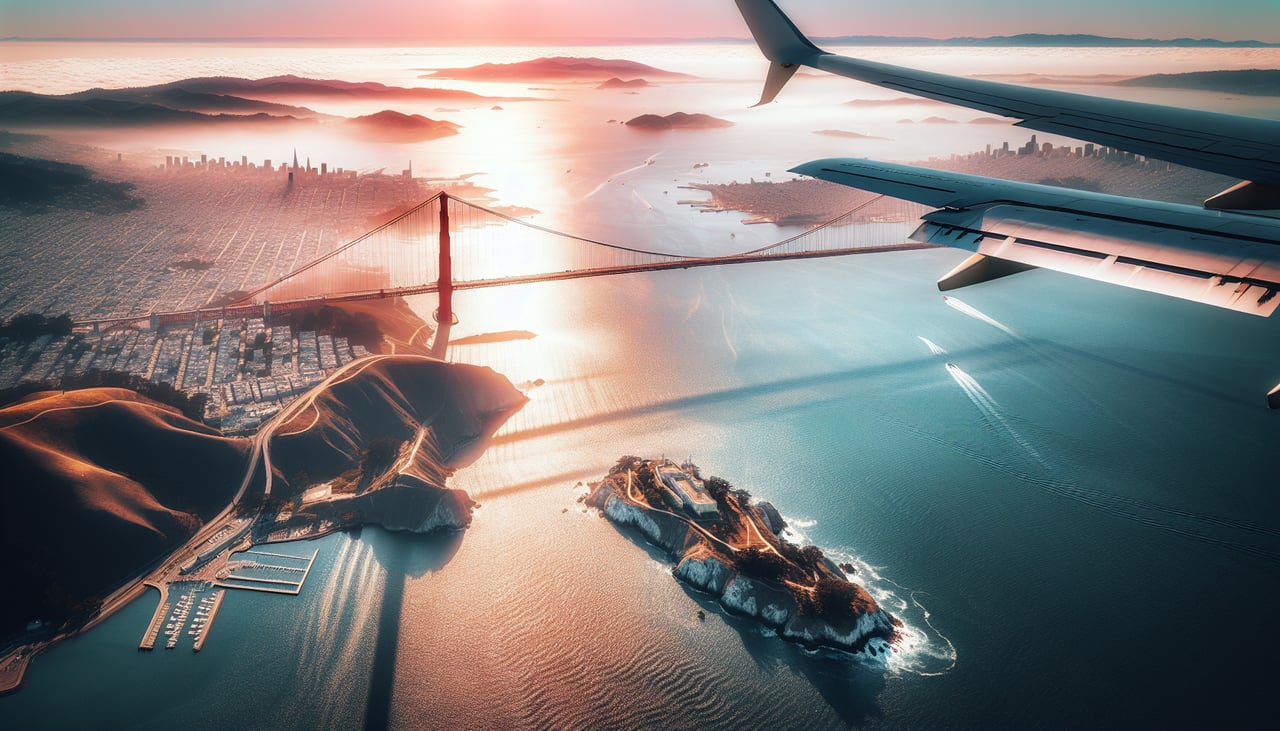
RIGHTArriving from the north and lining up for runway 28L/28R over the Bay, the right windows face north-northeast across the water toward the San Francisco skyline, the Bay Bridge and the Oakland waterfront. The left side mostly gets the South Bay shoreline and the Santa Cruz Mountains, which are good but less dramatic.
Will your flight be in sunlight?
Pick a date and time in the Sun Map to watch the sun move across your whole flight.
About This Route
Which side of the plane should I sit on flying from Indira Gandhi International (DEL) to San Francisco International (SFO)?
Sit on the Right side of the plane for the best views on flights from Delhi to San Francisco. The right side has the better bookends: the climb-out turn over Delhi and the Yamuna, and the approach with the San Francisco skyline and Bay Bridge in view. It also looks toward the Garhwal Himalaya after departure. The left side has strong Karakoram, Arctic and Alaska-BC mountain views, but its arrival is less iconic.
What can I see during takeoff from Indira Gandhi International in Delhi?
During takeoff from Indira Gandhi International (DEL), sit on the Right side for the best views. In Delhi's usual westerly departure flow (runway 29L/29R), the jet lifts off heading WNW and then banks right toward its north-northeast route. The right windows swing around to look over the city and the Yamuna River, while the left side mostly sees the flat plains and suburbs to the west. Notable sights include: Yamuna River, central Delhi around Lutyens' Delhi and India Gate, the wooded Delhi Ridge, the Gurgaon skyline.
What can I see when landing at San Francisco International in San Francisco?
When landing at San Francisco International (SFO), sit on the Right side for the best views. Arriving from the north and lining up for runway 28L/28R over the Bay, the right windows face north-northeast across the water toward the San Francisco skyline, the Bay Bridge and the Oakland waterfront. The left side mostly gets the South Bay shoreline and the Santa Cruz Mountains, which are good but less dramatic. Notable sights include: San Francisco skyline, Bay Bridge, Oakland port and East Bay hills, Mount Tamalpais on the horizon.
How long is the flight from Delhi to San Francisco?
The flight from Indira Gandhi International (DEL) to San Francisco International (SFO) takes about 15 hours 40 minutes. The shortest flight path between them is 7,694 miles (12,382 km); winds and air traffic control usually add a few percent.
What does the Delhi to San Francisco flight path pass over?
Routing varies with winds and airspace. The track usually heads north-northeast over the Himachal and Garhwal Himalaya, across the edge of the Tibetan Plateau and the Tian Shan or Altai ranges, then over Siberia and the Arctic coast near the Bering Strait. It then turns southeast across Alaska, the Gulf of Alaska and the British Columbia coast, passing the Coast Mountains and Vancouver Island before the descent into the Bay Area.