The right side captures both the dramatic Front Range backdrop on departure and the Dallas skyline on arrival, while the left side offers only flat, featureless plains for nearly the entire flight.
Flown DEN to DAL? Did we get it right?
Flight Path
Denver to Dallas is 651 miles (1,048 km), a flight of about 1 hour 55 minutes.
The route crosses the flat High Plains of eastern Colorado and the Texas/Oklahoma Panhandle region, marked by circular and rectangular irrigated farmland with little topographic relief until the terrain gradually flattens further into North Texas prairie.
Great circle distance and headings ›Phase by phase

Takeoff from DEN
RIGHTDeparting DEN typically climbs southward before turning toward Dallas, putting the Front Range of the Rockies squarely on the right side. Passengers get a clear view of the foothills and snow-capped peaks west of Denver before the plane banks east onto its cruise track.
Landing at DAL
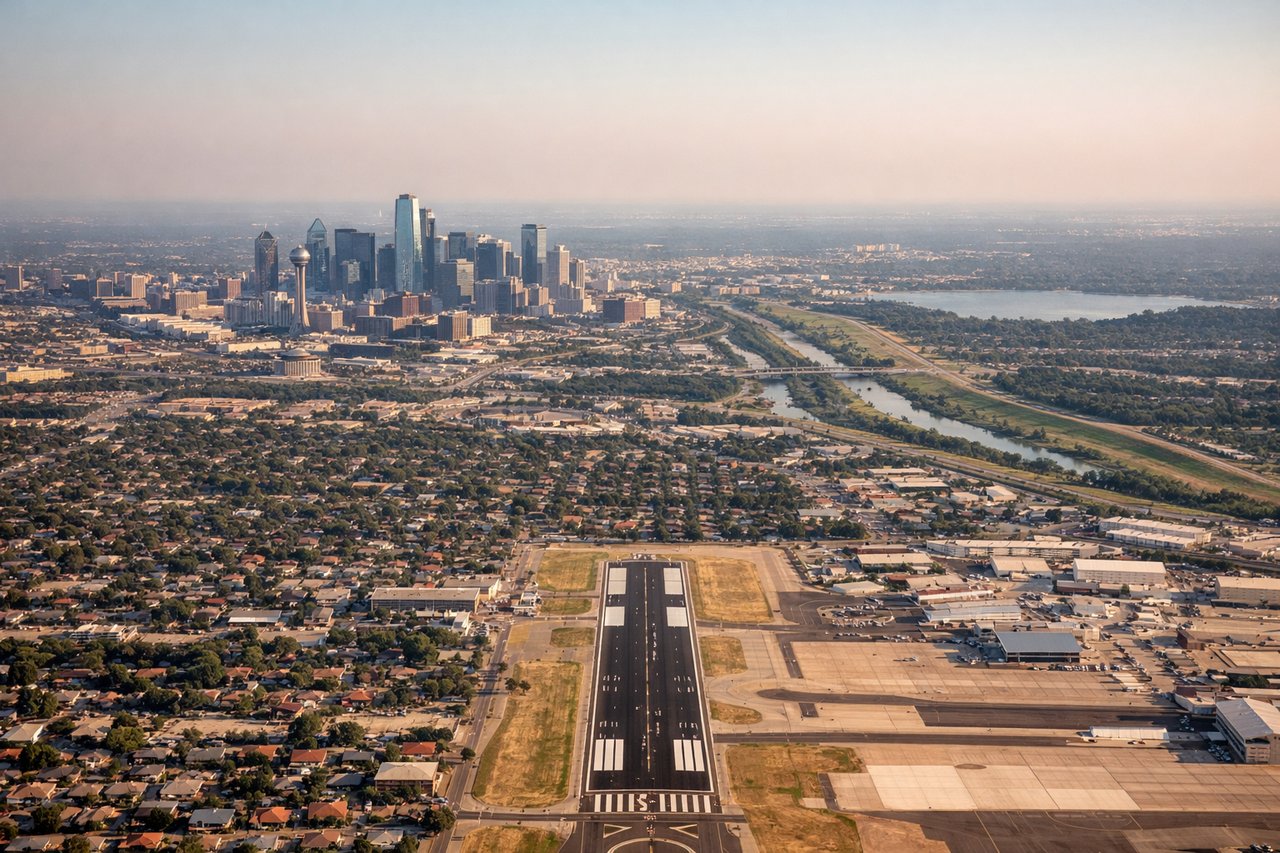
RIGHTArriving from the north, the aircraft banks to align with Love Field's runway and passes near downtown Dallas just before touchdown. The skyline, with its distinctive towers, sits off to the right during the final descent.
Will your flight be in sunlight?
Pick a date and time in the Sun Map to watch the sun move across your whole flight.
About This Route
Which side of the plane should I sit on flying from Denver International (DEN) to Dallas Love Fld (DAL)?
Sit on the Right side of the plane for the best views on flights from Denver to Dallas. The right side captures both the dramatic Front Range backdrop on departure and the Dallas skyline on arrival, while the left side offers only flat, featureless plains for nearly the entire flight.
What can I see during takeoff from Denver International in Denver?
During takeoff from Denver International (DEN), sit on the Right side for the best views. Departing DEN typically climbs southward before turning toward Dallas, putting the Front Range of the Rockies squarely on the right side. Passengers get a clear view of the foothills and snow-capped peaks west of Denver before the plane banks east onto its cruise track. Notable sights include: Front Range foothills, Mount Evans, Longs Peak, Denver's northern suburbs.
What can I see when landing at Dallas Love Fld in Dallas?
When landing at Dallas Love Fld (DAL), sit on the Right side for the best views. Arriving from the north, the aircraft banks to align with Love Field's runway and passes near downtown Dallas just before touchdown. The skyline, with its distinctive towers, sits off to the right during the final descent. Notable sights include: Downtown Dallas skyline, Reunion Tower, Trinity River, Bank of America Plaza.
How long is the flight from Denver to Dallas?
The flight from Denver International (DEN) to Dallas Love Fld (DAL) takes about 1 hour 55 minutes. The shortest flight path between them is 651 miles (1,048 km); winds and air traffic control usually add a few percent.
What does the Denver to Dallas flight path pass over?
The route crosses the flat High Plains of eastern Colorado and the Texas/Oklahoma Panhandle region, marked by circular and rectangular irrigated farmland with little topographic relief until the terrain gradually flattens further into North Texas prairie.