Denver to Jacksonville is 1,445 miles (2,325 km), a flight of about 3 hours 30 minutes.
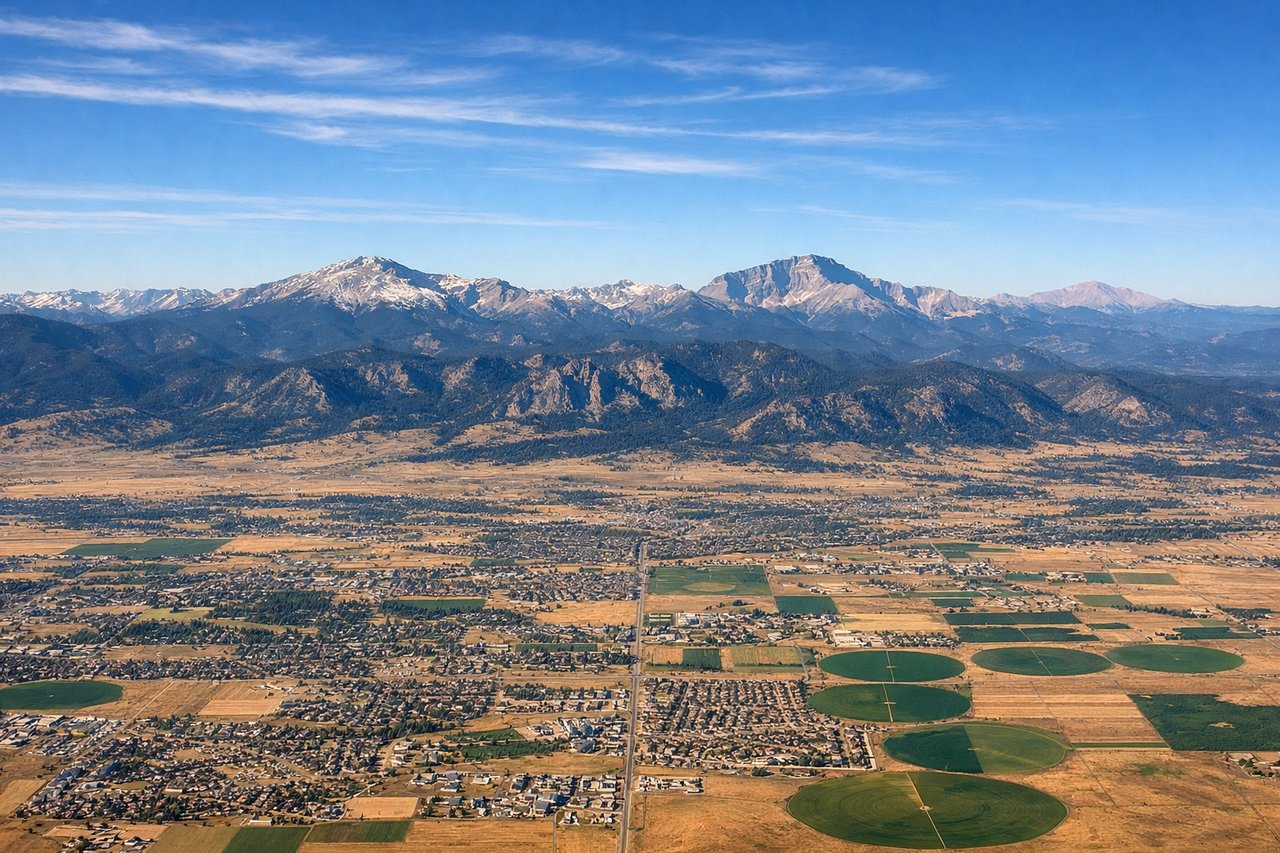
The left side delivers the dramatic Rocky Mountain Front Range panorama on departure, which is the single most spectacular visual moment of this flight. The mid-flight terrain over Kansas, Oklahoma, and Alabama is relatively flat on both sides, and while the right side gets the St. Johns River on approach, the Rockies at takeoff are the clear highlight of the journey.
Flight Path
The flight tracks southeast over the Kansas plains, then across the Ozark Plateau in southern Missouri and northern Arkansas, crossing the Mississippi River near Memphis, then over northern Alabama and Georgia before descending into Jacksonville. The Mississippi River crossing is the most visually notable mid-flight feature, appearing as a wide brown meandering ribbon. The Ozark hills offer subtle topographic relief but nothing dramatic at cruising altitude.
Great circle distance and headings ›
.jpeg?width=600)
Phase by phase
Takeoff from DEN
LEFTDEN typically departs eastward on runways 16/34 or 8/26. On an eastbound departure toward JAX, the aircraft banks southeast, putting the Rocky Mountains on the left (south) side. You get a sweeping view of the Front Range including Pikes Peak and the Denver metro grid below.
Landing at JAX
RIGHTJAX typically lands on runway 07/25 or 13/31. On approach from the west or northwest, the right side faces south toward the St. Johns River and downtown Jacksonville. The St. Johns River is a dominant and visually striking feature as it winds broadly through the city before reaching the Atlantic coast.
Landmarks on this routeAll landmarks →
Will your flight be in sunlight?
Pick a date and time in the Sun Map to watch the sun move across your whole flight.
About This Route
Which side of the plane should I sit on flying from Denver International (DEN) to Jacksonville International (JAX)?
Sit on the Left side of the plane for the best views on flights from Denver to Jacksonville. The left side delivers the dramatic Rocky Mountain Front Range panorama on departure, which is the single most spectacular visual moment of this flight. The mid-flight terrain over Kansas, Oklahoma, and Alabama is relatively flat on both sides, and while the right side gets the St. Johns River on approach, the Rockies at takeoff are the clear highlight of the journey.
What can I see during takeoff from Denver International in Denver?
During takeoff from Denver International (DEN), sit on the Left side for the best views. DEN typically departs eastward on runways 16/34 or 8/26. On an eastbound departure toward JAX, the aircraft banks southeast, putting the Rocky Mountains on the left (south) side. You get a sweeping view of the Front Range including Pikes Peak and the Denver metro grid below. Notable sights include: Front Range of the Rockies, Pikes Peak (14,115 ft), Denver metro grid, Cherry Creek Reservoir.
What can I see when landing at Jacksonville International in Jacksonville?
When landing at Jacksonville International (JAX), sit on the Right side for the best views. JAX typically lands on runway 07/25 or 13/31. On approach from the west or northwest, the right side faces south toward the St. Johns River and downtown Jacksonville. The St. Johns River is a dominant and visually striking feature as it winds broadly through the city before reaching the Atlantic coast. Notable sights include: St. Johns River, downtown Jacksonville skyline, Atlantic Ocean coastline, Intracoastal Waterway.
How long is the flight from Denver to Jacksonville?
The flight from Denver International (DEN) to Jacksonville International (JAX) takes about 3 hours 30 minutes. The shortest flight path between them is 1,445 miles (2,325 km); winds and air traffic control usually add a few percent.
What does the Denver to Jacksonville flight path pass over?
The flight tracks southeast over the Kansas plains, then across the Ozark Plateau in southern Missouri and northern Arkansas, crossing the Mississippi River near Memphis, then over northern Alabama and Georgia before descending into Jacksonville. The Mississippi River crossing is the most visually notable mid-flight feature, appearing as a wide brown meandering ribbon. The Ozark hills offer subtle topographic relief but nothing dramatic at cruising altitude.