Both sides score equally for the full flight due to the route's limited scenic drama—the departure offers brief mountain views but quickly transitions to featureless Great Plains, while the landing provides the more distinctive scenery with Bluegrass horse country and Appalachian foothills. Right-side passengers experience the more visually interesting final descent into Lexington, making it the marginally better choice for the overall journey.
Flown DEN to LEX? Did we get it right?
Flight Path
Denver to Lexington is 1,083 miles (1,743 km), a flight of about 3 hours 15 minutes.
The flight crosses the Great Plains from Colorado into Kansas and Missouri, passing over the relatively flat terrain of the High Plains with occasional river valleys (Arkansas River, Smoky Hill River). No major mountain ranges or dramatic terrain features are visible during cruise. The landscape transitions gradually from semi-arid plains in western Kansas to more verdant agricultural land in Missouri and into the Ohio River basin as the aircraft approaches Kentucky. The Ohio River becomes visible during descent into the Lexington area.
Great circle distance and headings ›Phase by phase
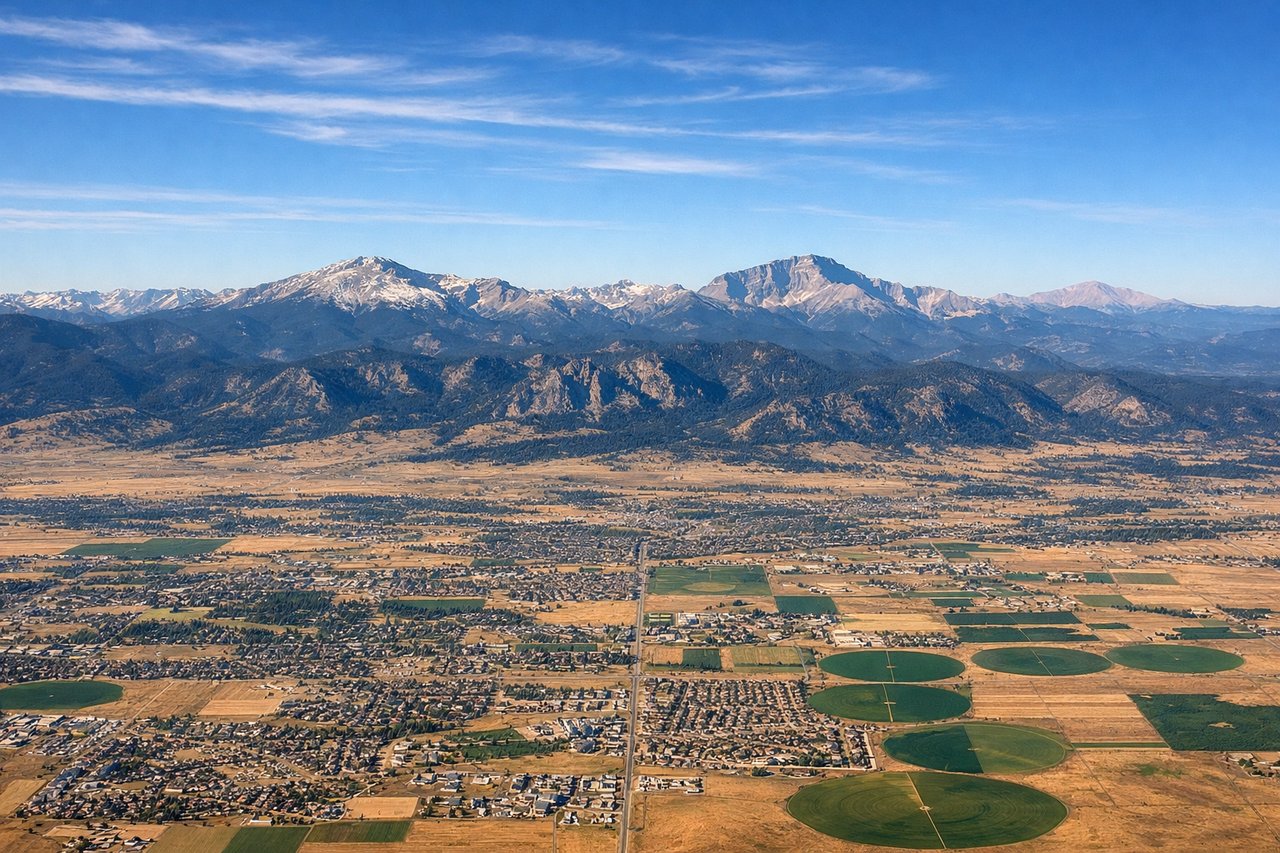
Takeoff from DEN
LEFTDeparting Denver typically uses north-south runways with southbound initial turns. Left-side passengers see the Front Range foothills and the urban sprawl of metro Denver receding, offering brief mountain relief before the climb-out over the plains.
Landing at LEX
RIGHTApproaching Lexington typically uses runway 22 (southwest heading) with descent from the northwest. Right-side passengers see the Bluegrass region's rolling terrain, horse farm country with distinctive white fencing, and the transition from Appalachian foothills into central Kentucky's pastoral landscape.
Will your flight be in sunlight?
Pick a date and time in the Sun Map to watch the sun move across your whole flight.
About This Route
Which side of the plane should I sit on flying from Denver International (DEN) to Blue Grass Airport (LEX)?
Sit on the Right side of the plane for the best views on flights from Denver to Lexington. Both sides score equally for the full flight due to the route's limited scenic drama—the departure offers brief mountain views but quickly transitions to featureless Great Plains, while the landing provides the more distinctive scenery with Bluegrass horse country and Appalachian foothills. Right-side passengers experience the more visually interesting final descent into Lexington, making it the marginally better choice for the overall journey.
What can I see during takeoff from Denver International in Denver?
During takeoff from Denver International (DEN), sit on the Left side for the best views. Departing Denver typically uses north-south runways with southbound initial turns. Left-side passengers see the Front Range foothills and the urban sprawl of metro Denver receding, offering brief mountain relief before the climb-out over the plains. Notable sights include: Front Range foothills, Denver metropolitan area, South Platte River valley.
What can I see when landing at Blue Grass Airport in Lexington?
When landing at Blue Grass Airport (LEX), sit on the Right side for the best views. Approaching Lexington typically uses runway 22 (southwest heading) with descent from the northwest. Right-side passengers see the Bluegrass region's rolling terrain, horse farm country with distinctive white fencing, and the transition from Appalachian foothills into central Kentucky's pastoral landscape. Notable sights include: Appalachian foothills, Bluegrass region horse farms, Kentucky River valley, Lexington urban area.
How long is the flight from Denver to Lexington?
The flight from Denver International (DEN) to Blue Grass Airport (LEX) takes about 3 hours 15 minutes. The shortest flight path between them is 1,083 miles (1,743 km); winds and air traffic control usually add a few percent.
What does the Denver to Lexington flight path pass over?
The flight crosses the Great Plains from Colorado into Kansas and Missouri, passing over the relatively flat terrain of the High Plains with occasional river valleys (Arkansas River, Smoky Hill River). No major mountain ranges or dramatic terrain features are visible during cruise. The landscape transitions gradually from semi-arid plains in western Kansas to more verdant agricultural land in Missouri and into the Ohio River basin as the aircraft approaches Kentucky. The Ohio River becomes visible during descent into the Lexington area.