Left side wins the entire flight. From Denver's Front Range at takeoff through the continuous Rocky Mountain corridor over Wyoming and Montana, to the Canadian Rockies on descent into Calgary, the left window tracks the mountain spine the whole way. The right side sees mostly flat plains throughout.
Flight Path
The flight tracks north over the Wyoming Basin and the Laramie Range, then crosses the Wind River Range — one of the most rugged and remote ranges in the lower 48, visible as a broad high massif to the left. Further north, the Bighorn Mountains appear to the right in Wyoming. Crossing into Montana, the flight passes near the Beartooth Plateau and eventually the Sweetgrass Hills before entering Alberta. The entire left side of the aircraft follows the Rocky Mountain front from Colorado through Wyoming and Montana into Canada.
Great circle distance and headings ›Phase by phase
Takeoff from DEN
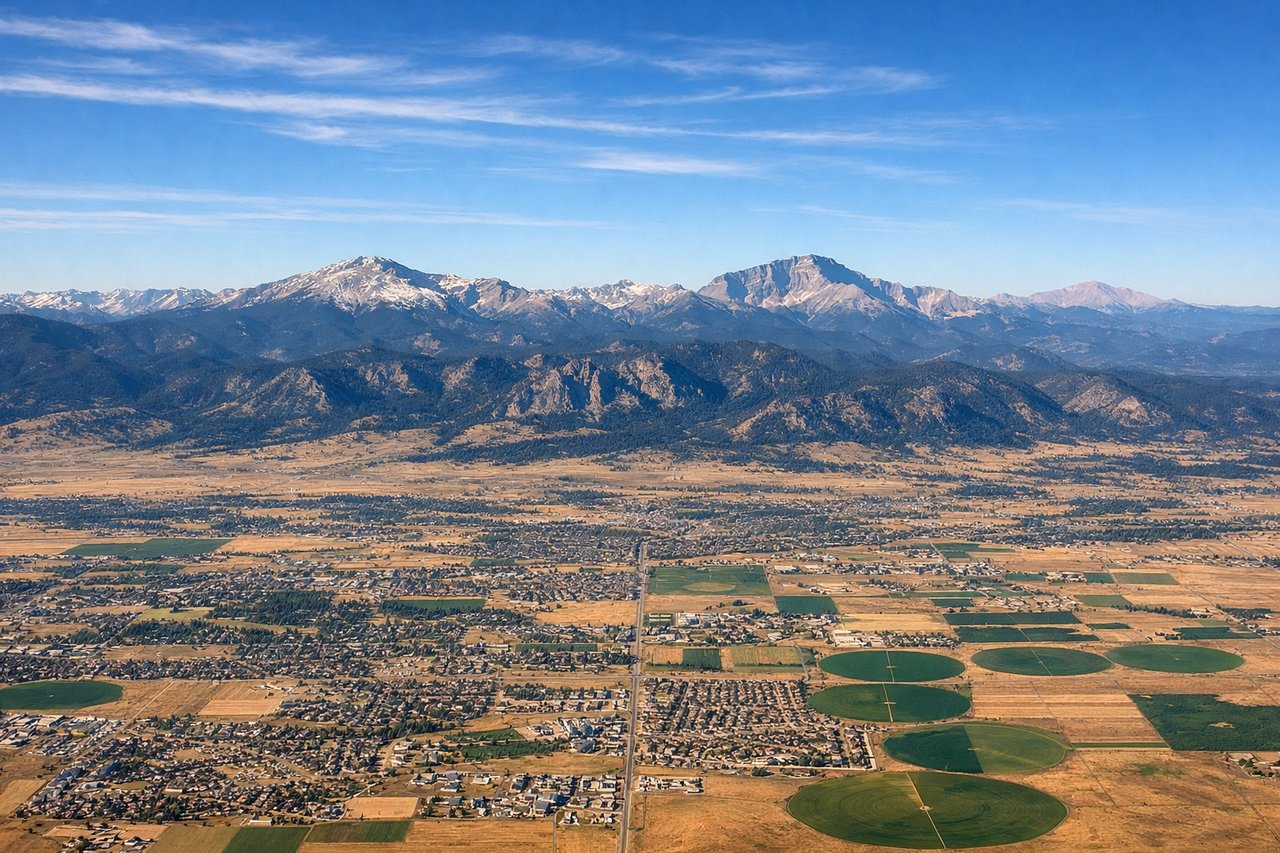
LEFTDEN's primary departure runways (16L/R and 17L/R) send northbound flights climbing westward initially, putting the entire Front Range of the Rockies on the left side. You get a sweeping view of the mountains from Pikes Peak in the south to Longs Peak and the Indian Peaks Wilderness to the northwest. Denver's downtown grid is also visible below-left during initial climb.
Landing at YYC
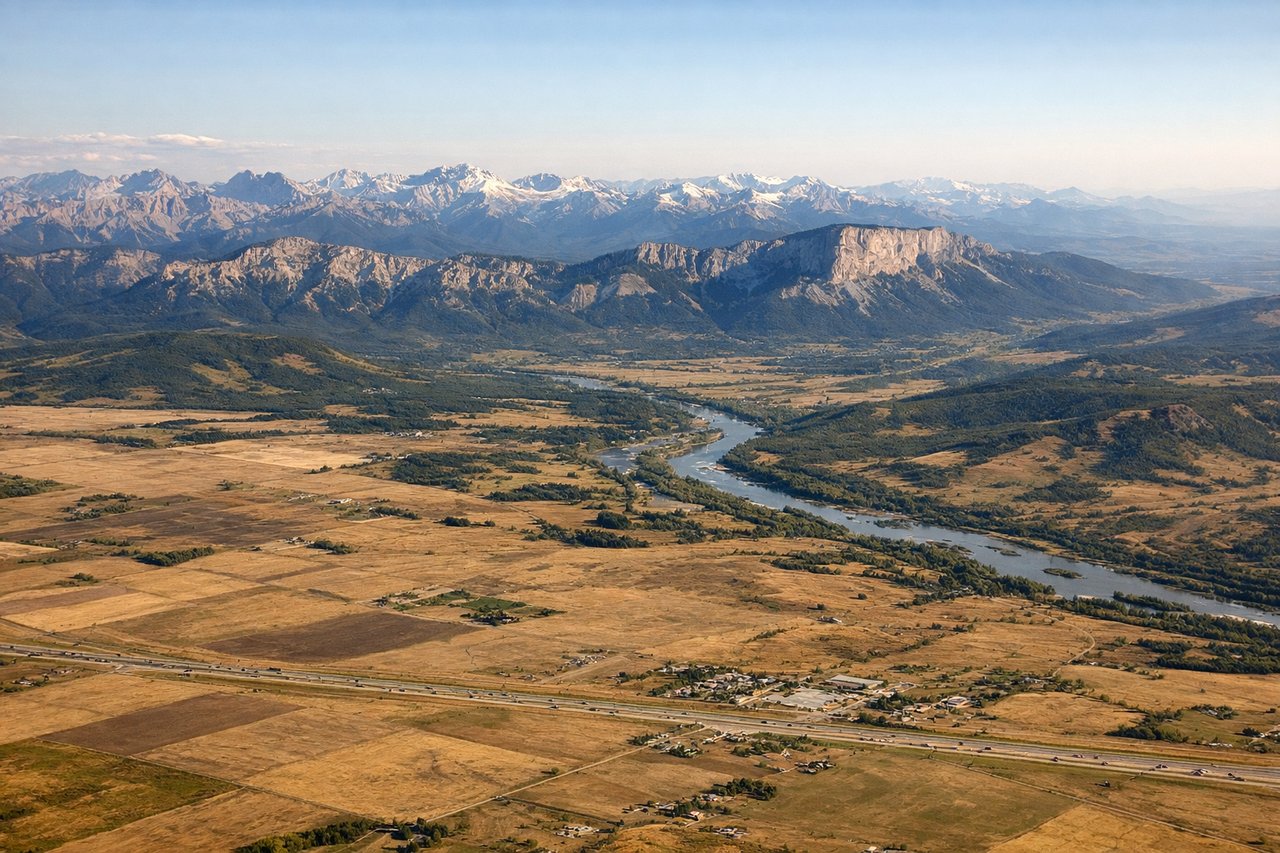
LEFTFlights into YYC from the south typically approach on runway 35L/R heading northward, with the Canadian Rockies running along the left (west) side. The left window gives you the Bow River valley, Banff and Kananaskis ranges, and the dramatic eastern escarpment of the Rockies as you descend over the foothills into Calgary.
Landmarks on this routeAll landmarks →
Will your flight be in sunlight?
See exactly which side of the plane gets sun and shade at your departure time.
About This Route
Which side of the plane should I sit on flying from Denver International (DEN) to Calgary International (YYC)?
Sit on the Left side of the plane for the best views on flights from Denver to Calgary. Left side wins the entire flight. From Denver's Front Range at takeoff through the continuous Rocky Mountain corridor over Wyoming and Montana, to the Canadian Rockies on descent into Calgary, the left window tracks the mountain spine the whole way. The right side sees mostly flat plains throughout.
What can I see during takeoff from Denver International in Denver?
During takeoff from Denver International (DEN), sit on the Left side for the best views. DEN's primary departure runways (16L/R and 17L/R) send northbound flights climbing westward initially, putting the entire Front Range of the Rockies on the left side. You get a sweeping view of the mountains from Pikes Peak in the south to Longs Peak and the Indian Peaks Wilderness to the northwest. Denver's downtown grid is also visible below-left during initial climb. Notable sights include: Front Range (Pikes Peak to Longs Peak), Denver downtown skyline, Rocky Mountain National Park peaks, Chatfield Reservoir.
What can I see when landing at Calgary International in Calgary?
When landing at Calgary International (YYC), sit on the Left side for the best views. Flights into YYC from the south typically approach on runway 35L/R heading northward, with the Canadian Rockies running along the left (west) side. The left window gives you the Bow River valley, Banff and Kananaskis ranges, and the dramatic eastern escarpment of the Rockies as you descend over the foothills into Calgary. Notable sights include: Canadian Rockies eastern escarpment, Bow River valley, Kananaskis Country peaks, Calgary downtown skyline.
How long is the flight from Denver to Calgary?
The flight from Denver International (DEN) to Calgary International (YYC) takes Approximately 1 hour 45 minutes to 2 hours.
What does the Denver to Calgary flight path pass over?
The flight tracks north over the Wyoming Basin and the Laramie Range, then crosses the Wind River Range — one of the most rugged and remote ranges in the lower 48, visible as a broad high massif to the left. Further north, the Bighorn Mountains appear to the right in Wyoming. Crossing into Montana, the flight passes near the Beartooth Plateau and eventually the Sweetgrass Hills before entering Alberta. The entire left side of the aircraft follows the Rocky Mountain front from Colorado through Wyoming and Montana into Canada.