Dallas-Fort Worth to Durango is 673 miles (1,084 km), a flight of about 1 hour 30 minutes.
Left side wins both ends of the flight. During the cruise portion heading northwest, the left side also tracks closer to the Sangre de Cristo Mountains of New Mexico and the southern Rockies as you approach Colorado, making it the consistently better side for the entire journey.
Flight Path
The flight crosses the rolling plains of north Texas, then the Caprock Escarpment and the Canadian River breaks in the Texas Panhandle, before crossing into New Mexico over the high desert plateau near Tucumcari. The route then passes over the Sangre de Cristo foothills and the broad San Juan Basin before descending into the Animas River valley at Durango.
Great circle distance and headings ›.jpg?width=600)

Phase by phase
Takeoff from DFW
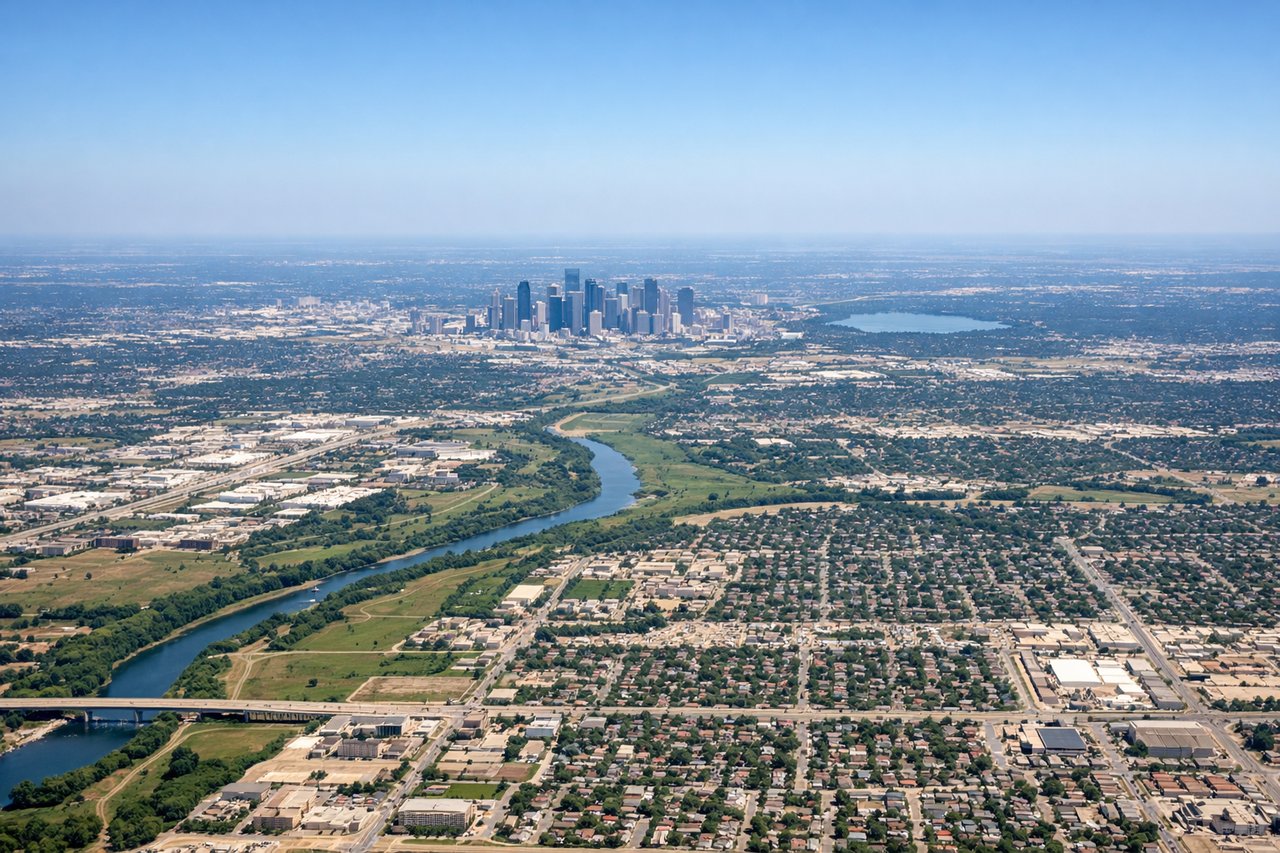
LEFTDFW typically departs northwestward on runways 17L/17R or 18L/18R in south flow, or 35L/35R in north flow. Heading northwest toward DRO, the left side gives you a view over Fort Worth's downtown skyline and the sprawling DFW metroplex as you climb out, with the Trinity River corridor visible below.
Landing at DRO
LEFTDRO's primary approach is from the east or southeast on runway 02/20. On approach from the southeast heading northwest, the left side faces west and southwest, giving you a direct view of the La Plata Mountains and the Animas River valley below Durango. The right side looks back east toward open mesa country.
Landmarks on this routeAll landmarks →
Will your flight be in sunlight?
Pick a date and time in the Sun Map to watch the sun move across your whole flight.
About This Route
Which side of the plane should I sit on flying from Dallas Fort Worth International (DFW) to Durango La Plata Co (DRO)?
Sit on the Left side of the plane for the best views on flights from Dallas-Fort Worth to Durango. Left side wins both ends of the flight. During the cruise portion heading northwest, the left side also tracks closer to the Sangre de Cristo Mountains of New Mexico and the southern Rockies as you approach Colorado, making it the consistently better side for the entire journey.
What can I see during takeoff from Dallas Fort Worth International in Dallas-Fort Worth?
During takeoff from Dallas Fort Worth International (DFW), sit on the Left side for the best views. DFW typically departs northwestward on runways 17L/17R or 18L/18R in south flow, or 35L/35R in north flow. Heading northwest toward DRO, the left side gives you a view over Fort Worth's downtown skyline and the sprawling DFW metroplex as you climb out, with the Trinity River corridor visible below. Notable sights include: Fort Worth downtown skyline, Trinity River corridor, Lake Worth to the northwest, sprawling DFW suburban grid.
What can I see when landing at Durango La Plata Co in Durango?
When landing at Durango La Plata Co (DRO), sit on the Left side for the best views. DRO's primary approach is from the east or southeast on runway 02/20. On approach from the southeast heading northwest, the left side faces west and southwest, giving you a direct view of the La Plata Mountains and the Animas River valley below Durango. The right side looks back east toward open mesa country. Notable sights include: La Plata Mountains (directly to the west), Animas River valley and Durango townsite, Missionary Ridge to the east, Hesperus Mountain (13,232 ft) visible to the southwest.
How long is the flight from Dallas-Fort Worth to Durango?
The flight from Dallas Fort Worth International (DFW) to Durango La Plata Co (DRO) takes about 1 hour 30 minutes. The shortest flight path between them is 673 miles (1,084 km); winds and air traffic control usually add a few percent.
What does the Dallas-Fort Worth to Durango flight path pass over?
The flight crosses the rolling plains of north Texas, then the Caprock Escarpment and the Canadian River breaks in the Texas Panhandle, before crossing into New Mexico over the high desert plateau near Tucumcari. The route then passes over the Sangre de Cristo foothills and the broad San Juan Basin before descending into the Animas River valley at Durango.