Durango to Dallas-Fort Worth is 673 miles (1,084 km), a flight of about 2 hours 5 minutes.
While takeoff offers dramatic mountain scenery, the landing approach into DFW provides more sustained visual interest over a longer portion of the flight—the descent reveals the entire Dallas-Fort Worth metroplex, the Trinity River system, and the airport approach. Right-side seats capture this better than left.
Flight Path
The flight path crosses the Texas Panhandle and northern Texas. Notable features include the Canadian River valley (visible around the New Mexico-Texas border), the Palo Duro Canyon area (if slightly south of direct routing), the High Plains terrain of the Texas Panhandle (relatively flat with sparse vegetation), and the transition into the rolling prairie and woodland of north-central Texas. The Brazos River and its tributaries become visible in the final descent phase. No major mountain ranges are visible in the midpoint; the terrain gradually transitions from high plateau (around 4,000-5,000 feet elevation) to rolling prairie (2,000-3,000 feet) to the Dallas-Fort Worth lowlands (500-800 feet).
Great circle distance and headings ›Phase by phase
Takeoff from DRO
LEFTLeft side offers immediate views of the San Juan Mountains to the north and east of Durango, with the Animas River valley visible below during climb-out. Right side faces toward lower terrain and the Colorado Plateau with less dramatic relief.
Landing at DFW
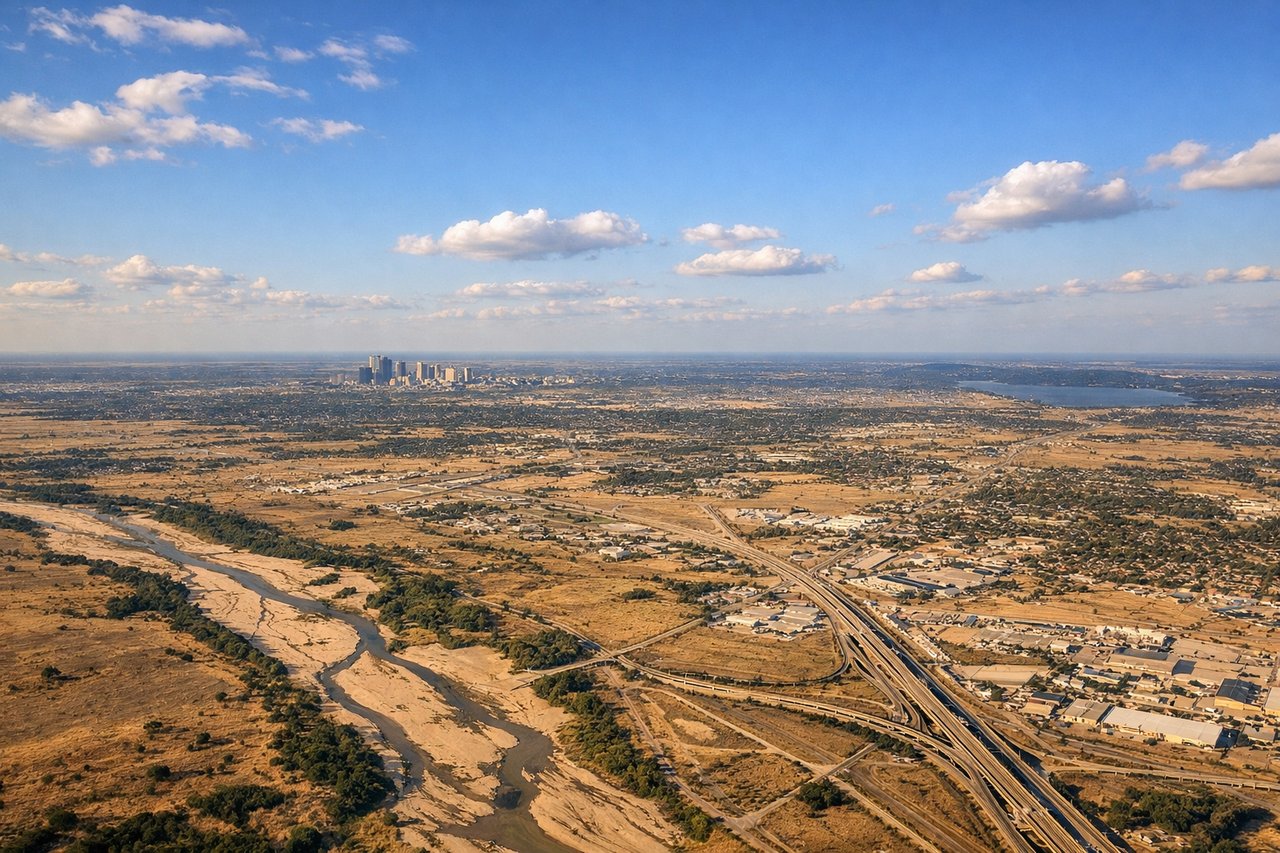
RIGHTRight side provides views of the Fort Worth skyline and the Trinity River as you descend into DFW. You'll also see the urban sprawl of the Dallas-Fort Worth metroplex and major highways converging toward the airport from the north and west.
Landmarks on this routeAll landmarks →
Will your flight be in sunlight?
Pick a date and time in the Sun Map to watch the sun move across your whole flight.
About This Route
Which side of the plane should I sit on flying from Durango La Plata Co (DRO) to Dallas Fort Worth International (DFW)?
Sit on the Right side of the plane for the best views on flights from Durango to Dallas-Fort Worth. While takeoff offers dramatic mountain scenery, the landing approach into DFW provides more sustained visual interest over a longer portion of the flight—the descent reveals the entire Dallas-Fort Worth metroplex, the Trinity River system, and the airport approach. Right-side seats capture this better than left.
What can I see during takeoff from Durango La Plata Co in Durango?
During takeoff from Durango La Plata Co (DRO), sit on the Left side for the best views. Left side offers immediate views of the San Juan Mountains to the north and east of Durango, with the Animas River valley visible below during climb-out. Right side faces toward lower terrain and the Colorado Plateau with less dramatic relief. Notable sights include: San Juan Mountains (north/northeast), Animas River valley (directly below), La Plata Mountains (east), Durango city grid (immediate ground reference).
What can I see when landing at Dallas Fort Worth International in Dallas-Fort Worth?
When landing at Dallas Fort Worth International (DFW), sit on the Right side for the best views. Right side provides views of the Fort Worth skyline and the Trinity River as you descend into DFW. You'll also see the urban sprawl of the Dallas-Fort Worth metroplex and major highways converging toward the airport from the north and west. Notable sights include: Fort Worth downtown skyline (west/southwest), Trinity River (winding through the city), Dallas-Fort Worth metroplex urban grid, DFW Airport runways and taxiways (immediate approach).
How long is the flight from Durango to Dallas-Fort Worth?
The flight from Durango La Plata Co (DRO) to Dallas Fort Worth International (DFW) takes about 2 hours 5 minutes. The shortest flight path between them is 673 miles (1,084 km); winds and air traffic control usually add a few percent.
What does the Durango to Dallas-Fort Worth flight path pass over?
The flight path crosses the Texas Panhandle and northern Texas. Notable features include the Canadian River valley (visible around the New Mexico-Texas border), the Palo Duro Canyon area (if slightly south of direct routing), the High Plains terrain of the Texas Panhandle (relatively flat with sparse vegetation), and the transition into the rolling prairie and woodland of north-central Texas. The Brazos River and its tributaries become visible in the final descent phase. No major mountain ranges are visible in the midpoint; the terrain gradually transitions from high plateau (around 4,000-5,000 feet elevation) to rolling prairie (2,000-3,000 feet) to the Dallas-Fort Worth lowlands (500-800 feet).