While the takeoff briefly favors the right side, the long cruise phase gives the left side sustained views of the Rockies, the Canadian Rockies, and Alaska's Alaska Range/Denali area as the great-circle route curves northwest, plus a strong finish with Tokyo Bay and possibly Mount Fuji on descent into Narita.
Flight Path
Gulf of Alaska, the Alaska Peninsula and Aleutian Islands chain, and the open waters of the Bering Sea near the flight's northernmost point
Great circle distance and headings ›.jpg?width=600)


Phase by phase
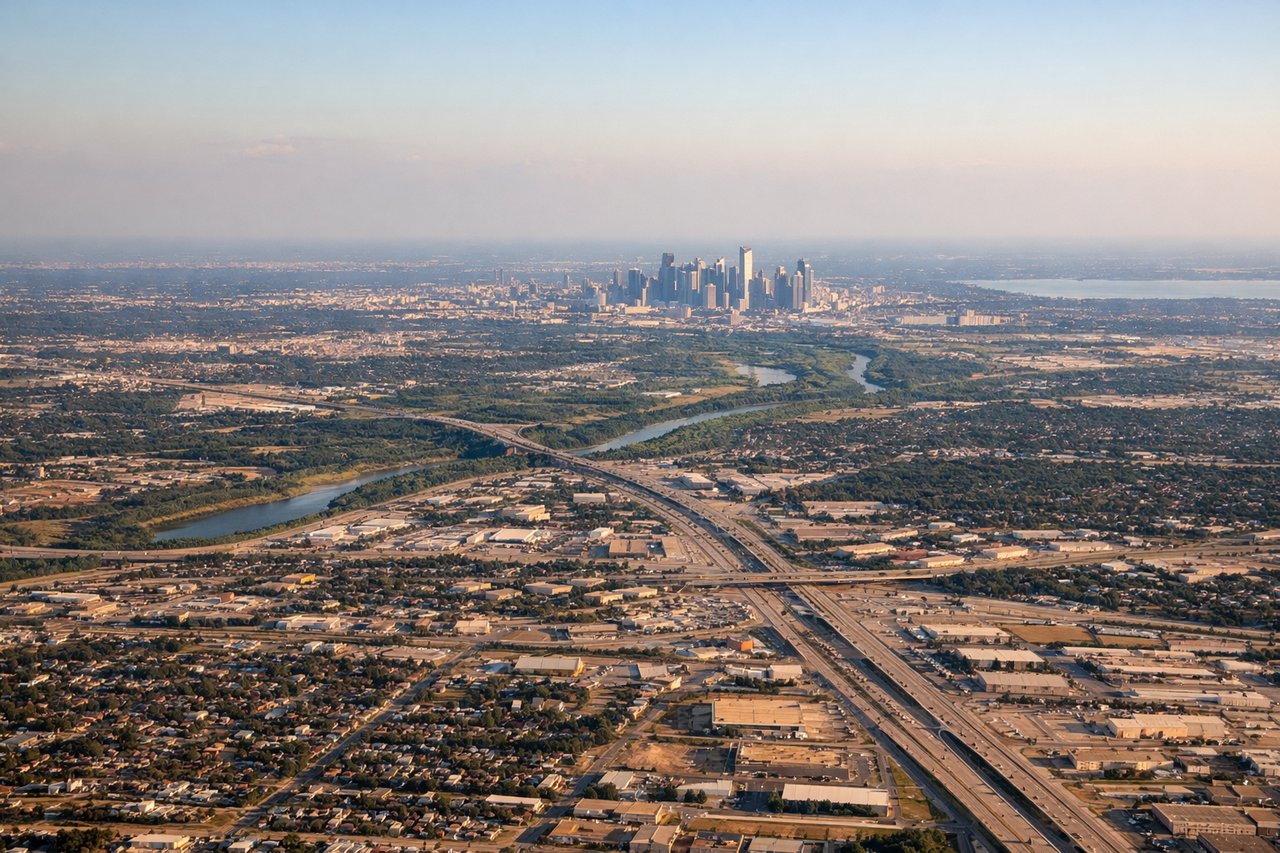
Takeoff from DFW
RIGHTDepartures from DFW typically climb out on a north-to-northwest heading before turning onto the polar/great-circle course toward Alaska, and during that turn the right side faces east toward downtown Dallas. The left side mostly shows flat suburban sprawl and Fort Worth, which is less visually distinct.
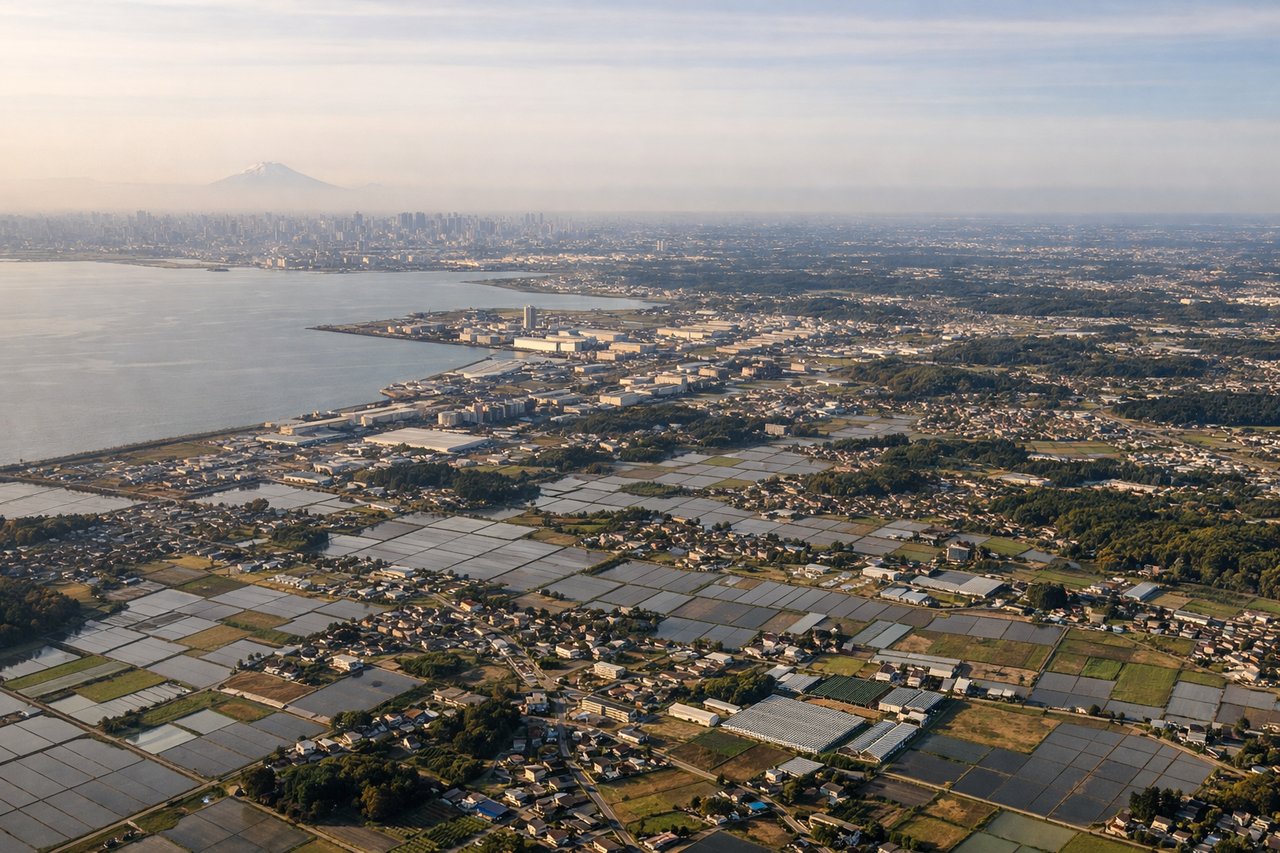
Landing at NRT
LEFTFlights arriving at Narita from the North Pacific typically track down Japan's east coast before turning inland, and on a southbound approach the left side faces southwest toward Tokyo Bay and, on a clear day, the distant cone of Mount Fuji. The right side mainly faces the open Pacific and the low hills of Chiba.
Landmarks on this routeAll landmarks →
Will your flight be in sunlight?
See exactly which side of the plane gets sun and shade at your departure time.
About This Route
Which side of the plane should I sit on flying from Dallas Fort Worth International (DFW) to New Tokyo International (NRT)?
Sit on the Left side of the plane for the best views on flights from Dallas-Fort Worth to Tokyo. While the takeoff briefly favors the right side, the long cruise phase gives the left side sustained views of the Rockies, the Canadian Rockies, and Alaska's Alaska Range/Denali area as the great-circle route curves northwest, plus a strong finish with Tokyo Bay and possibly Mount Fuji on descent into Narita.
What can I see during takeoff from Dallas Fort Worth International in Dallas-Fort Worth?
During takeoff from Dallas Fort Worth International (DFW), sit on the Right side for the best views. Departures from DFW typically climb out on a north-to-northwest heading before turning onto the polar/great-circle course toward Alaska, and during that turn the right side faces east toward downtown Dallas. The left side mostly shows flat suburban sprawl and Fort Worth, which is less visually distinct. Notable sights include: Downtown Dallas skyline (Reunion Tower, Bank of America Plaza), DFW's grid of terminals and runways, flat North Texas prairie.
What can I see when landing at New Tokyo International in Tokyo?
When landing at New Tokyo International (NRT), sit on the Left side for the best views. Flights arriving at Narita from the North Pacific typically track down Japan's east coast before turning inland, and on a southbound approach the left side faces southwest toward Tokyo Bay and, on a clear day, the distant cone of Mount Fuji. The right side mainly faces the open Pacific and the low hills of Chiba. Notable sights include: Mount Fuji (distant, on clear days), Tokyo Bay, Boso Peninsula coastline, patchwork rice fields of Chiba near Narita.
How long is the flight from Dallas-Fort Worth to Tokyo?
The flight from Dallas Fort Worth International (DFW) to New Tokyo International (NRT) takes 13h 15m.
What does the Dallas-Fort Worth to Tokyo flight path pass over?
Gulf of Alaska, the Alaska Peninsula and Aleutian Islands chain, and the open waters of the Bering Sea near the flight's northernmost point