The right side wins because of consistent mountain scenery: Colorado's southern Rockies and Utah's high desert plateaus pass beneath the route during cruise, and the flight ends with a close pass along the Wasatch Range into Salt Lake City. The left side stays over flat plains and open desert basins with little topographic interest.
Flight Path
Sangre de Cristo Range and San Juan Mountains foothills in southern Colorado, the Grand Mesa and Book Cliffs near Grand Junction, and the red-rock San Rafael Swell in central Utah before descending toward the Wasatch Front.
Great circle distance and headings ›.jpg?width=600)
.jpg?width=600)

Phase by phase
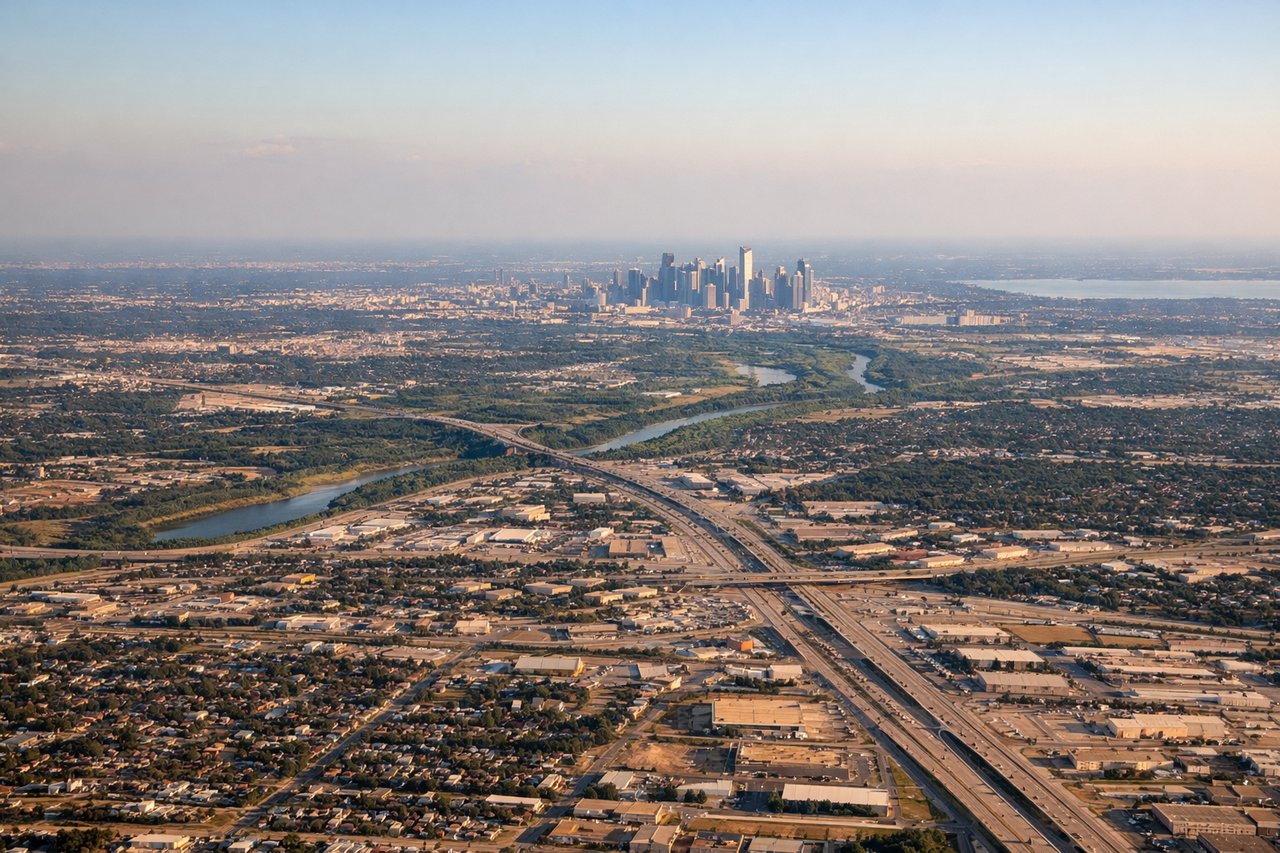
Takeoff from DFW
RIGHTAs the aircraft lifts off DFW's south-flow runways and banks toward the northwest, the right side briefly reveals the Fort Worth skyline and Lake Worth before the Metroplex gives way to flat Blackland Prairie farmland. The left side mostly shows featureless suburban grid with no real landmarks.
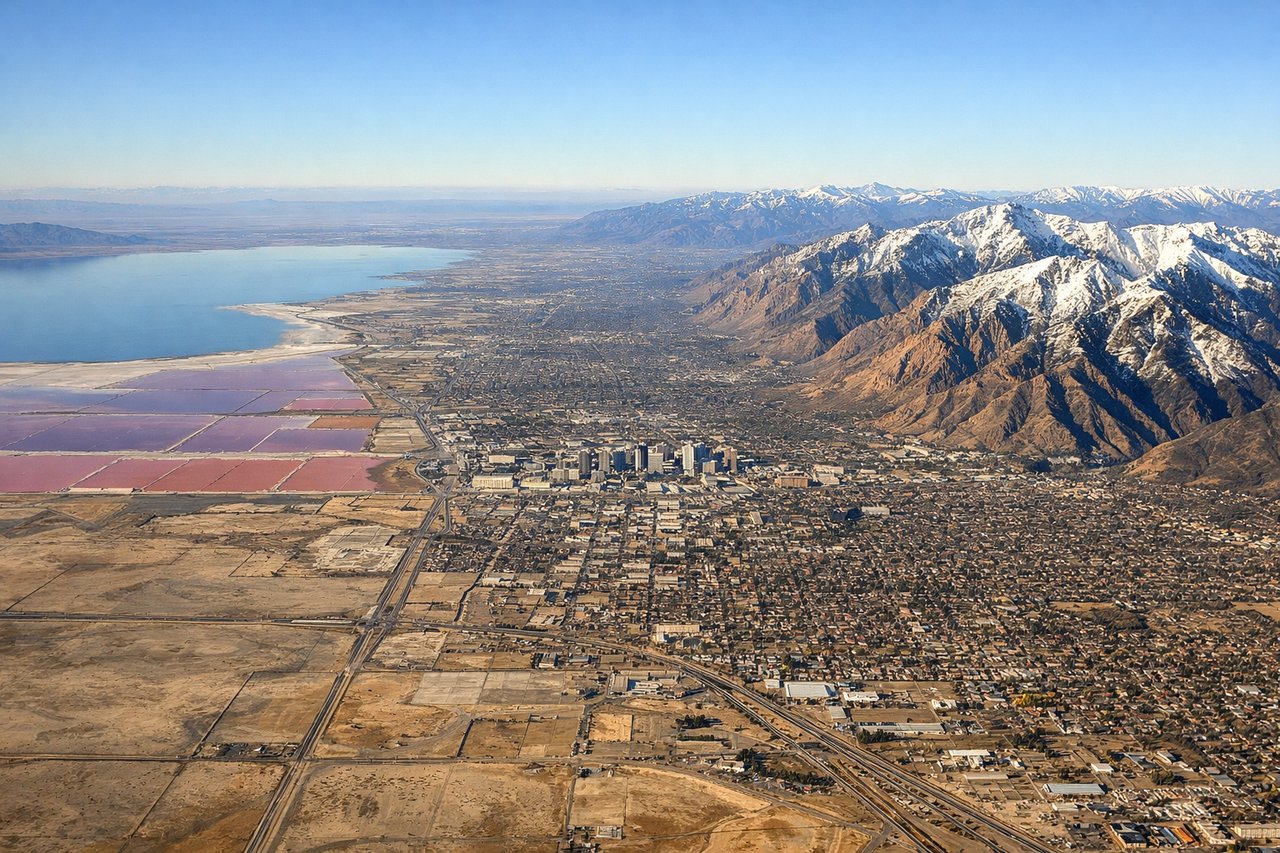
Landing at SLC
RIGHTOn approach into SLC, arriving from the southeast, the aircraft aligns with the north-south runways with the Wasatch Range close on the right, its steep peaks and canyons rising directly beside the descent path. The left side instead faces west toward the flatter Salt Lake Valley floor and the distant Great Salt Lake, less dramatic than the mountain wall.
Landmarks on this routeAll landmarks →
Will your flight be in sunlight?
See exactly which side of the plane gets sun and shade at your departure time.
About This Route
Which side of the plane should I sit on flying from Dallas Fort Worth International (DFW) to Salt Lake City International (SLC)?
Sit on the Right side of the plane for the best views on flights from Dallas-Fort Worth to Salt Lake City. The right side wins because of consistent mountain scenery: Colorado's southern Rockies and Utah's high desert plateaus pass beneath the route during cruise, and the flight ends with a close pass along the Wasatch Range into Salt Lake City. The left side stays over flat plains and open desert basins with little topographic interest.
What can I see during takeoff from Dallas Fort Worth International in Dallas-Fort Worth?
During takeoff from Dallas Fort Worth International (DFW), sit on the Right side for the best views. As the aircraft lifts off DFW's south-flow runways and banks toward the northwest, the right side briefly reveals the Fort Worth skyline and Lake Worth before the Metroplex gives way to flat Blackland Prairie farmland. The left side mostly shows featureless suburban grid with no real landmarks. Notable sights include: Fort Worth downtown skyline, Lake Worth, North Texas farmland grid.
What can I see when landing at Salt Lake City International in Salt Lake City?
When landing at Salt Lake City International (SLC), sit on the Right side for the best views. On approach into SLC, arriving from the southeast, the aircraft aligns with the north-south runways with the Wasatch Range close on the right, its steep peaks and canyons rising directly beside the descent path. The left side instead faces west toward the flatter Salt Lake Valley floor and the distant Great Salt Lake, less dramatic than the mountain wall. Notable sights include: Wasatch Range peaks, Point of the Mountain gap, Traverse Mountains, Salt Lake Valley grid.
How long is the flight from Dallas-Fort Worth to Salt Lake City?
The flight from Dallas Fort Worth International (DFW) to Salt Lake City International (SLC) takes 3h 05m.
What does the Dallas-Fort Worth to Salt Lake City flight path pass over?
Sangre de Cristo Range and San Juan Mountains foothills in southern Colorado, the Grand Mesa and Book Cliffs near Grand Junction, and the red-rock San Rafael Swell in central Utah before descending toward the Wasatch Front.