Dillingham to Anchorage is 328 miles (527 km), a flight of about 1 hour.
The landing approach provides superior views of the Chugach Mountains and Turnagain Arm's dramatic tidal geography. While takeoff offers river systems, the approach into Anchorage delivers more visually distinctive and geographically significant features.
Flight Path
The flight path crosses the Alaska Range foothills and transitions from Bristol Bay drainage to Cook Inlet basin. Notable midpoint features include the Tikchik Lakes region (visible as a cluster of water bodies if flying at lower cruise altitude), the transition from tundra to more mountainous terrain, and the approach to the Chugach Mountains' western slopes as you near Anchorage.
Great circle distance and headings ›Phase by phase
Takeoff from DLG
RIGHTDillingham typically departs to the north or northeast. Right-side seats capture the Wood River valley and Nuyakuk River drainage system as you climb out, with the Ahklun Mountains rising to the east across Cook Inlet waters.
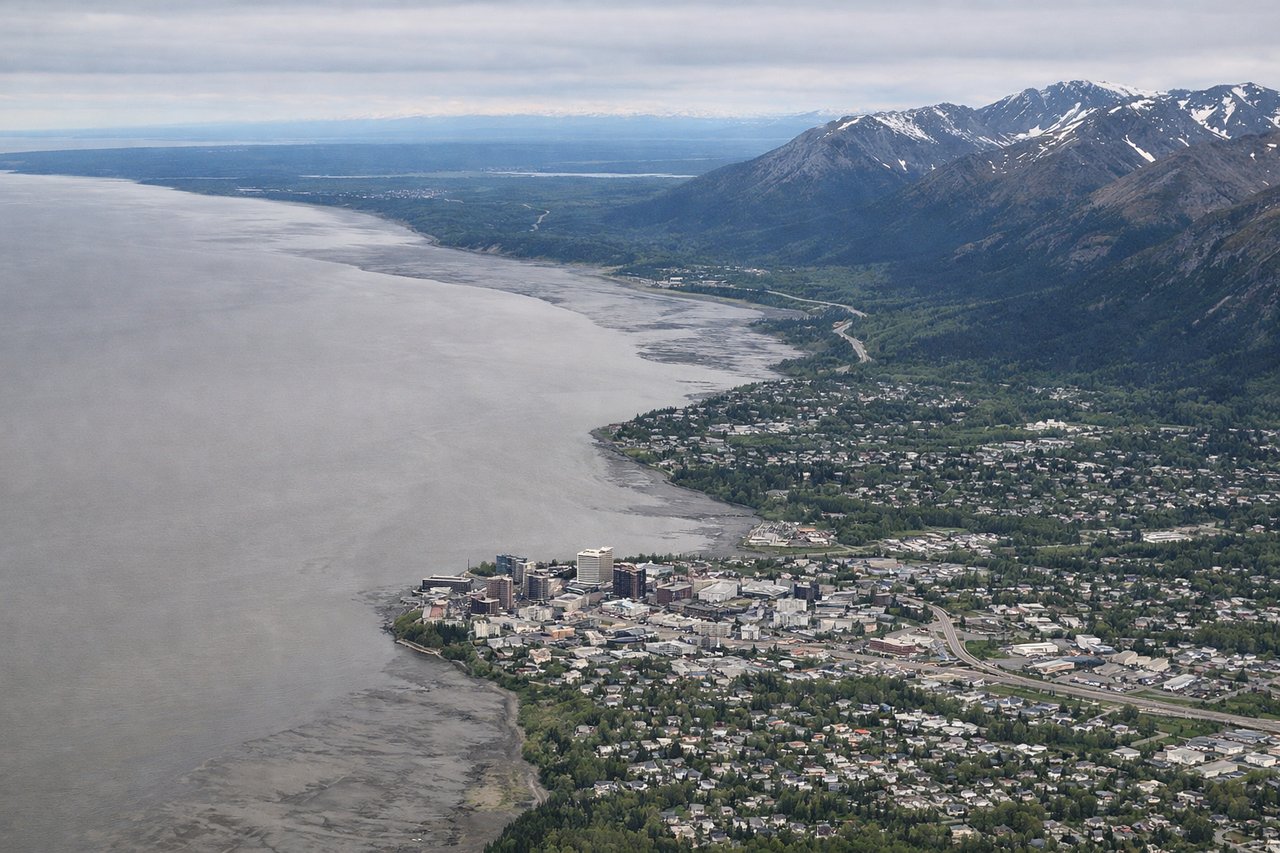
Landing at ANC
LEFTApproaching Anchorage from the southwest typically uses runways 24L/24R. Left-side seats offer views of the Chugach Mountains' western slopes, Turnagain Arm's distinctive geography, and the descent into the Anchorage Bowl with Cook Inlet visible.
Landmarks on this routeAll landmarks →
Will your flight be in sunlight?
Pick a date and time in the Sun Map to watch the sun move across your whole flight.
About This Route
Which side of the plane should I sit on flying from Dillingham (DLG) to Ted Stevens Anchorage International (ANC)?
Sit on the Left side of the plane for the best views on flights from Dillingham to Anchorage. The landing approach provides superior views of the Chugach Mountains and Turnagain Arm's dramatic tidal geography. While takeoff offers river systems, the approach into Anchorage delivers more visually distinctive and geographically significant features.
What can I see during takeoff from Dillingham in Dillingham?
During takeoff from Dillingham (DLG), sit on the Right side for the best views. Dillingham typically departs to the north or northeast. Right-side seats capture the Wood River valley and Nuyakuk River drainage system as you climb out, with the Ahklun Mountains rising to the east across Cook Inlet waters. Notable sights include: Nuyakuk River (braided system directly below), Ahklun Mountains (eastern horizon), Cook Inlet (western water body), Wood River valley (northern approach).
What can I see when landing at Ted Stevens Anchorage International in Anchorage?
When landing at Ted Stevens Anchorage International (ANC), sit on the Left side for the best views. Approaching Anchorage from the southwest typically uses runways 24L/24R. Left-side seats offer views of the Chugach Mountains' western slopes, Turnagain Arm's distinctive geography, and the descent into the Anchorage Bowl with Cook Inlet visible. Notable sights include: Chugach Mountains (dominant eastern feature), Turnagain Arm (water body with tidal flats), Cook Inlet (western water), Anchorage Bowl urban area (final approach).
How long is the flight from Dillingham to Anchorage?
The flight from Dillingham (DLG) to Ted Stevens Anchorage International (ANC) takes about 1 hour. The shortest flight path between them is 328 miles (527 km); winds and air traffic control usually add a few percent.
What does the Dillingham to Anchorage flight path pass over?
The flight path crosses the Alaska Range foothills and transitions from Bristol Bay drainage to Cook Inlet basin. Notable midpoint features include the Tikchik Lakes region (visible as a cluster of water bodies if flying at lower cruise altitude), the transition from tundra to more mountainous terrain, and the approach to the Chugach Mountains' western slopes as you near Anchorage.