Tucson to Denver is 634 miles (1,021 km), a flight of about 1 hour 55 minutes.
Left side wins both ends of the flight. During the cruise phase heading north-northeast, the left side also tracks closer to the San Juan Mountains of southern Colorado and the Sangre de Cristo Range, offering the best mountain scenery throughout the entire route.
Flight Path
The flight crosses the Colorado Plateau and high desert of northern Arizona, then the San Juan Mountains of southwestern Colorado including the 14,000-ft peaks around Telluride and Silverton, followed by the broad San Luis Valley flanked by the Sangre de Cristo Range to the east and San Juan Mountains to the west, before descending over the Palmer Divide toward Denver.
Great circle distance and headings ›
.jpg?width=600)
Phase by phase
Takeoff from DMA
LEFTDavis-Monthan typically departs runway 12/30. On a northbound departure climbing out heading roughly northwest, the left (south/west) side gives you a clear view of the Santa Catalina Mountains rising sharply above Tucson, with Mount Lemmon at 9,157 ft dominating the skyline. The right side faces east toward flatter desert terrain.
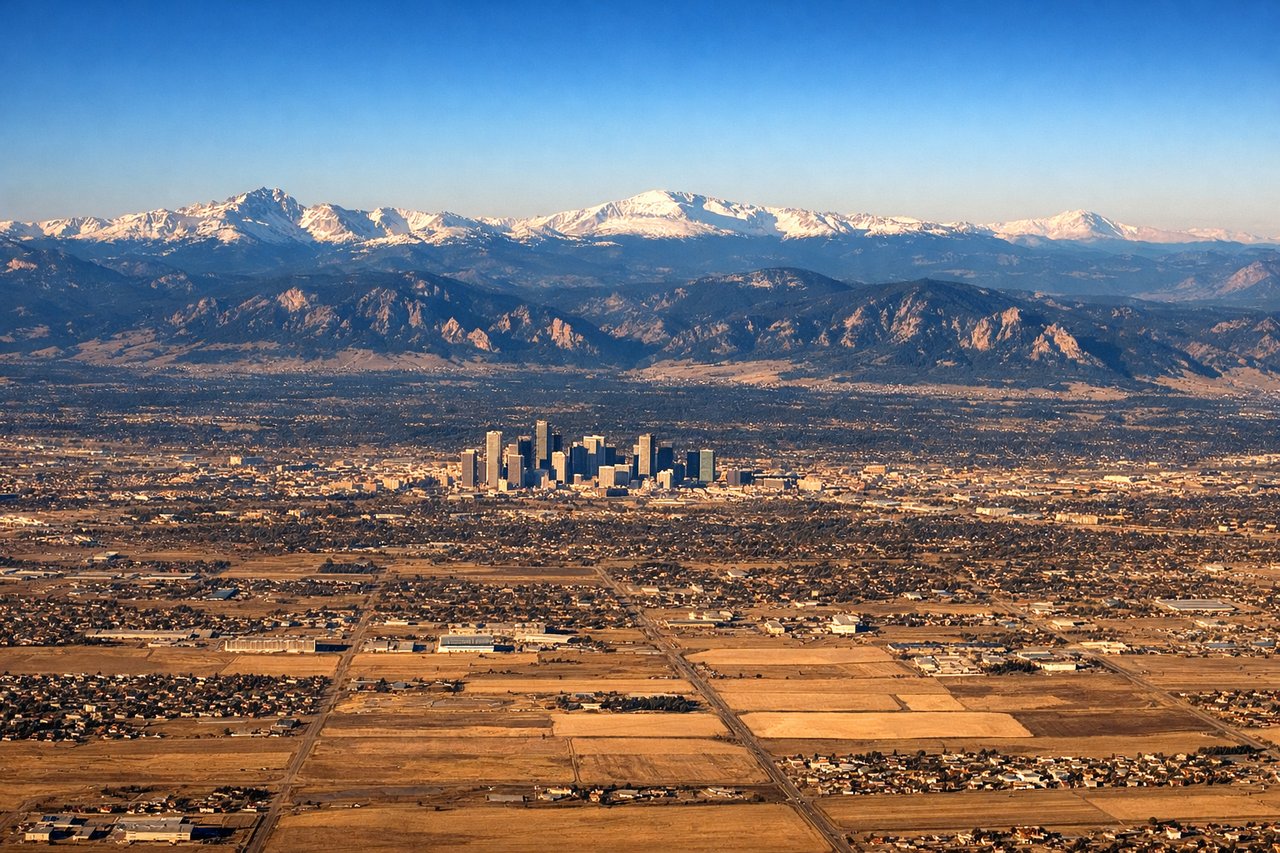
Landing at DEN
LEFTDenver International typically lands from the south or southeast on runways oriented roughly north-south. On approach from the south, the left (west) side gives a spectacular view of the entire Front Range — from Pikes Peak in the south through the Rampart Range to Longs Peak in the north — while the right side faces east over the flat Kansas plains.
Landmarks on this routeAll landmarks →
Will your flight be in sunlight?
Pick a date and time in the Sun Map to watch the sun move across your whole flight.
About This Route
Which side of the plane should I sit on flying from Davis Monthan Afb (DMA) to Denver International (DEN)?
Sit on the Left side of the plane for the best views on flights from Tucson to Denver. Left side wins both ends of the flight. During the cruise phase heading north-northeast, the left side also tracks closer to the San Juan Mountains of southern Colorado and the Sangre de Cristo Range, offering the best mountain scenery throughout the entire route.
What can I see during takeoff from Davis Monthan Afb in Tucson?
During takeoff from Davis Monthan Afb (DMA), sit on the Left side for the best views. Davis-Monthan typically departs runway 12/30. On a northbound departure climbing out heading roughly northwest, the left (south/west) side gives you a clear view of the Santa Catalina Mountains rising sharply above Tucson, with Mount Lemmon at 9,157 ft dominating the skyline. The right side faces east toward flatter desert terrain. Notable sights include: Santa Catalina Mountains and Mount Lemmon, Davis-Monthan boneyard aircraft storage visible below, downtown Tucson grid, Rincon Mountains to the southeast.
What can I see when landing at Denver International in Denver?
When landing at Denver International (DEN), sit on the Left side for the best views. Denver International typically lands from the south or southeast on runways oriented roughly north-south. On approach from the south, the left (west) side gives a spectacular view of the entire Front Range — from Pikes Peak in the south through the Rampart Range to Longs Peak in the north — while the right side faces east over the flat Kansas plains. Notable sights include: Front Range of the Rocky Mountains including Pikes Peak, Mount Evans, and Longs Peak, Denver city skyline, Cherry Creek Reservoir, Rocky Mountain Arsenal National Wildlife Refuge.
How long is the flight from Tucson to Denver?
The flight from Davis Monthan Afb (DMA) to Denver International (DEN) takes about 1 hour 55 minutes. The shortest flight path between them is 634 miles (1,021 km); winds and air traffic control usually add a few percent.
What does the Tucson to Denver flight path pass over?
The flight crosses the Colorado Plateau and high desert of northern Arizona, then the San Juan Mountains of southwestern Colorado including the 14,000-ft peaks around Telluride and Silverton, followed by the broad San Luis Valley flanked by the Sangre de Cristo Range to the east and San Juan Mountains to the west, before descending over the Palmer Divide toward Denver.