The right side benefits from the Doha coastline at takeoff and a cruise track that skirts the Zagros foothills and the Black Sea basin, giving more topographic variety than the largely flat, ocean-free but featureless plains and Balkan lowlands seen on the left.
Flight Path
Route crosses the Arabian Desert and southern Iraq, skirts the western Zagros foothills near the Iran-Iraq border, traverses eastern and central Turkey (Taurus Mountains region), crosses the Black Sea's western edge or Bulgaria/Romania's Danube plains, then continues over Central Europe's flatlands into the Netherlands.
Great circle distance and headings ›
.jpg?width=600)

Phase by phase

Takeoff from DOH
RIGHTDeparting DOH toward the northwest, the aircraft banks away from the coast, giving right-side passengers a clear view of Doha's skyline and the turquoise waters of the Persian Gulf before the route turns inland over the desert.
Landing at AMS
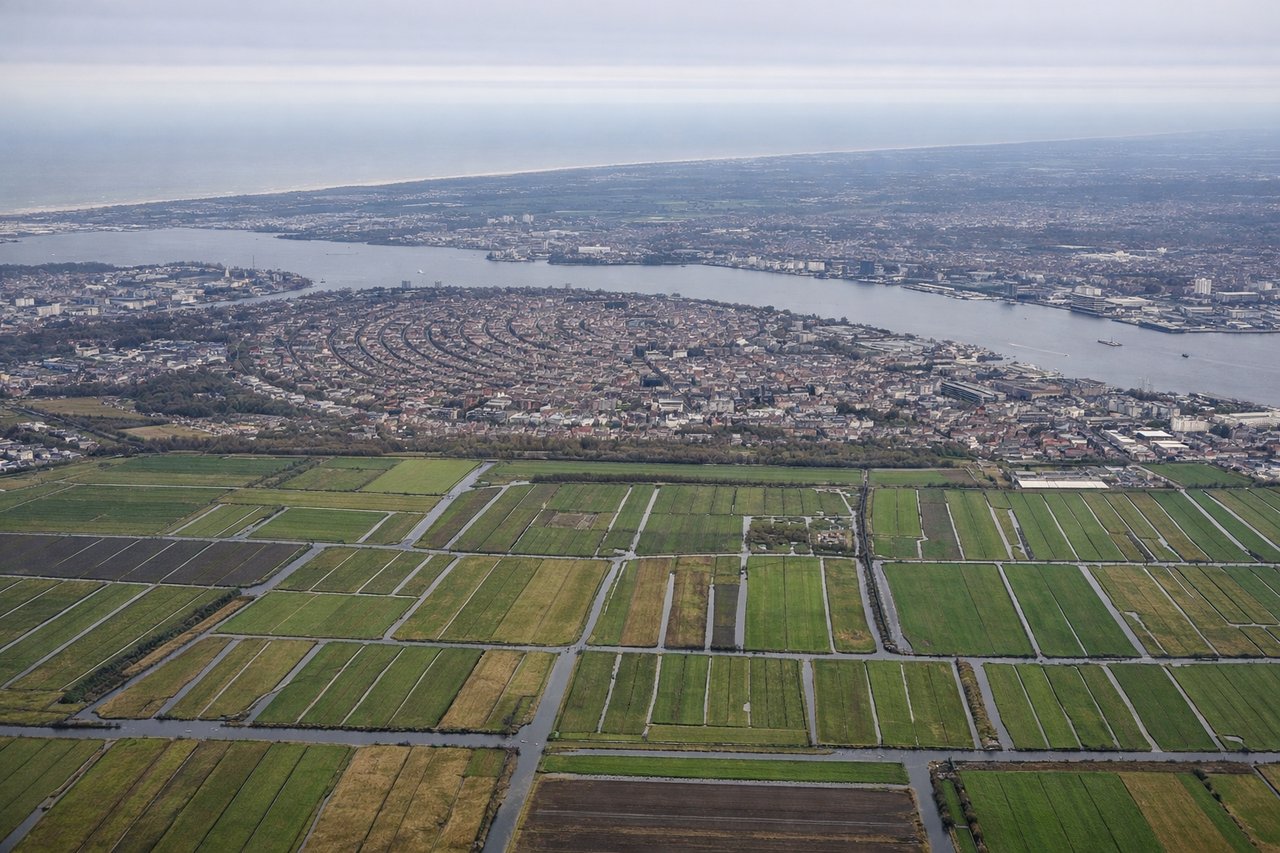
LEFTOn approach into Schiphol from the south, left-side passengers get a good look at Amsterdam's canal rings and the IJsselmeer's edge before the final turn onto the Polderbaan or Zwanenburgbaan runways over the flat polder landscape.
Landmarks on this routeAll landmarks →
Will your flight be in sunlight?
See exactly which side of the plane gets sun and shade at your departure time.
About This Route
Which side of the plane should I sit on flying from Hamad International Airport (DOH) to Schiphol (AMS)?
Sit on the Right side of the plane for the best views on flights from Doha to Amsterdam. The right side benefits from the Doha coastline at takeoff and a cruise track that skirts the Zagros foothills and the Black Sea basin, giving more topographic variety than the largely flat, ocean-free but featureless plains and Balkan lowlands seen on the left.
What can I see during takeoff from Hamad International Airport in Doha?
During takeoff from Hamad International Airport (DOH), sit on the Right side for the best views. Departing DOH toward the northwest, the aircraft banks away from the coast, giving right-side passengers a clear view of Doha's skyline and the turquoise waters of the Persian Gulf before the route turns inland over the desert. Notable sights include: Doha skyline and West Bay towers, Persian Gulf coastline, Qatari coastal sabkha flats.
What can I see when landing at Schiphol in Amsterdam?
When landing at Schiphol (AMS), sit on the Left side for the best views. On approach into Schiphol from the south, left-side passengers get a good look at Amsterdam's canal rings and the IJsselmeer's edge before the final turn onto the Polderbaan or Zwanenburgbaan runways over the flat polder landscape. Notable sights include: Amsterdam canal ring, IJsselmeer lake edge, Dutch polder farmland grids, Schiphol's Polderbaan runway.
How long is the flight from Doha to Amsterdam?
The flight from Hamad International Airport (DOH) to Schiphol (AMS) takes 6h 45m.
What does the Doha to Amsterdam flight path pass over?
Route crosses the Arabian Desert and southern Iraq, skirts the western Zagros foothills near the Iran-Iraq border, traverses eastern and central Turkey (Taurus Mountains region), crosses the Black Sea's western edge or Bulgaria/Romania's Danube plains, then continues over Central Europe's flatlands into the Netherlands.