Left side wins at both ends of the flight. Over the mid-route, the left side also captures the Mediterranean coast of Turkey and Greece during the early hours, and later the Atlantic crossing offers little either way, but the bookend views of Doha's Gulf setting and Houston's urban sprawl both favor the left.
Flight Path
The route tracks northwest over Saudi Arabia and Iraq, then across Turkey and the eastern Mediterranean, crosses Greece and the Aegean Sea, transits the central Mediterranean near Sicily, crosses the Strait of Gibraltar or southern Spain, then makes a long North Atlantic crossing before approaching the US Gulf Coast over Louisiana and southeast Texas. Key features include the Zagros Mountains of Iran and Iraq, the Anatolian plateau, the Greek island chains of the Aegean, the Strait of Gibraltar, and the vast featureless North Atlantic.
Great circle distance and headings ›


Phase by phase
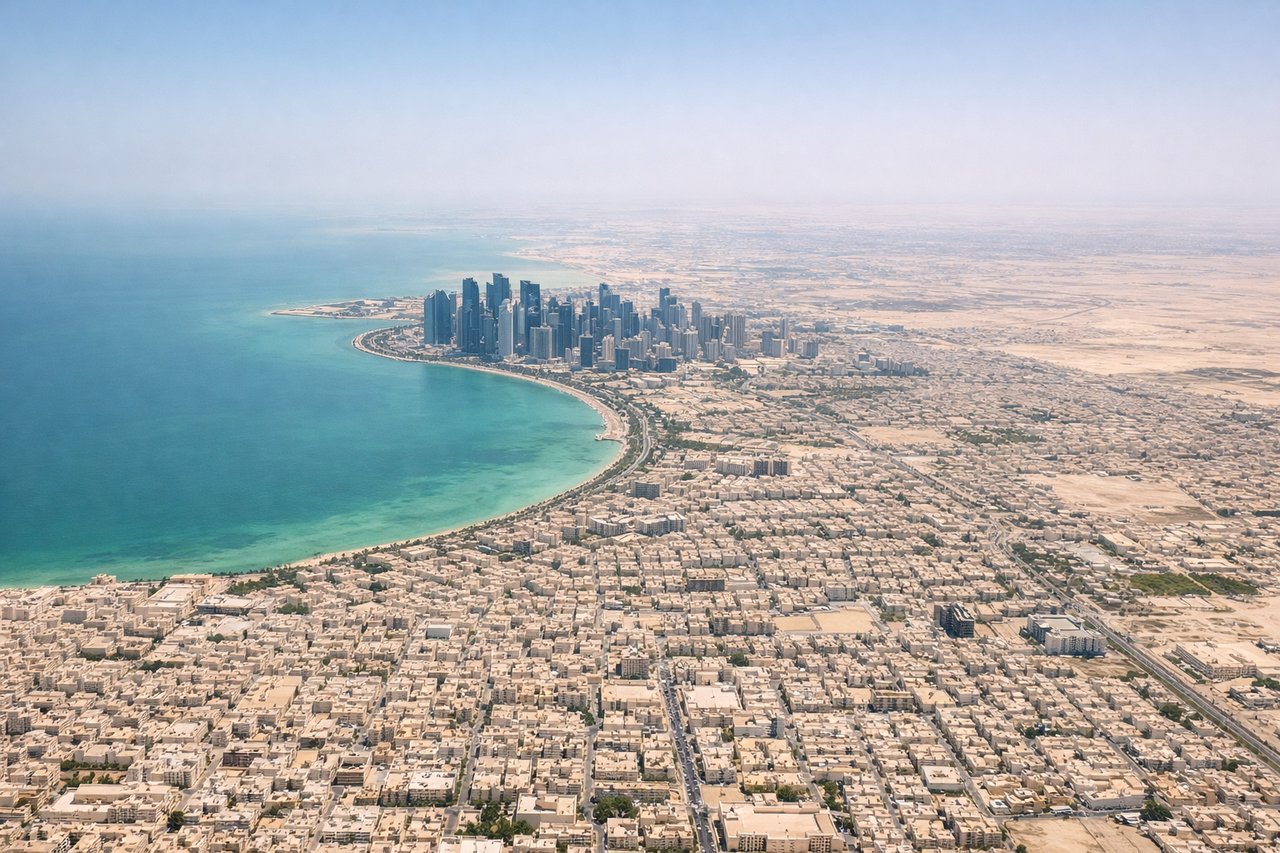
Takeoff from DOH
LEFTDeparting Doha, aircraft typically use runway 16/34 or 15/33. On a westbound departure climbing out over the Gulf, the left side gives you the Doha city skyline and the West Bay skyscraper district, plus the shallow turquoise waters of the inner Gulf. The right side faces the open desert hinterland with little of interest.

Landing at IAH
LEFTIAH typically uses runways oriented roughly north-south (runways 8L/26R, 15L/33R, etc.). On approach from the east or northeast, the left side gives views over downtown Houston's skyline, the Ship Channel industrial complex, and the sprawling flat urban grid of the fourth-largest US city. The right side faces suburban sprawl with fewer distinguishing features.
Landmarks on this routeAll landmarks →
Will your flight be in sunlight?
See exactly which side of the plane gets sun and shade at your departure time.
About This Route
Which side of the plane should I sit on flying from Hamad International Airport (DOH) to George Bush Intcntl Houston (IAH)?
Sit on the Left side of the plane for the best views on flights from Doha to Houston. Left side wins at both ends of the flight. Over the mid-route, the left side also captures the Mediterranean coast of Turkey and Greece during the early hours, and later the Atlantic crossing offers little either way, but the bookend views of Doha's Gulf setting and Houston's urban sprawl both favor the left.
What can I see during takeoff from Hamad International Airport in Doha?
During takeoff from Hamad International Airport (DOH), sit on the Left side for the best views. Departing Doha, aircraft typically use runway 16/34 or 15/33. On a westbound departure climbing out over the Gulf, the left side gives you the Doha city skyline and the West Bay skyscraper district, plus the shallow turquoise waters of the inner Gulf. The right side faces the open desert hinterland with little of interest. Notable sights include: West Bay skyline of Doha, Pearl-Qatar artificial island, shallow turquoise Gulf waters, Hamad International Airport layout below.
What can I see when landing at George Bush Intcntl Houston in Houston?
When landing at George Bush Intcntl Houston (IAH), sit on the Left side for the best views. IAH typically uses runways oriented roughly north-south (runways 8L/26R, 15L/33R, etc.). On approach from the east or northeast, the left side gives views over downtown Houston's skyline, the Ship Channel industrial complex, and the sprawling flat urban grid of the fourth-largest US city. The right side faces suburban sprawl with fewer distinguishing features. Notable sights include: Downtown Houston skyline, Houston Ship Channel and port facilities, Lake Houston to the northeast, flat Texas coastal plain urban grid.
How long is the flight from Doha to Houston?
The flight from Hamad International Airport (DOH) to George Bush Intcntl Houston (IAH) takes Approximately 15 to 16 hours.
What does the Doha to Houston flight path pass over?
The route tracks northwest over Saudi Arabia and Iraq, then across Turkey and the eastern Mediterranean, crosses Greece and the Aegean Sea, transits the central Mediterranean near Sicily, crosses the Strait of Gibraltar or southern Spain, then makes a long North Atlantic crossing before approaching the US Gulf Coast over Louisiana and southeast Texas. Key features include the Zagros Mountains of Iran and Iraq, the Anatolian plateau, the Greek island chains of the Aegean, the Strait of Gibraltar, and the vast featureless North Atlantic.