Right-side seats capture the most dramatic scenery: the Persian Gulf departure from Doha and the Mediterranean approach to Cyprus. The left side during takeoff shows only urban sprawl, while the right side during landing is less visually distinctive than the left.
Flight Path
The flight path crosses the Arabian Sea and approaches the Levantine coast. Mid-flight offers views of open water with occasional glimpses of the Iraqi and Iranian coastlines to the left (north) depending on routing. The aircraft typically passes east of the Arabian Peninsula and over the northeastern corner of the Arabian Sea before turning northwest toward Cyprus. No major mountain ranges or distinctive landmarks are visible during the middle portion of the flight—mostly open water and distant, low-lying coastlines.
Great circle distance and headings ›Phase by phase
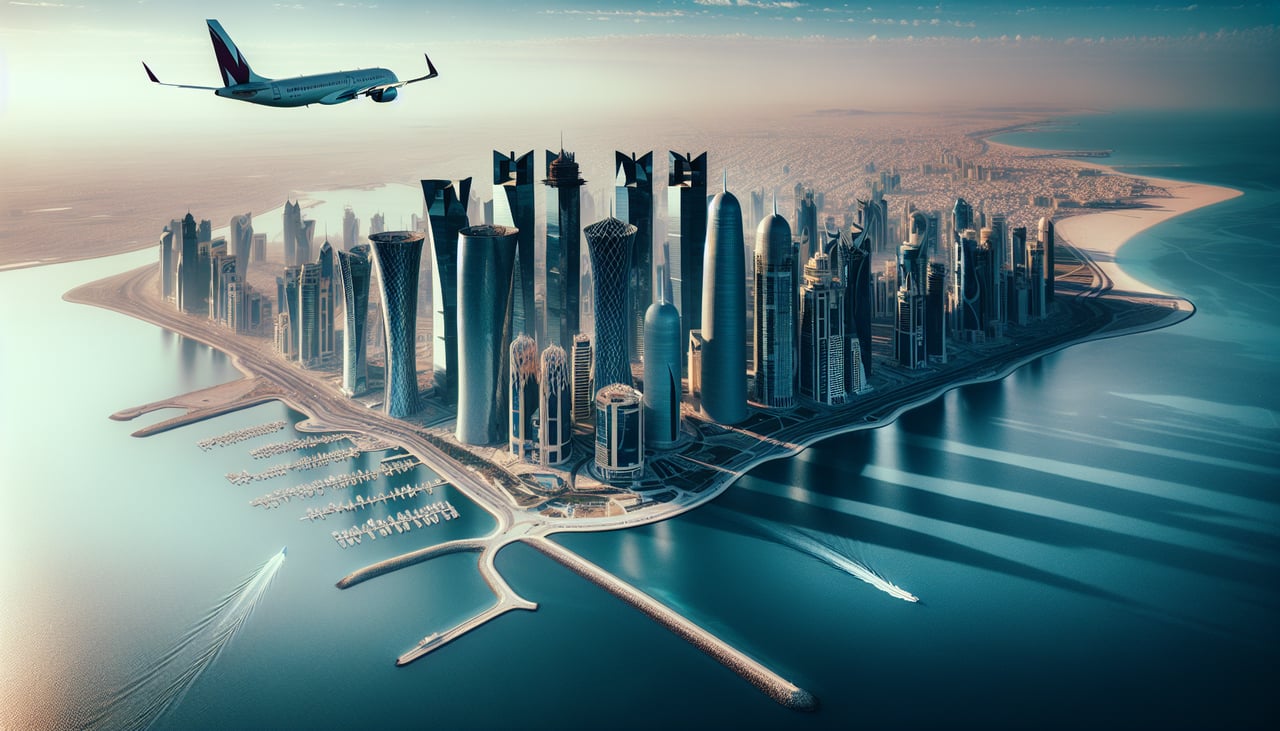
Takeoff from DOH
RIGHTRight-side seats offer views of the Persian Gulf coastline and Doha's waterfront as the aircraft climbs northeastward. You'll see the distinctive curve of Doha Bay and the city's modern skyline receding below.
Landing at LCA
LEFTLeft-side seats provide excellent views during the approach to Larnaca. You'll see the Troodos Mountains inland to the left and the southern Cyprus coastline with its beaches and salt lakes as you descend toward the airport.
Landmarks on this routeAll landmarks →
Will your flight be in sunlight?
See exactly which side of the plane gets sun and shade at your departure time.
About This Route
Which side of the plane should I sit on flying from Hamad International Airport (DOH) to Larnaca (LCA)?
Sit on the Right side of the plane for the best views on flights from Doha to Larnaca. Right-side seats capture the most dramatic scenery: the Persian Gulf departure from Doha and the Mediterranean approach to Cyprus. The left side during takeoff shows only urban sprawl, while the right side during landing is less visually distinctive than the left.
What can I see during takeoff from Hamad International Airport in Doha?
During takeoff from Hamad International Airport (DOH), sit on the Right side for the best views. Right-side seats offer views of the Persian Gulf coastline and Doha's waterfront as the aircraft climbs northeastward. You'll see the distinctive curve of Doha Bay and the city's modern skyline receding below. Notable sights include: Doha Bay, Persian Gulf coastline, Doha city center with Corniche, Al Khor area to the north.
What can I see when landing at Larnaca in Larnaca?
When landing at Larnaca (LCA), sit on the Left side for the best views. Left-side seats provide excellent views during the approach to Larnaca. You'll see the Troodos Mountains inland to the left and the southern Cyprus coastline with its beaches and salt lakes as you descend toward the airport. Notable sights include: Troodos Mountains, Larnaca Salt Lake, Cyprus southern coastline, Larnaca Bay.
How long is the flight from Doha to Larnaca?
The flight from Hamad International Airport (DOH) to Larnaca (LCA) takes Approximately 2 hours 15 minutes.
What does the Doha to Larnaca flight path pass over?
The flight path crosses the Arabian Sea and approaches the Levantine coast. Mid-flight offers views of open water with occasional glimpses of the Iraqi and Iranian coastlines to the left (north) depending on routing. The aircraft typically passes east of the Arabian Peninsula and over the northeastern corner of the Arabian Sea before turning northwest toward Cyprus. No major mountain ranges or distinctive landmarks are visible during the middle portion of the flight—mostly open water and distant, low-lying coastlines.