Although the takeoff favors the right side with Doha's skyline, the left side wins overall because it catches Sri Lanka's coastline and Sumatra's volcanic peaks during the long ocean crossing, plus Melbourne's bay and skyline on arrival — giving it more variety across the full flight.
Flight Path
The flight's midpoint falls over the eastern Indian Ocean southwest of Sumatra, near the Mentawai Islands, with the Nicobar Islands and Sri Lanka's silhouette having passed earlier to the north along the route.
Great circle distance and headings ›Phase by phase
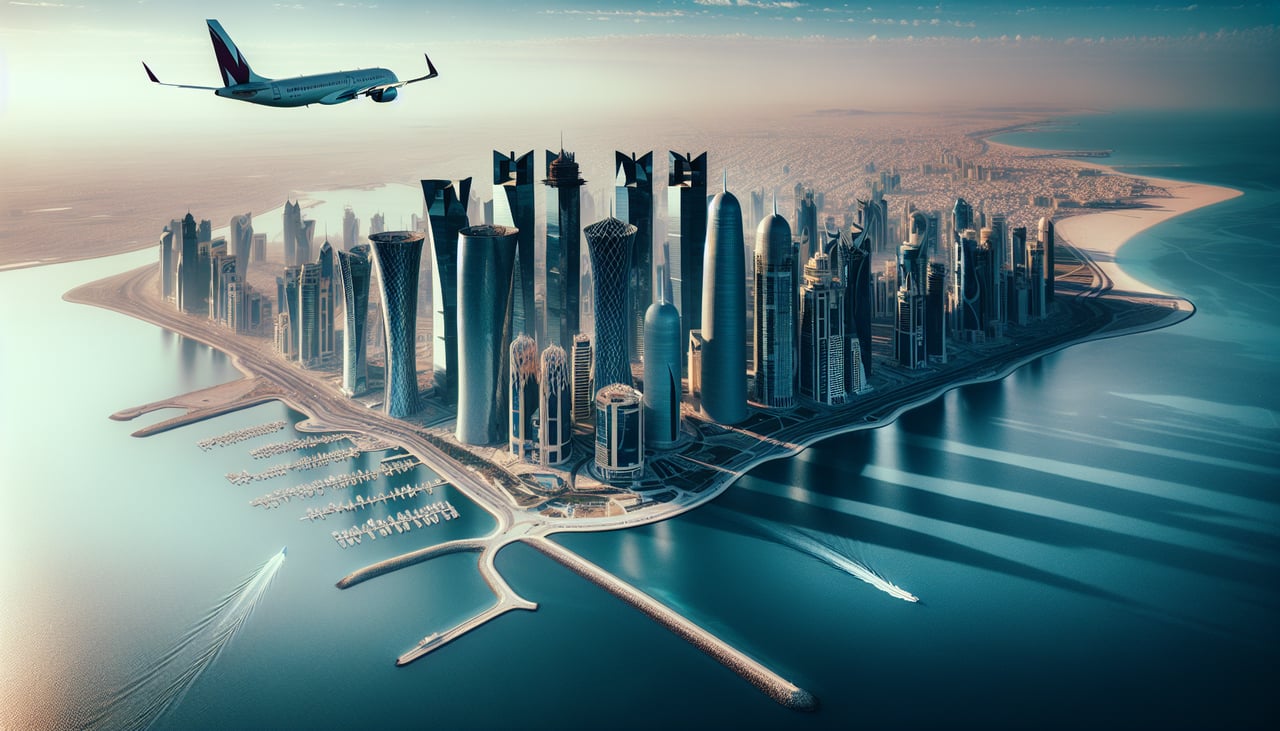
Takeoff from DOH
RIGHTShamal winds typically send departures northwest on runway 33, requiring a sweeping right turn back toward the southeast heading for Melbourne. That bank puts Doha's West Bay skyline and the turquoise Persian Gulf coastline directly under the right-side windows before the aircraft levels out over the desert.
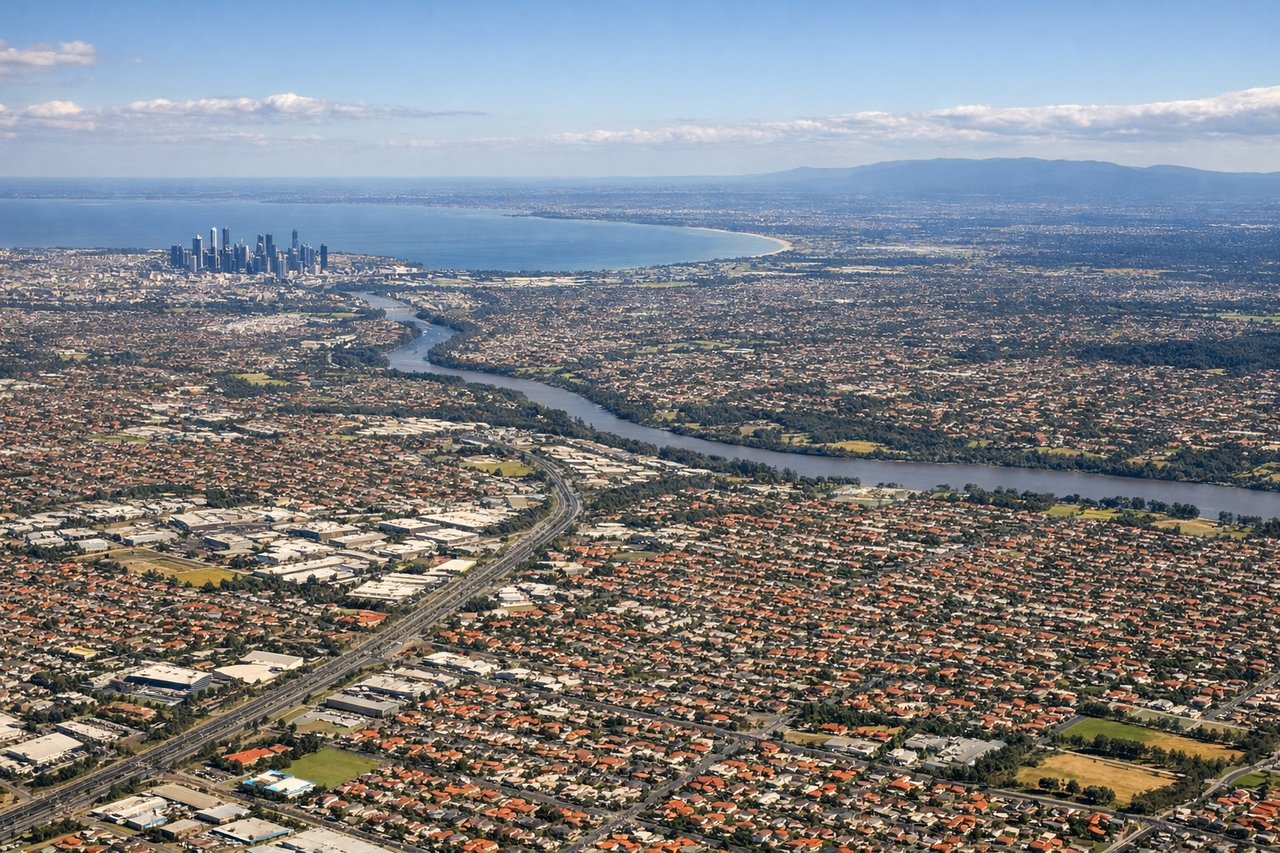
Landing at MEL
LEFTArriving from the north, flights descend toward runway 16 with Melbourne's CBD and Port Phillip Bay sliding into view on the left side, while the Dandenong Ranges appear as low hills further east on the horizon. The right side mostly shows flat rural paddocks and the outer northern suburbs with less visual interest.
Landmarks on this routeAll landmarks →
Will your flight be in sunlight?
See exactly which side of the plane gets sun and shade at your departure time.
About This Route
Which side of the plane should I sit on flying from Hamad International Airport (DOH) to Melbourne International (MEL)?
Sit on the Left side of the plane for the best views on flights from Doha to Melbourne. Although the takeoff favors the right side with Doha's skyline, the left side wins overall because it catches Sri Lanka's coastline and Sumatra's volcanic peaks during the long ocean crossing, plus Melbourne's bay and skyline on arrival — giving it more variety across the full flight.
What can I see during takeoff from Hamad International Airport in Doha?
During takeoff from Hamad International Airport (DOH), sit on the Right side for the best views. Shamal winds typically send departures northwest on runway 33, requiring a sweeping right turn back toward the southeast heading for Melbourne. That bank puts Doha's West Bay skyline and the turquoise Persian Gulf coastline directly under the right-side windows before the aircraft levels out over the desert. Notable sights include: Doha West Bay skyline, Persian Gulf coastline, Hamad Port breakwaters, Qatari desert fringe.
What can I see when landing at Melbourne International in Melbourne?
When landing at Melbourne International (MEL), sit on the Left side for the best views. Arriving from the north, flights descend toward runway 16 with Melbourne's CBD and Port Phillip Bay sliding into view on the left side, while the Dandenong Ranges appear as low hills further east on the horizon. The right side mostly shows flat rural paddocks and the outer northern suburbs with less visual interest. Notable sights include: Melbourne CBD skyline, Port Phillip Bay, Dandenong Ranges, Yarra River delta.
How long is the flight from Doha to Melbourne?
The flight from Hamad International Airport (DOH) to Melbourne International (MEL) takes 14h 05m.
What does the Doha to Melbourne flight path pass over?
The flight's midpoint falls over the eastern Indian Ocean southwest of Sumatra, near the Mentawai Islands, with the Nicobar Islands and Sri Lanka's silhouette having passed earlier to the north along the route.