The left side wins overall because while you sacrifice the West Bay view on departure, you gain the better view for most of the flight westward over the Saudi interior and get the superior Riyadh approach view with the Jabal Tuwaiq escarpment. The right side has the edge only at takeoff.
Flight Path
The flight crosses the flat, gravelly Najd plateau of central Saudi Arabia — largely featureless hamada desert with occasional dry wadi channels visible as pale sinuous lines. The Dahna sand corridor, a narrow arc of reddish dunes connecting the Nefud to the Rub al Khali, may be visible crossing the route roughly midway. No significant mountain ranges cross this corridor. The terrain rises very gradually from sea level at the Gulf coast to around 2,000 feet on the Najd plateau approaching Riyadh.
Great circle distance and headings ›Phase by phase
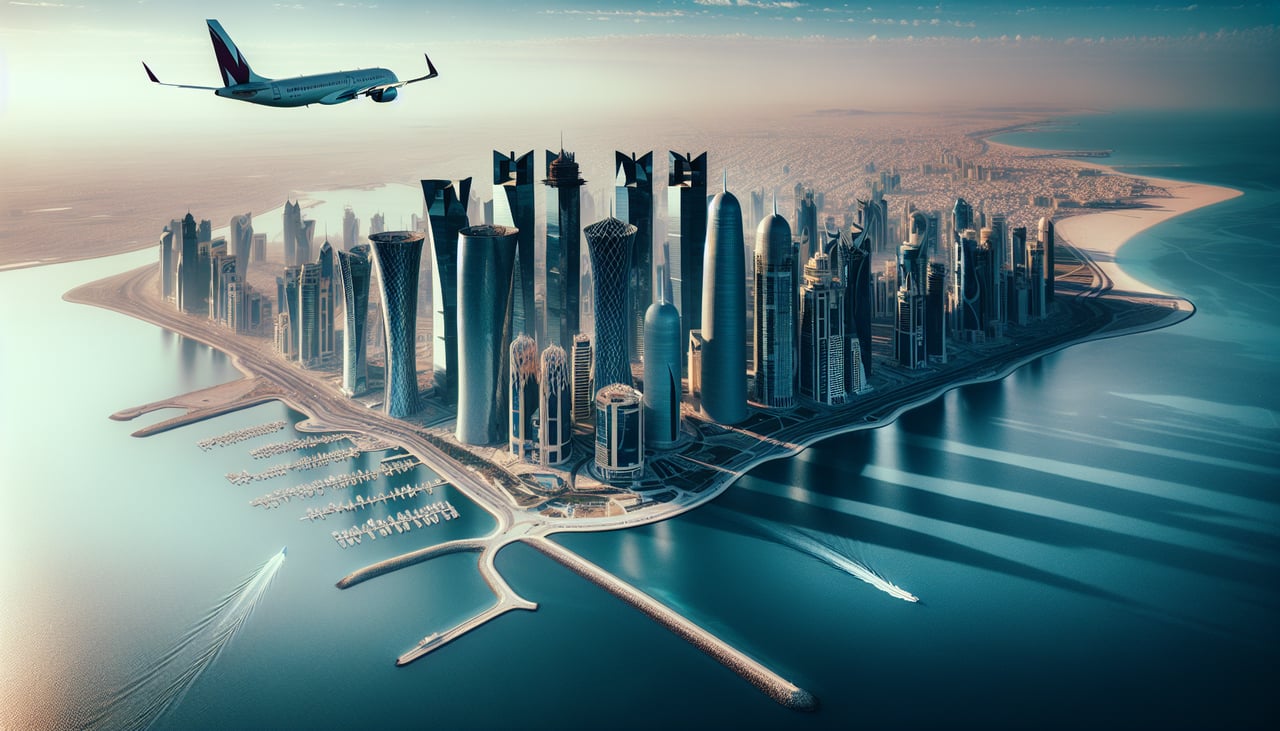
Takeoff from DOH
RIGHTDeparting Doha, aircraft typically use runways oriented roughly northeast-southwest. A right-side seat gives you views over Doha's West Bay skyline and the shallow turquoise waters of the inner Gulf as you climb out westward. The contrast between the dense tower cluster and the flat desert beyond is striking.
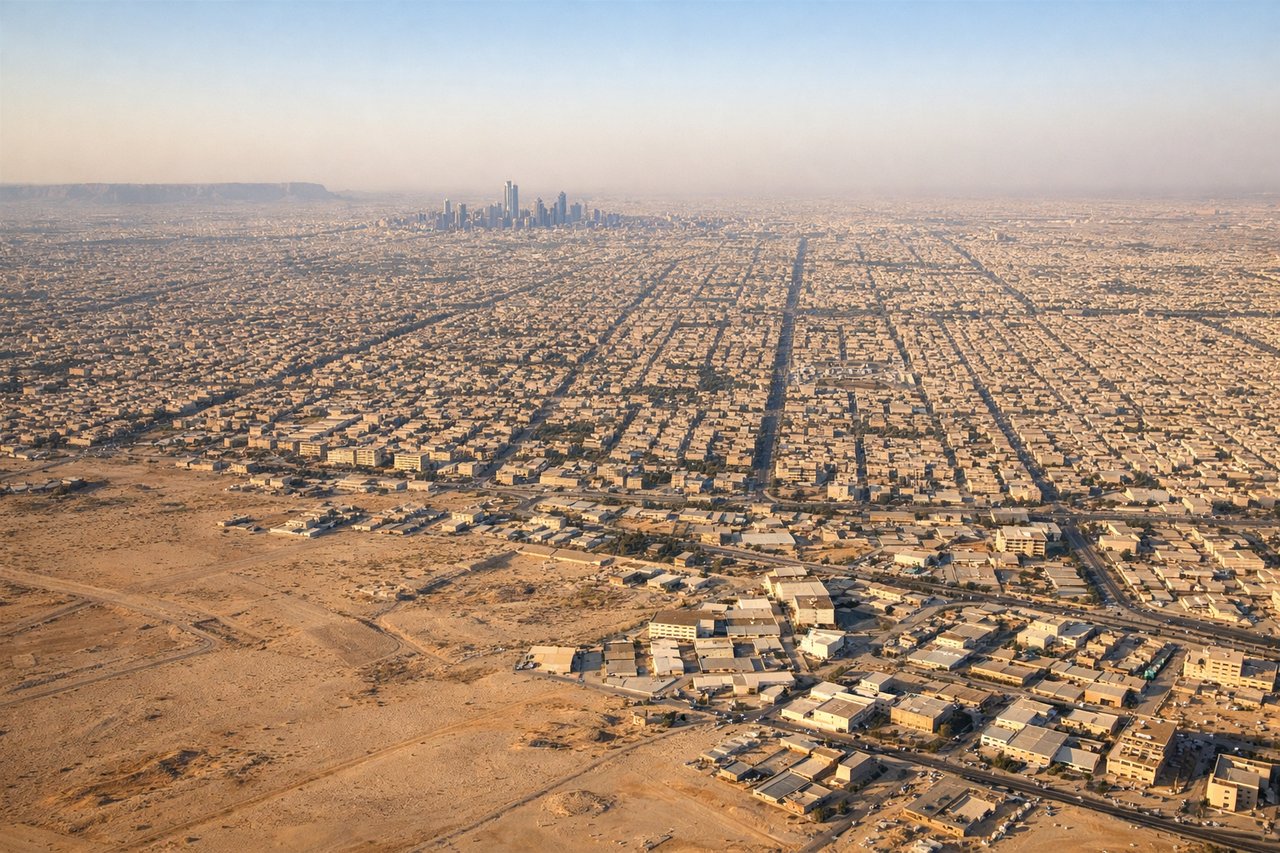
Landing at RUH
LEFTApproaching Riyadh from the east, aircraft typically descend toward runways oriented roughly north-south at King Khaled International. A left-side seat faces south and southwest, giving views over the dense urban grid of central Riyadh, the distinctive escarpment edge of Jabal Tuwaiq to the west, and the sprawling city layout. The right side faces largely featureless desert.
Landmarks on this routeAll landmarks →
Will your flight be in sunlight?
See exactly which side of the plane gets sun and shade at your departure time.
About This Route
Which side of the plane should I sit on flying from Hamad International Airport (DOH) to King Khaled International (RUH)?
Sit on the Left side of the plane for the best views on flights from Doha to Riyadh. The left side wins overall because while you sacrifice the West Bay view on departure, you gain the better view for most of the flight westward over the Saudi interior and get the superior Riyadh approach view with the Jabal Tuwaiq escarpment. The right side has the edge only at takeoff.
What can I see during takeoff from Hamad International Airport in Doha?
During takeoff from Hamad International Airport (DOH), sit on the Right side for the best views. Departing Doha, aircraft typically use runways oriented roughly northeast-southwest. A right-side seat gives you views over Doha's West Bay skyline and the shallow turquoise waters of the inner Gulf as you climb out westward. The contrast between the dense tower cluster and the flat desert beyond is striking. Notable sights include: West Bay skyscraper district, Doha Corniche waterfront, shallow turquoise waters of the inner Gulf of Bahrain, flat sabkha salt flats south of the city.
What can I see when landing at King Khaled International in Riyadh?
When landing at King Khaled International (RUH), sit on the Left side for the best views. Approaching Riyadh from the east, aircraft typically descend toward runways oriented roughly north-south at King Khaled International. A left-side seat faces south and southwest, giving views over the dense urban grid of central Riyadh, the distinctive escarpment edge of Jabal Tuwaiq to the west, and the sprawling city layout. The right side faces largely featureless desert. Notable sights include: Riyadh urban grid and central business district, Jabal Tuwaiq escarpment edge to the west, Al Masmak area and old city core, vast Rub al Khali desert fringe to the south.
How long is the flight from Doha to Riyadh?
The flight from Hamad International Airport (DOH) to King Khaled International (RUH) takes Approximately 1 hour 20 minutes.
What does the Doha to Riyadh flight path pass over?
The flight crosses the flat, gravelly Najd plateau of central Saudi Arabia — largely featureless hamada desert with occasional dry wadi channels visible as pale sinuous lines. The Dahna sand corridor, a narrow arc of reddish dunes connecting the Nefud to the Rub al Khali, may be visible crossing the route roughly midway. No significant mountain ranges cross this corridor. The terrain rises very gradually from sea level at the Gulf coast to around 2,000 feet on the Najd plateau approaching Riyadh.