While the left side wins at takeoff for the Doha skyline and Gulf views, the right side delivers the more dramatic landing sequence with the Medvednica ridge framing Zagreb, plus better views of the Adriatic coast and Dinaric Alps during the Croatian approach phase. For the full flight, right side also catches the Aegean islands and Greek coastline during the mid-flight segment.
Flown DOH to ZAG? Did we get it right?
Flight Path
Doha to Zagreb is 2,417 miles (3,890 km), a flight of about 5 hours 30 minutes.
The route tracks northwest from Qatar over the Persian Gulf, crossing Kuwait and southern Iraq, then over eastern Turkey and the Anatolian plateau. It crosses the Bosphorus or Sea of Marmara region, then transits over the Aegean Sea with Greek islands visible below, crosses northern Greece and North Macedonia, and enters Croatia from the southeast. The Dinaric Alps and Adriatic coastline are visible on descent into Zagreb.
Great circle distance and headings ›

Phase by phase
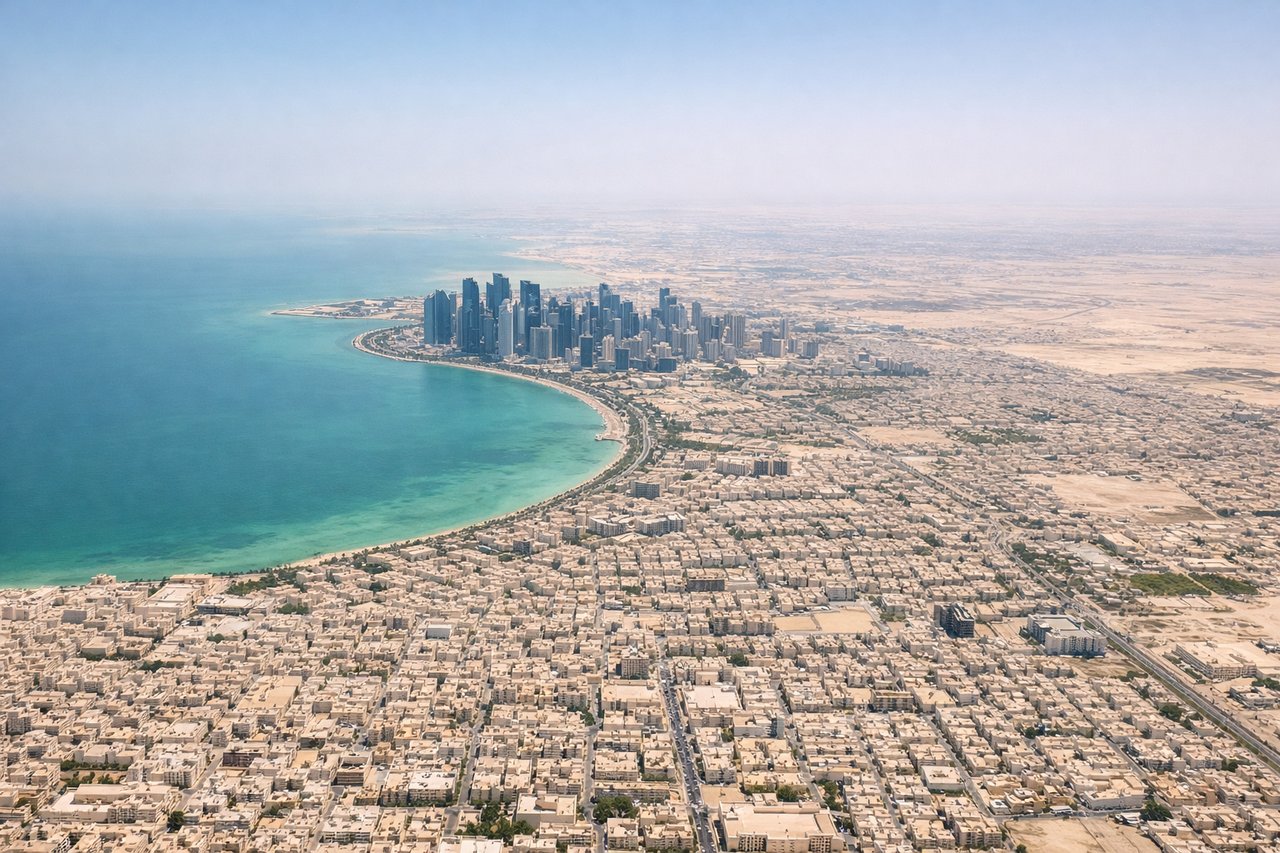
Takeoff from DOH
LEFTDoha's main runways (16L/34R orientation) mean a northbound departure climbs out over the city center and the West Bay skyline before banking northwest. The left side captures the dense cluster of Doha's skyscrapers, the corniche waterfront, and the shallow turquoise waters of the Persian Gulf spreading toward the Qatar peninsula interior.
Landing at ZAG
RIGHTZagreb Airport sits south of the city, and aircraft typically land on runway 05/23. On approach from the southeast on runway 05, the right side faces north toward Zagreb city center and the Medvednica mountain ridge rising sharply behind it. The Sava River valley is also visible on the right as the aircraft descends.
Will your flight be in sunlight?
Pick a date and time in the Sun Map to watch the sun move across your whole flight.
About This Route
Which side of the plane should I sit on flying from Hamad International Airport (DOH) to Zagreb (ZAG)?
Sit on the Right side of the plane for the best views on flights from Doha to Zagreb. While the left side wins at takeoff for the Doha skyline and Gulf views, the right side delivers the more dramatic landing sequence with the Medvednica ridge framing Zagreb, plus better views of the Adriatic coast and Dinaric Alps during the Croatian approach phase. For the full flight, right side also catches the Aegean islands and Greek coastline during the mid-flight segment.
What can I see during takeoff from Hamad International Airport in Doha?
During takeoff from Hamad International Airport (DOH), sit on the Left side for the best views. Doha's main runways (16L/34R orientation) mean a northbound departure climbs out over the city center and the West Bay skyline before banking northwest. The left side captures the dense cluster of Doha's skyscrapers, the corniche waterfront, and the shallow turquoise waters of the Persian Gulf spreading toward the Qatar peninsula interior. Notable sights include: West Bay skyline cluster, Doha Corniche waterfront, shallow turquoise Persian Gulf waters, Qatar peninsula coastline.
What can I see when landing at Zagreb in Zagreb?
When landing at Zagreb (ZAG), sit on the Right side for the best views. Zagreb Airport sits south of the city, and aircraft typically land on runway 05/23. On approach from the southeast on runway 05, the right side faces north toward Zagreb city center and the Medvednica mountain ridge rising sharply behind it. The Sava River valley is also visible on the right as the aircraft descends. Notable sights include: Medvednica mountain ridge (Sljeme peak), Zagreb city center and historic upper town, Sava River valley, flat Pannonian plain stretching east.
How long is the flight from Doha to Zagreb?
The flight from Hamad International Airport (DOH) to Zagreb (ZAG) takes about 5 hours 30 minutes. The shortest flight path between them is 2,417 miles (3,890 km); winds and air traffic control usually add a few percent.
What does the Doha to Zagreb flight path pass over?
The route tracks northwest from Qatar over the Persian Gulf, crossing Kuwait and southern Iraq, then over eastern Turkey and the Anatolian plateau. It crosses the Bosphorus or Sea of Marmara region, then transits over the Aegean Sea with Greek islands visible below, crosses northern Greece and North Macedonia, and enters Croatia from the southeast. The Dinaric Alps and Adriatic coastline are visible on descent into Zagreb.