While takeoff offers some Louisiana wetland and river views, the landing into Dublin provides more dramatic and varied scenery: coastal features, a major European city, mountains, and a significant bay. The left side captures these landing highlights better.
Flight Path
This transatlantic route crosses the Atlantic Ocean for approximately 3,000 nautical miles. Midpoint features visible from altitude include: the Mid-Atlantic Ridge region (deep ocean with no visible surface features), occasional weather systems and cloud formations, and the transition from North American air masses to Atlantic maritime conditions. No significant land features are visible at the midpoint. The route typically passes north of Bermuda and south of Newfoundland, though these remain well beyond the horizon. The North Atlantic itself dominates the view for 5-6 hours of flight time, appearing as open ocean with wave patterns visible at lower altitudes, gradually transitioning to the approach to Ireland over the Celtic Sea and Irish coastline.
Great circle distance and headings ›
.jpeg?width=600)
Phase by phase
Takeoff from DRI
RIGHTRight side offers views of the Sabine River and Louisiana's piney woods terrain as you climb out westbound. The river valley and surrounding forest create visible linear features during initial climb.
Landing at DUB
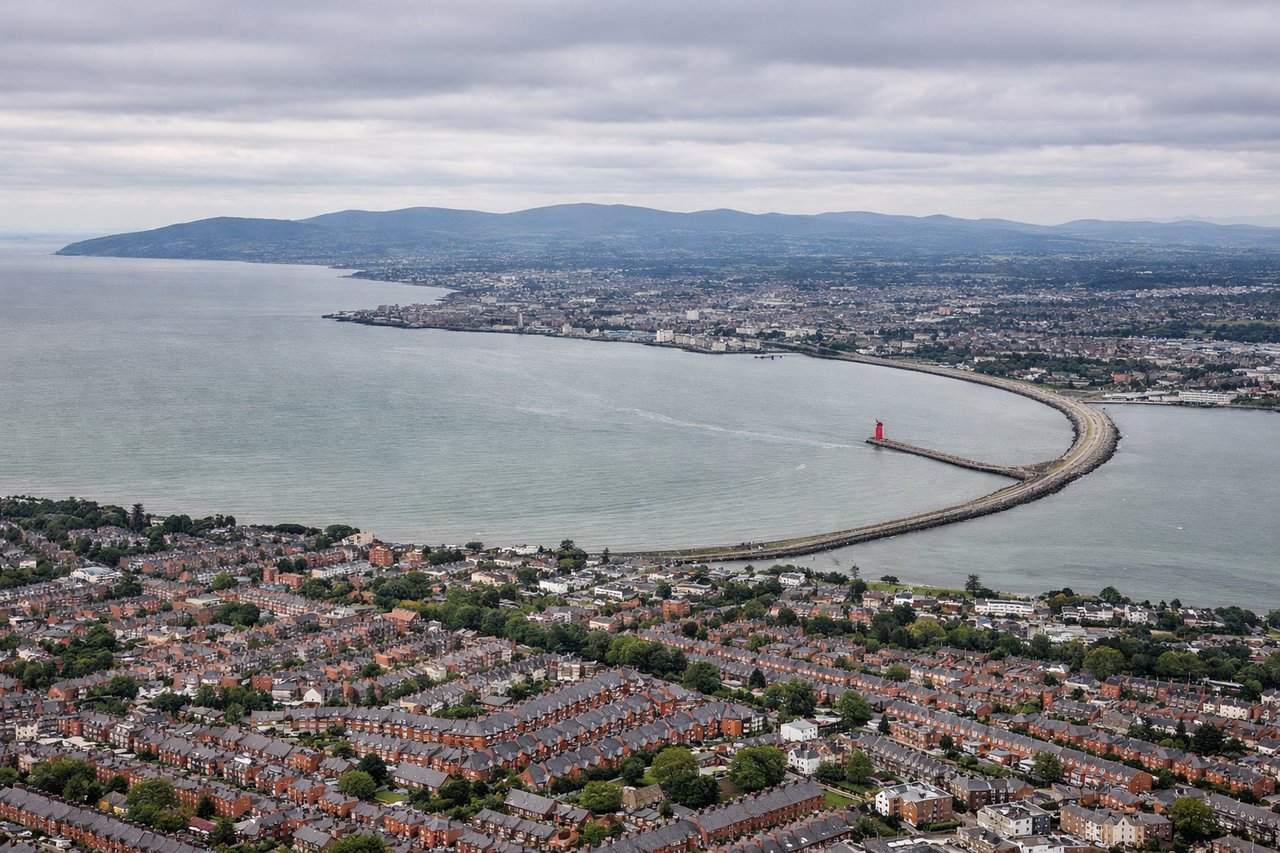
LEFTLeft side provides views of the Irish coastline, Dublin Bay, and the Wicklow Mountains during descent into Dublin. The approach typically brings aircraft over the Irish Sea and coastal features before turning toward the airport.
Landmarks on this routeAll landmarks →
Will your flight be in sunlight?
See exactly which side of the plane gets sun and shade at your departure time.
About This Route
Which side of the plane should I sit on flying from Beauregard Parish (DRI) to Dublin (DUB)?
Sit on the Left side of the plane for the best views on flights from Deridder to Dublin. While takeoff offers some Louisiana wetland and river views, the landing into Dublin provides more dramatic and varied scenery: coastal features, a major European city, mountains, and a significant bay. The left side captures these landing highlights better.
What can I see during takeoff from Beauregard Parish in Deridder?
During takeoff from Beauregard Parish (DRI), sit on the Right side for the best views. Right side offers views of the Sabine River and Louisiana's piney woods terrain as you climb out westbound. The river valley and surrounding forest create visible linear features during initial climb. Notable sights include: Sabine River, Toledo Bend Reservoir (visible as a large water body to the northwest), Louisiana pine forest canopy, Beauregard Parish cleared agricultural patches.
What can I see when landing at Dublin in Dublin?
When landing at Dublin (DUB), sit on the Left side for the best views. Left side provides views of the Irish coastline, Dublin Bay, and the Wicklow Mountains during descent into Dublin. The approach typically brings aircraft over the Irish Sea and coastal features before turning toward the airport. Notable sights include: Dublin Bay, Wicklow Mountains (visible as a ridge to the south), Irish coastline with Howth Peninsula, River Liffey estuary.
How long is the flight from Deridder to Dublin?
The flight from Beauregard Parish (DRI) to Dublin (DUB) takes 8h 15m.
What does the Deridder to Dublin flight path pass over?
This transatlantic route crosses the Atlantic Ocean for approximately 3,000 nautical miles. Midpoint features visible from altitude include: the Mid-Atlantic Ridge region (deep ocean with no visible surface features), occasional weather systems and cloud formations, and the transition from North American air masses to Atlantic maritime conditions. No significant land features are visible at the midpoint. The route typically passes north of Bermuda and south of Newfoundland, though these remain well beyond the horizon. The North Atlantic itself dominates the view for 5-6 hours of flight time, appearing as open ocean with wave patterns visible at lower altitudes, gradually transitioning to the approach to Ireland over the Celtic Sea and Irish coastline.