The right side scores higher due to the dramatic approach into Istanbul over the Sea of Marmara and the visible transition from Anatolian plateau to coastal terrain. While the left side offers Rhine Valley scenery during departure, it's relatively flat and industrial. The right side's combination of major water body, geographic relief change, and Istanbul's sprawling urban landscape provides greater visual variety and landmark density across the full flight.
Flight Path
The flight path crosses the Carpathian Mountains (visible as a north-south ridge system in central Romania), the Danube River valley, and the Wallachian Plain before descending toward the Black Sea coast and turning south toward the Marmara region. The Balkans form a secondary ridge system visible in the southern portion of the cruise phase.
Great circle distance and headings ›.jpg?width=600)
_in_Istanbul.jpg?width=600)
Phase by phase
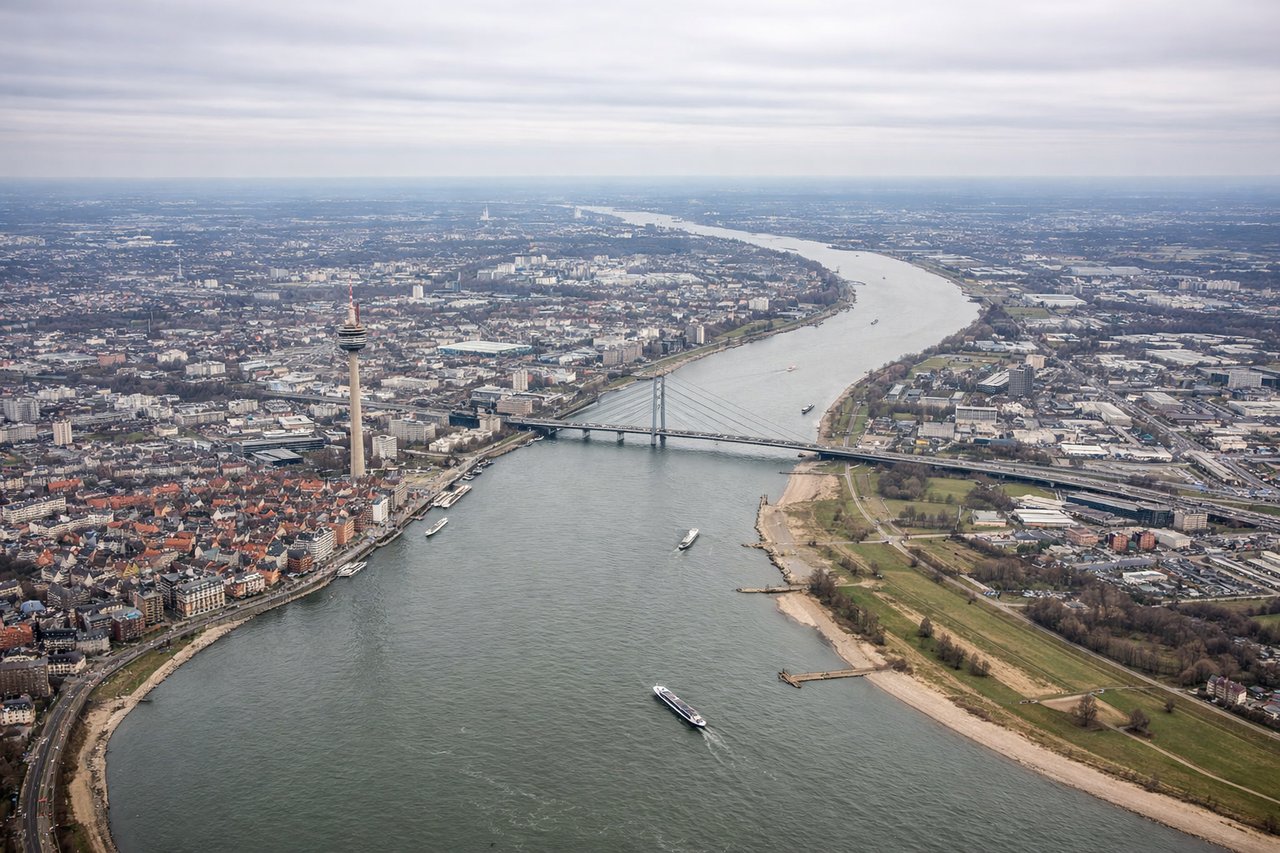
Takeoff from DUS
LEFTDüsseldorf departure offers views of the Rhine River valley and the North Rhine-Westphalia industrial landscape. The left side captures the river's meanders and surrounding lowlands during climb-out toward the southeast routing.
Landing at SAW
RIGHTThe right side during approach to Istanbul Sabiha Gökçen captures the Marmara Sea, the Bosphorus strait, and the dramatic transition from Anatolian plateau to coastal terrain. The approach path offers views of the Sea of Marmara's eastern basin and the Asian side of Istanbul's geography.
Landmarks on this routeAll landmarks →
Will your flight be in sunlight?
See exactly which side of the plane gets sun and shade at your departure time.
About This Route
Which side of the plane should I sit on flying from Dusseldorf (DUS) to Istanbul Sabiha Gökçen International Airport (SAW)?
Sit on the Right side of the plane for the best views on flights from Duesseldorf to Pendik, Istanbul. The right side scores higher due to the dramatic approach into Istanbul over the Sea of Marmara and the visible transition from Anatolian plateau to coastal terrain. While the left side offers Rhine Valley scenery during departure, it's relatively flat and industrial. The right side's combination of major water body, geographic relief change, and Istanbul's sprawling urban landscape provides greater visual variety and landmark density across the full flight.
What can I see during takeoff from Dusseldorf in Duesseldorf?
During takeoff from Dusseldorf (DUS), sit on the Left side for the best views. Düsseldorf departure offers views of the Rhine River valley and the North Rhine-Westphalia industrial landscape. The left side captures the river's meanders and surrounding lowlands during climb-out toward the southeast routing. Notable sights include: Rhine River, Cologne metropolitan area (visible ~50 km south), North German Plain, Ruhr Valley industrial zones.
What can I see when landing at Istanbul Sabiha Gökçen International Airport in Pendik, Istanbul?
When landing at Istanbul Sabiha Gökçen International Airport (SAW), sit on the Right side for the best views. The right side during approach to Istanbul Sabiha Gökçen captures the Marmara Sea, the Bosphorus strait, and the dramatic transition from Anatolian plateau to coastal terrain. The approach path offers views of the Sea of Marmara's eastern basin and the Asian side of Istanbul's geography. Notable sights include: Sea of Marmara, Bosphorus Strait, Anatolian Plateau escarpment, Istanbul's Asian districts (Pendik, Tuzla).
How long is the flight from Duesseldorf to Pendik, Istanbul?
The flight from Dusseldorf (DUS) to Istanbul Sabiha Gökçen International Airport (SAW) takes 3h 15m.
What does the Duesseldorf to Pendik, Istanbul flight path pass over?
The flight path crosses the Carpathian Mountains (visible as a north-south ridge system in central Romania), the Danube River valley, and the Wallachian Plain before descending toward the Black Sea coast and turning south toward the Marmara region. The Balkans form a secondary ridge system visible in the southern portion of the cruise phase.