While left seats dominate the takeoff phase with Dubai's coastal features, right seats provide superior views during the longer descent phase into Osaka, capturing the dramatic transition from open water to mountainous terrain and the Kansai region's complex geography. The landing experience outweighs the takeoff advantage.
Flown DWC to KIX? Did we get it right?
Flight Path
Dubai to Osaka is 4,731 miles (7,614 km), a flight of about 9 hours 20 minutes.
The flight path crosses the Arabian Sea and the Indian Ocean, passing over open water with no significant landmarks visible for most of the journey. Approximately midway, the aircraft passes over the Arabian Sea's eastern expanse. As the flight approaches the Asian continent, the Deccan Plateau's western edge becomes visible on the horizon (though typically too distant for clear detail). The final approach phase brings views of the Japanese coastline, including the Kii Peninsula's forested mountains and Osaka Bay's complex geography before landing.
Great circle distance and headings ›


Phase by phase
Takeoff from DWC
LEFTLeft seats capture the Persian Gulf coastline and the Dubai urban sprawl extending northeast. You'll see the distinctive artificial Palm Jumeirah islands and the contrast between developed coastal zones and desert inland.
Landing at KIX
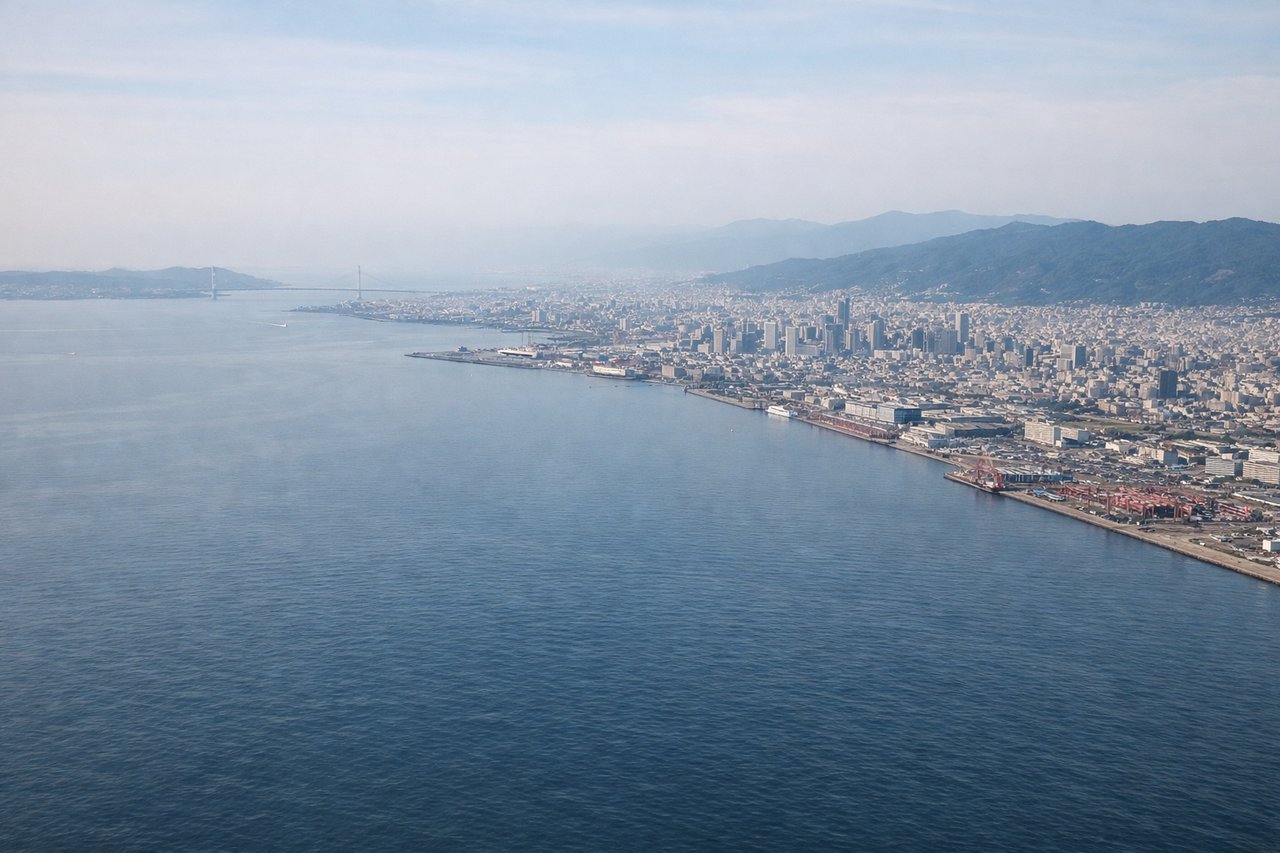
RIGHTRight seats offer the best view during descent into Kansai. You'll see the Kii Peninsula's mountainous terrain, Osaka Bay, and the approach over water toward the airport's artificial island. The Yodo River delta and surrounding urban sprawl of the Kansai region are also visible.
Will your flight be in sunlight?
Pick a date and time in the Sun Map to watch the sun move across your whole flight.
About This Route
Which side of the plane should I sit on flying from Al Maktoum International Airport (DWC) to Kansai International (KIX)?
Sit on the Right side of the plane for the best views on flights from Dubai to Osaka. While left seats dominate the takeoff phase with Dubai's coastal features, right seats provide superior views during the longer descent phase into Osaka, capturing the dramatic transition from open water to mountainous terrain and the Kansai region's complex geography. The landing experience outweighs the takeoff advantage.
What can I see during takeoff from Al Maktoum International Airport in Dubai?
During takeoff from Al Maktoum International Airport (DWC), sit on the Left side for the best views. Left seats capture the Persian Gulf coastline and the Dubai urban sprawl extending northeast. You'll see the distinctive artificial Palm Jumeirah islands and the contrast between developed coastal zones and desert inland. Notable sights include: Persian Gulf (immediate coastline), Palm Jumeirah artificial islands, Dubai city grid extending inland, Arabian Desert (tan expanse to the south and west).
What can I see when landing at Kansai International in Osaka?
When landing at Kansai International (KIX), sit on the Right side for the best views. Right seats offer the best view during descent into Kansai. You'll see the Kii Peninsula's mountainous terrain, Osaka Bay, and the approach over water toward the airport's artificial island. The Yodo River delta and surrounding urban sprawl of the Kansai region are also visible. Notable sights include: Osaka Bay (large inland sea), Kii Peninsula mountains (forested ridges to the south), Yodo River delta (braided waterways), Kobe and Osaka urban zones (gray-white cityscape).
How long is the flight from Dubai to Osaka?
The flight from Al Maktoum International Airport (DWC) to Kansai International (KIX) takes about 9 hours 20 minutes. The shortest flight path between them is 4,731 miles (7,614 km); winds and air traffic control usually add a few percent.
What does the Dubai to Osaka flight path pass over?
The flight path crosses the Arabian Sea and the Indian Ocean, passing over open water with no significant landmarks visible for most of the journey. Approximately midway, the aircraft passes over the Arabian Sea's eastern expanse. As the flight approaches the Asian continent, the Deccan Plateau's western edge becomes visible on the horizon (though typically too distant for clear detail). The final approach phase brings views of the Japanese coastline, including the Kii Peninsula's forested mountains and Osaka Bay's complex geography before landing.