Anchorage to Seattle is 1,442 miles (2,321 km), a flight of about 3 hours 15 minutes.
Left side wins both ends of the flight. During the cruise portion heading south-southeast, the left side also tracks closer to the coastal mountain ranges of British Columbia and Washington, including the Coast Mountains and eventually the North Cascades, making it the stronger choice throughout.
Flight Path
The flight tracks south along the Alaska and British Columbia coast, passing over the Gulf of Alaska coastline, the St. Elias Range visible to the east, then the Coast Mountains of BC running the length of the route, the Inside Passage fjords below, and the North Cascades as you enter Washington state airspace.
Great circle distance and headings ›

Phase by phase
Takeoff from EDF
LEFTElmendorf typically departs south on runway 06/24 or uses runway 34, heading generally southward. A left-side seat gives you views over Anchorage city, Cook Inlet, and the Alaska Range as the aircraft banks south. You get a clear look at the Chugach Mountains rising immediately east of the base.
Landing at SEA
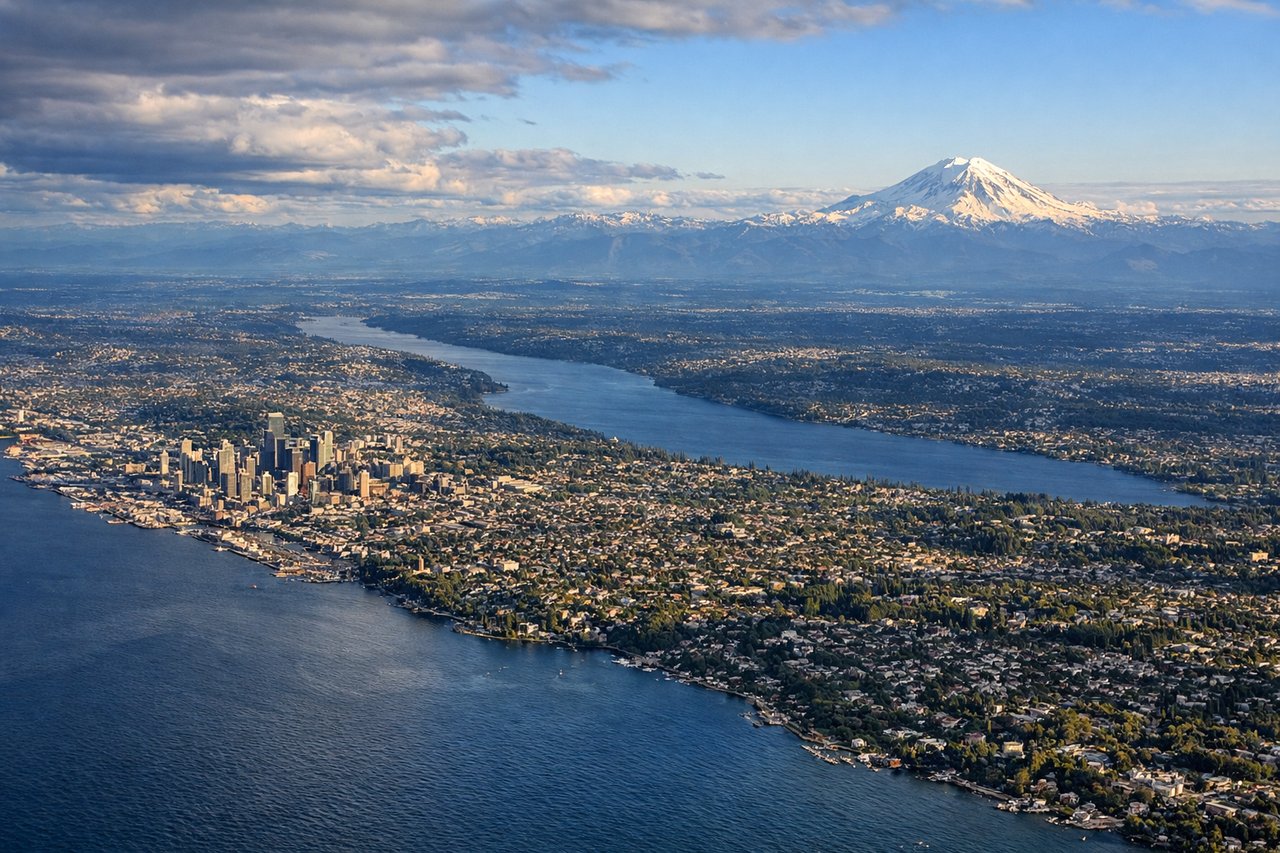
LEFTSeaTac typically lands on runways 16L/16R heading south, meaning the approach comes from the north over the Seattle metro area. A left-side seat faces east, giving you views of Lake Washington, the Cascades, and Mount Rainier looming to the southeast. The right side faces Puget Sound and the Olympics, which are also good, but Rainier is the dominant visual landmark.
Landmarks on this routeAll landmarks →
Will your flight be in sunlight?
Pick a date and time in the Sun Map to watch the sun move across your whole flight.
About This Route
Which side of the plane should I sit on flying from Elmendorf Afb (EDF) to Seattle Tacoma International (SEA)?
Sit on the Left side of the plane for the best views on flights from Anchorage to Seattle. Left side wins both ends of the flight. During the cruise portion heading south-southeast, the left side also tracks closer to the coastal mountain ranges of British Columbia and Washington, including the Coast Mountains and eventually the North Cascades, making it the stronger choice throughout.
What can I see during takeoff from Elmendorf Afb in Anchorage?
During takeoff from Elmendorf Afb (EDF), sit on the Left side for the best views. Elmendorf typically departs south on runway 06/24 or uses runway 34, heading generally southward. A left-side seat gives you views over Anchorage city, Cook Inlet, and the Alaska Range as the aircraft banks south. You get a clear look at the Chugach Mountains rising immediately east of the base. Notable sights include: Chugach Mountains, Cook Inlet, Knik Arm, downtown Anchorage grid.
What can I see when landing at Seattle Tacoma International in Seattle?
When landing at Seattle Tacoma International (SEA), sit on the Left side for the best views. SeaTac typically lands on runways 16L/16R heading south, meaning the approach comes from the north over the Seattle metro area. A left-side seat faces east, giving you views of Lake Washington, the Cascades, and Mount Rainier looming to the southeast. The right side faces Puget Sound and the Olympics, which are also good, but Rainier is the dominant visual landmark. Notable sights include: Mount Rainier, Lake Washington, Cascade Range, Seattle city center.
How long is the flight from Anchorage to Seattle?
The flight from Elmendorf Afb (EDF) to Seattle Tacoma International (SEA) takes about 3 hours 15 minutes. The shortest flight path between them is 1,442 miles (2,321 km); winds and air traffic control usually add a few percent.
What does the Anchorage to Seattle flight path pass over?
The flight tracks south along the Alaska and British Columbia coast, passing over the Gulf of Alaska coastline, the St. Elias Range visible to the east, then the Coast Mountains of BC running the length of the route, the Inside Passage fjords below, and the North Cascades as you enter Washington state airspace.